August 10, 2022
Between the passage of the Inflation Reduction Act and the CHIPS Act, the successful assassination of al-Qaeda leader Ayman al-Zawahri without collateral damage, a blockbuster jobs report that laid to rest any talk ofrecession, a sharp decline in inflation expectations on the back of 57 straight days of falling gas prices, and solidly red state Kansas voting down abortion restrictions, the Biden administration has had an exceptional couple of weeks.
But there is one bit of very bad news raining on Biden’s parade: House Speaker Nancy Pelosi’s visit to Taiwan has increased tensions between the U.S. and China to their highest point since the Tiananmen Square massacre.
The political status of Taiwan has long been a central sticking point in U.S.-China relations. While de facto an independent and self-governing entity that considers itself a sovereign state, Taiwan is considered by mainland China and by the international community—including the United States—as a part of “one China.” Beijing claims it as a province of China and seeks to eventually achieve reunification, peacefully if possible but by force if necessary. For its part, Washington’s position is one of “strategic ambiguity”: guided by the Taiwan Relations Act, the United States acknowledges China’s claims on Taiwan (i.e., the “One-China” principle) at the same time as it opposes both unilateral unification and Taiwanese independence—all the while lending economic and military support to enable Taiwan to defend itself from coercion.
Want to understand the world a little better? Subscribe to GZERO Daily by Ian Bremmer for free and get new posts delivered to your inbox every week.

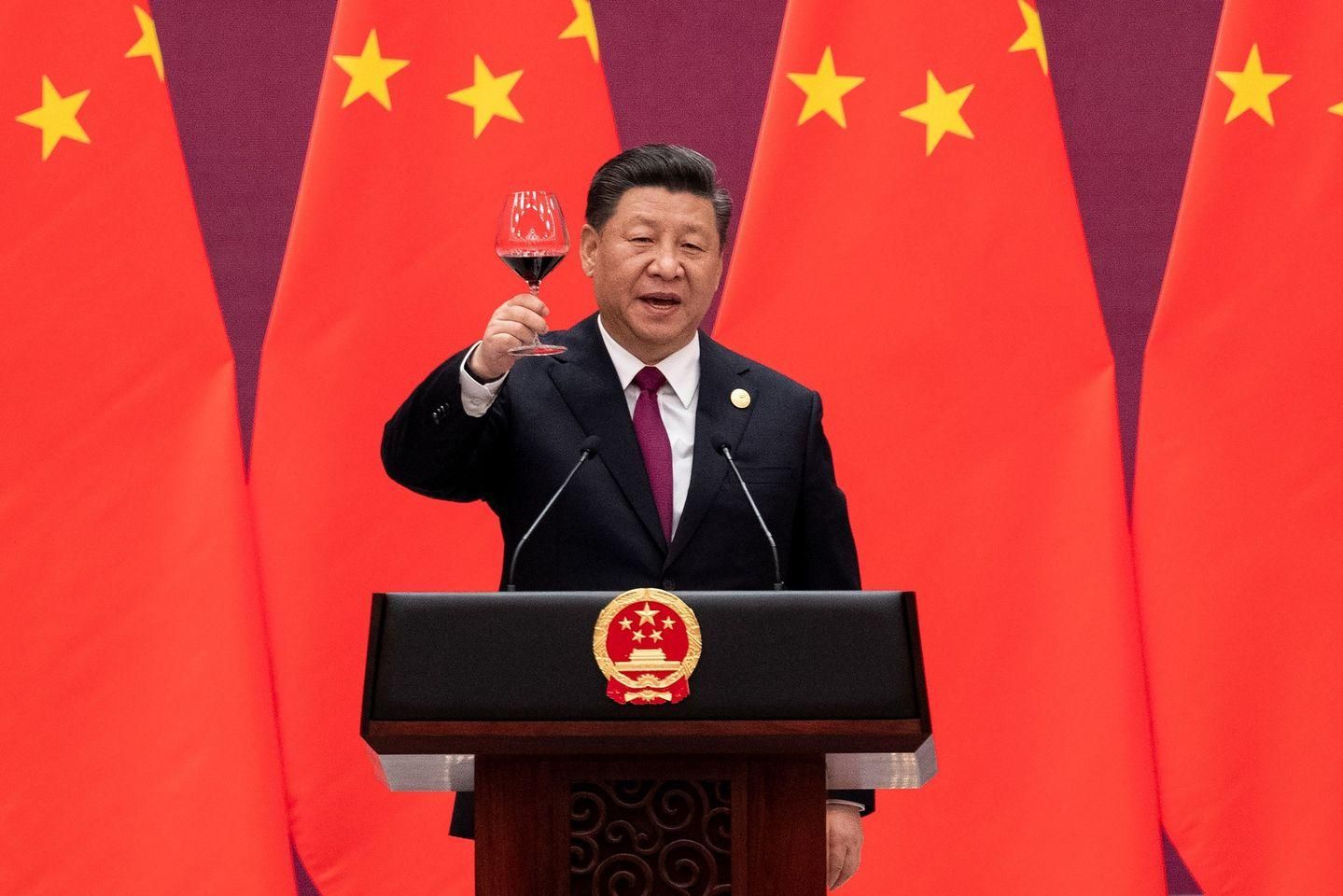
Under President Xi Jinping, China has turned more assertive about reunification, which Xi considers one of the primary goals of his rule and a necessary condition for the country’s “rejuvenation.” As China’s economic and military capabilities have grown and the balance of power has moved in Beijing’s favor, Chinese intimidation of Taipei and incursions into the Taiwan Strait have become increasingly commonplace, heightening the risk of confrontation.
However, ever since watching the Russian invasion of Ukraine galvanize a once“brain dead” transatlantic alliance overnight, Xi had adopted a more cautious stance on Taiwan, fearing that any move toward coercive reunification would be met with strong and united opposition from America and its allies—potentially risking a humiliating military defeat, devastating economic sanctions, and sweeping diplomatic isolation. This was a risk Xi was not willing to take in the run-up to the 20th Party Congress, where he’s set to secure a norm-defying third term in power.
House Speaker Nancy Pelosi’s visit to Taiwan last week upended that calculus.
Despite clear and consistent Chinese warnings as well as opposition from both President Biden and American allies, the soon-to-be-retired 82-year-old congresswoman unilaterally made a highly consequential foreign policy decision for personal reasons, without U.S. strategic goals in mind. Knowing that Biden opposed the move and had no interest in a near-term conflict over Taiwan, Xi Jinping suddenly found himself able to shift the status quo in his favor with minimal risk of retaliation.
And that’s exactly what he did. So far, China has blocked food imports from and suspended sand exports to Taiwan. They launched cyberattacks on Taiwanese infrastructure. They conducted unprecedented live-fire military drills effectively surrounding Taiwan. They launched missiles over Taiwanese territory. They flew aircraft into Taiwan’s air defense identification zone and crossed the median line. Many of these exercises are likely to continue for at least the next month. And on Wednesday, China withdrew an earlier promise not to deploy troops to Taiwan following an eventual reunification.

Pelosi’s unnecessary provocation gave Xi cover to engage in meaningful yet carefully calculated escalation, chipping away at Taiwan’s sovereignty and increasing its presence in the Taiwan Strait with virtually no consequences. While this crisis is very unlikely to lead to war between the U.S. and China, it increases the odds of accidents and miscalculation and further erodes whatever guardrails exist to prevent direct military conflict.
Importantly, the crisis highlights America’s structural credibility deficit on the global stage, weakening the United States and emboldening China. In the eyes of U.S. friends and foes alike, domestic political division and dysfunction cast doubt on America’s long-term commitments and strategic orientation. Beijing will seek to exploit these vulnerabilities going forward, waiting for the U.S. to make additional unforced errors that allow China to change the status quo in Taiwan with minimal risk of retaliation.
Unfortunately for the United States—and Taiwan—there may be plenty such opportunities in the near future. Should Republicans take the House in November’s midterm elections (as expected), for example, the new Republican House Speaker would likely lead a larger and more rhetorically provocative congressional delegation to Taiwan than Pelosi did, prompting China to escalate further without risking a significant response from President Biden. A potential constitutional crisis after the 2024 presidential election would also encourage China to act while the U.S. is consumed by infighting.
As is too often the case these days, the greatest threat to American interests is American dysfunction.
🔔 And if you haven't already, don't forget to subscribe to my free newsletter, GZERO Daily by Ian Bremmer, to get new posts delivered to your inbox.