
Skip to content
Search

Latest Stories

GZERO AI

The rise of AI giants (and their challengers)

The logo of OpenAI is seen displayed on a mobile phone screen with the Nvidia logo in the background.

The logo of OpenAI is seen displayed on a mobile phone screen with the Nvidia logo in the background.

Idrees Abbas/SOPA Images/Sipa/via Reuters

Two winners have emerged from the AI boom’s first year, but others are in hot pursuit.

Within a few days of ChatGPT’s launch on Nov. 30, 2022, the chatbot attracted millions of users, proving that the world was ready for consumer-grade AI. This made OpenAI, the parent company, a clear victor on the software front. On the hardware front, NVIDIA grabbed the spotlight. The company’s graphics-processing chips have become the industry standard for fueling powerful AI models, making NVIDIA a trillion-dollar company this year.

Wannabe contenders, however, are trying to catch up.


Last week, Google launched Gemini, its much-anticipated new AI model, which it integrated into its Bard chatbot, boasting about “multimodal reasoning capabilities.” Google, already the industry leader in so many internet sectors — search, advertising, online video, and more — wants Gemini to challenge OpenAI’s large language model, GPT-4, on which ChatGPT is built.

Gemini, an umbrella for three models functioning at different levels, will also be added to Android mobile devices, the Google search engine, and Chrome. Google CEO Sundar Pichai told The New York Times that there’s room for more than one top AI company: “It’s so far from a zero-sum game.”

Meanwhile, US chipmaker AMD has NVIDIA in its crosshairs. Last week, AMD announced a new series of chips specifically for AI. The new chips, called MI300, are meant to rival NVIDIA’s H100 series. Microsoft plans to use the new AMD chips to power some of its Azure-branded cloud computing services, and Meta wants to use them for its data centers.

In these parallel races for AI domination, there’s only one sure winner: the United States. There are plenty of top tech companies competing for dominance of the buzziest industry of the moment, but so many of them — OpenAI, Google, NVIDIA, and AMD — are based in the US. As we chronicled last week, Washington stands to benefit in countless ways.



More For You

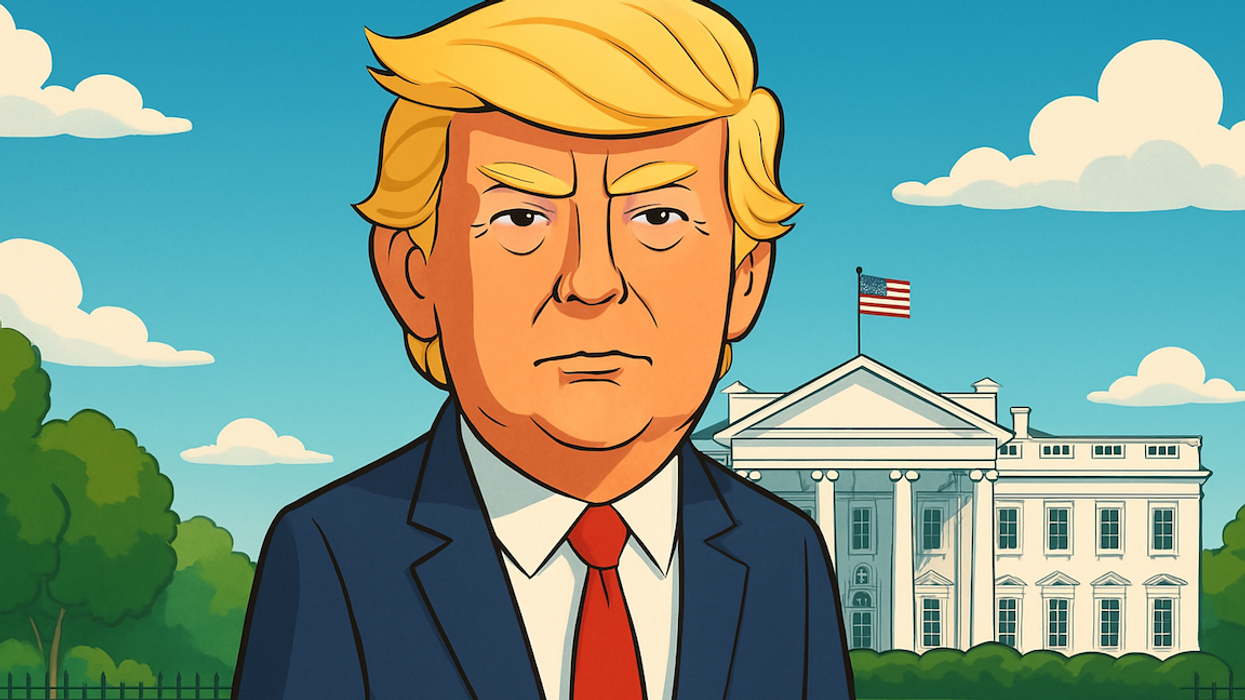
What we learned from a week of AI-generated cartoons
Courtesy of ChatGPT
Last week, OpenAI released its GPT-4o image-generation model, which is billed as more responsive to prompts, more capable of accurately rendering text, and better at producing higher-fidelity images than previous AI image generators. Within hours, ChatGPT users flooded social media with cartoons they made using the model in the style of the [...]
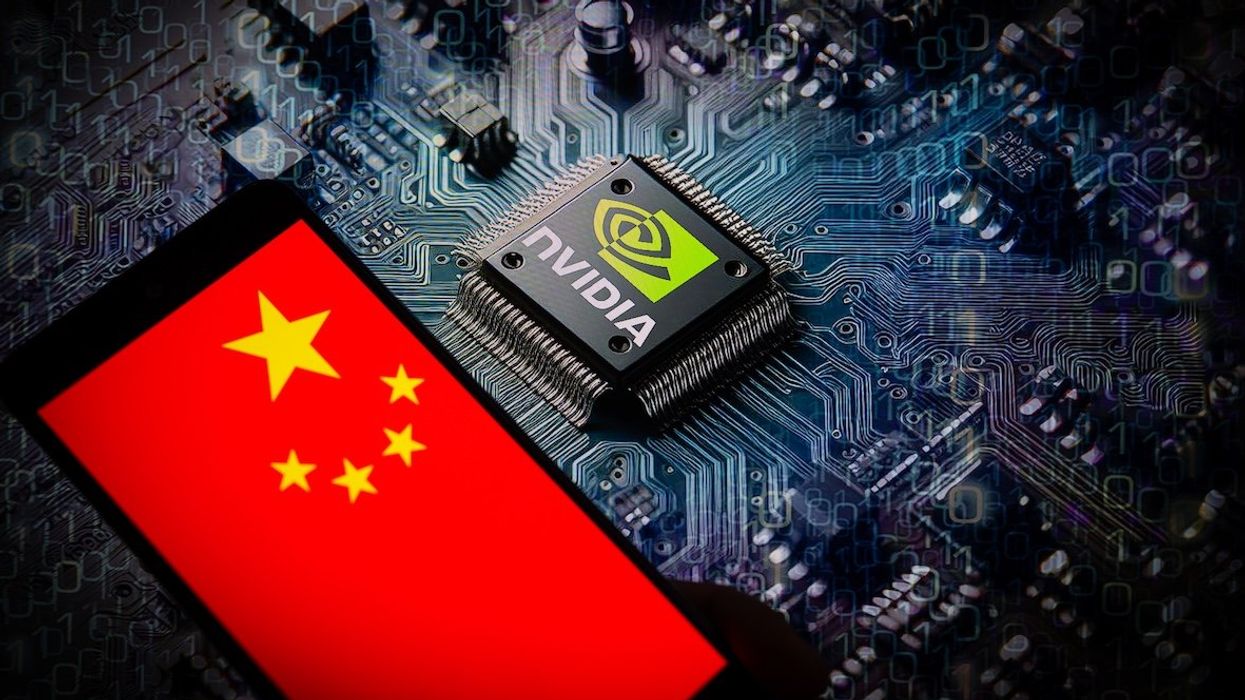
The flag of China is displayed on a smartphone with a NVIDIA chip in the background in this photo illustration.

The flag of China is displayed on a smartphone with a NVIDIA chip in the background in this photo illustration.

Jonathan Raa/NurPhoto via Reuters
H3C, one of China’s biggest server makers, has warned about running out of Nvidia H20 chips, the most powerful AI chips Chinese companies can legally purchase under US export controls. [...]
​North Korean leader Kim Jong Un supervises the test of suicide drones with artificial intelligence at an unknown location, in this photo released by North Korea's official Korean Central News Agency on March 27, 2025.

North Korean leader Kim Jong Un supervises the test of suicide drones with artificial intelligence at an unknown location, in this photo released by North Korea's official Korean Central News Agency on March 27, 2025.

KCNA via REUTERS
Hermit Kingdom leader Kim Jong Un has reportedly supervised AI-powered kamikaze drone tests. He told KCNA, the state news agency, that developing unmanned aircraft and AI should be a top priority to modernize North Korea’s armed forces. [...]
The logo for Isomorphic Labs is displayed on a tablet in this illustration.

The logo for Isomorphic Labs is displayed on a tablet in this illustration.

Igor Golovniov/SOPA Images/Sipa USA via Reuters
In 2024, Demis Hassabis won a Nobel Prize in chemistry for his work in predicting protein structures through his company, Isomorphic Labs. The lab, which broke off from Google's DeepMind in 2021, raised $600 million from investors in a new funding round led by Thrive Capital on Monday. The company did not disclose a valuation. [...]