
Skip to content
Search

Latest Stories

GZERO AI

US Justice Department vows to bring more cases against AI-generated CSAM

US Justice Department vows to bring more cases against AI-generated CSAM

A computer keyboard with a blue light on it.

Federal prosecutors at the US Department of Justice are cracking down on AI-generated child sexual abuse material, or CSAM. James Silver, who leads the department’s Computer Crime and Intellectual Property Section, told Reuters “there’s more to come” following two criminal cases earlier this year.


“What we’re concerned about is the normalization of this,” Silver said. “AI makes it easier to generate these kinds of images, and the more [them] out there, the more normalized this becomes. That’s something that we really want to stymie and get in front of.”

In one such case announced in May, a Wisconsin man was arrested and charged with using Stable Diffusion’s text-to-image model to create and distribute AI-generated CSAM. He allegedly sent the images to a minor too. “Put simply, CSAM generated by AI is still CSAM, and we will hold accountable those who exploit AI to create obscene, abusive, and increasingly photorealistic images of children,” said Deputy Attorney General Lisa Monaco at the time.

There may be legal complexity in prosecuting some of these cases. The First Amendment does not protect child pornography, but when there’s not an identifiable child in the images in question, prosecutors might have to get creative — likely charging obscenity law violations, which are more subjective.

In a 2002 case, Ashcroft v. Free Speech Coalition, a federal judge struck down part of a congressional statute for being overly broad because it prohibited “any visual depiction, including any photograph, film, video, picture, or computer or computer-generated image or picture [that] is, or appears to be, of a minor engaging in sexually explicit conduct.” In the US, restrictions on speech need to be extremely specific and narrowly tailored to address an issue, or they won’t stand up in court. That legal precedent could place additional strain on prosecutors trying to demonstrate that AI-generated media should not be allowed.


More For You

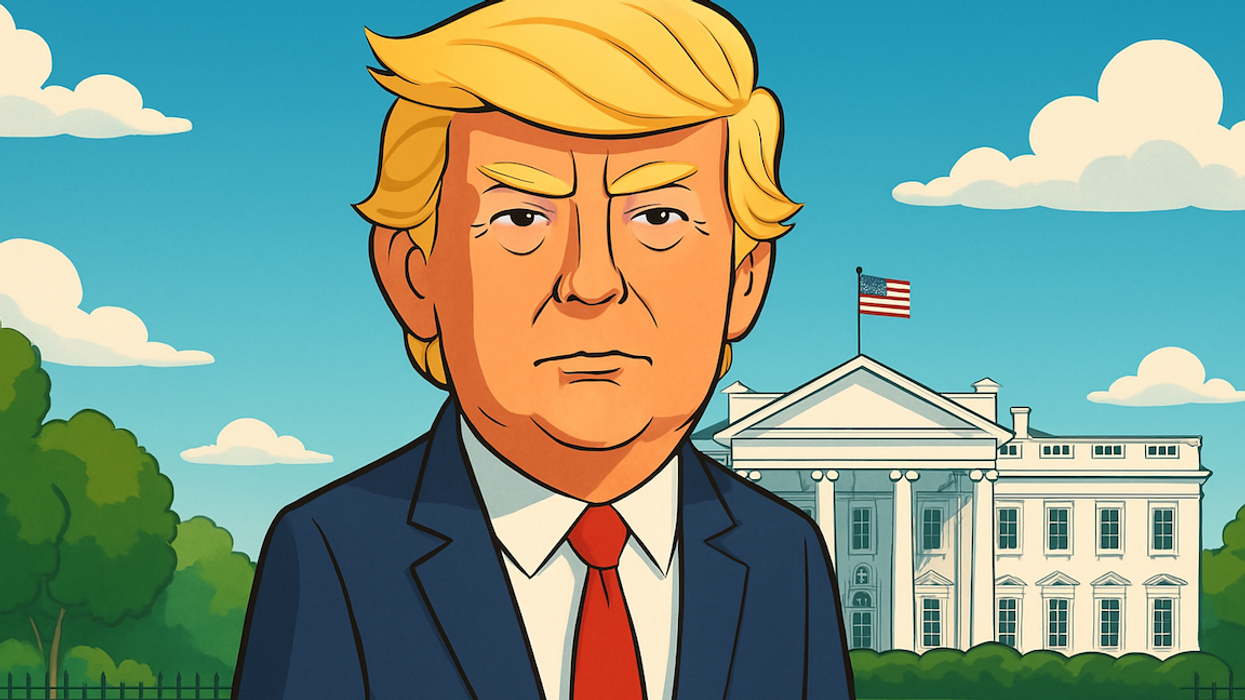
What we learned from a week of AI-generated cartoons
Courtesy of ChatGPT
Last week, OpenAI released its GPT-4o image-generation model, which is billed as more responsive to prompts, more capable of accurately rendering text, and better at producing higher-fidelity images than previous AI image generators. Within hours, ChatGPT users flooded social media with cartoons they made using the model in the style of the [...]
The flag of China is displayed on a smartphone with a NVIDIA chip in the background in this photo illustration.

The flag of China is displayed on a smartphone with a NVIDIA chip in the background in this photo illustration.

Jonathan Raa/NurPhoto via Reuters
H3C, one of China’s biggest server makers, has warned about running out of Nvidia H20 chips, the most powerful AI chips Chinese companies can legally purchase under US export controls. [...]
​North Korean leader Kim Jong Un supervises the test of suicide drones with artificial intelligence at an unknown location, in this photo released by North Korea's official Korean Central News Agency on March 27, 2025.

North Korean leader Kim Jong Un supervises the test of suicide drones with artificial intelligence at an unknown location, in this photo released by North Korea's official Korean Central News Agency on March 27, 2025.

KCNA via REUTERS
Hermit Kingdom leader Kim Jong Un has reportedly supervised AI-powered kamikaze drone tests. He told KCNA, the state news agency, that developing unmanned aircraft and AI should be a top priority to modernize North Korea’s armed forces. [...]
The logo for Isomorphic Labs is displayed on a tablet in this illustration.

The logo for Isomorphic Labs is displayed on a tablet in this illustration.

Igor Golovniov/SOPA Images/Sipa USA via Reuters
In 2024, Demis Hassabis won a Nobel Prize in chemistry for his work in predicting protein structures through his company, Isomorphic Labs. The lab, which broke off from Google's DeepMind in 2021, raised $600 million from investors in a new funding round led by Thrive Capital on Monday. The company did not disclose a valuation. [...]