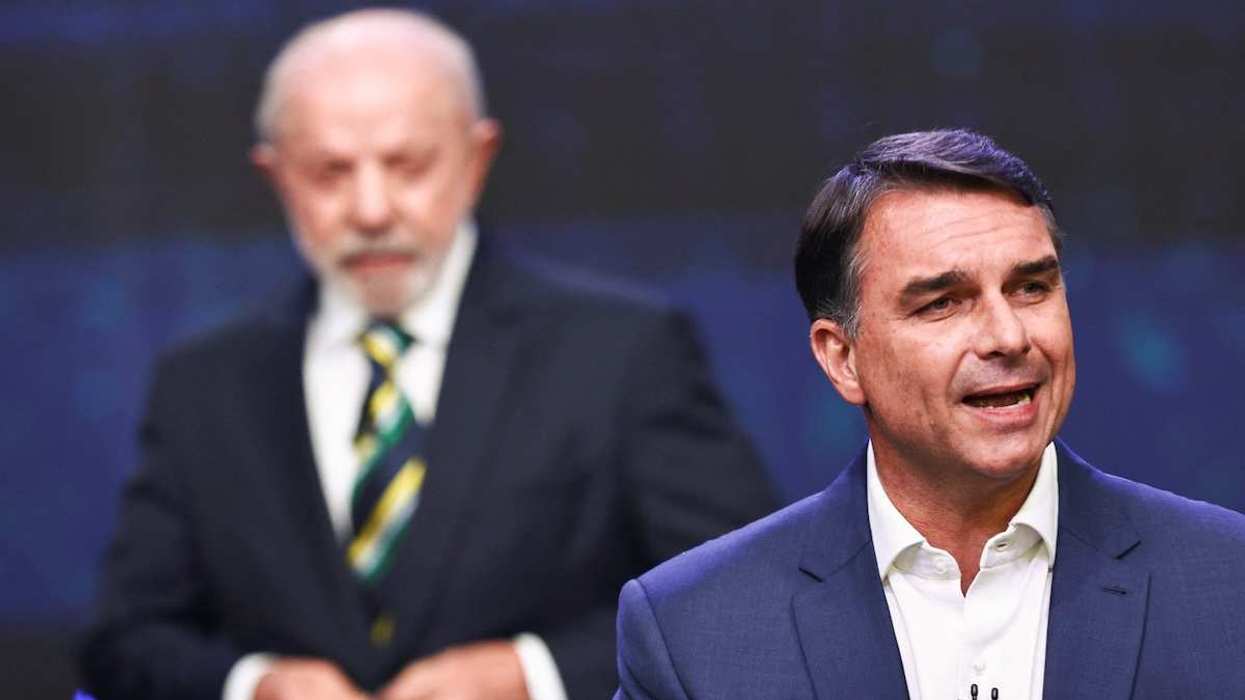
Outsider candidate Javier Milei is consolidating his position as the frontrunner ahead of Argentina’s Oct. 22 presidential election even as investor concerns about his policy promises exacerbate the country’s financial turmoil. Milei’s surprising first-place finish in the recent primaries has prompted a currency sell-off that is fueling price pressures in an economy where inflation is already running above 100%.
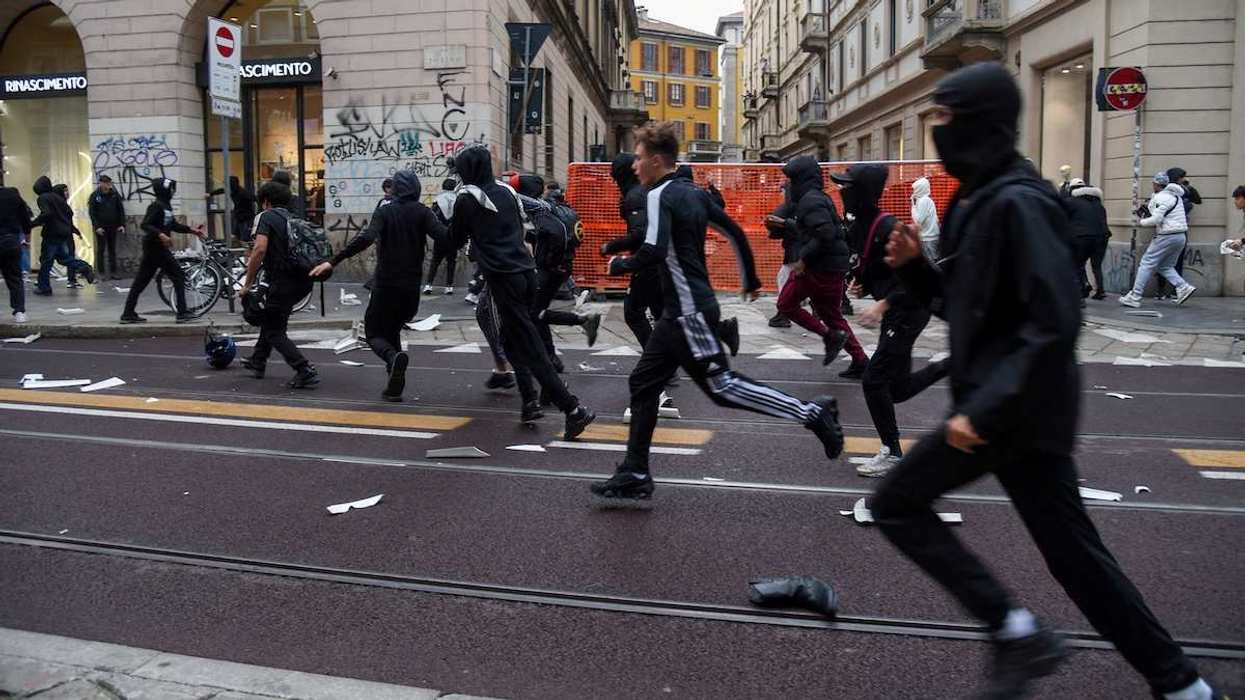
Economy Minister and ruling party candidate Sergio Massa has called for the formation of an anti-Milei coalition while announcing pre-election giveaways that are likely to further fuel inflation. In a sign of mounting hardships, there have been outbreaks of looting at stores across the country.
Yet the more economic conditions deteriorate, the more appealing voters will find Milei’s promises for radical change, according to Eurasia Group expert Luciano Sigalov. We asked him to explain.
Why do investors fear Milei?
Milei first made his name as a wild-haired right-wing economist engaging in fiery debates on television talk shows and has brought that combative approach to the campaign trail with scathing criticisms of the political establishment and promises of wholesale change. He has proposed substituting the dollar for the Argentine peso, closing the central bank, and dramatically downsizing the government, among other things.
Investors fear the potential for these policies to create tremendous economic, political, and social instability. Milei lacks a strong party structure or a clear plan. He would not have majorities in Congress to advance his agenda and would face enormous resistance from unions, social movements, and the Peronists who have ruled the country for most of the last 20 years.
If Milei’s proposals are so risky, why have voters embraced them?
After more than a decade of stagnant growth and soaring inflation, Milei’s message of change has broad appeal. And the worse the economic situation gets, the more it resonates. The fact that Milei is truly an outsider candidate makes novelty one of his biggest strengths. Voters see him as “unpolluted” by the “political caste” he seeks to overhaul. He has also managed to convince them that the bulk of the adjustment would fall upon politicians, in the form of lost jobs and privileges, and not on regular citizens.
It is important to note, however, that polls show that strong anti-establishment sentiment among voters does not necessarily translate into an unconditional endorsement of Milei’s radical agenda, which includes the privatization of healthcare, education, and pensions.
How would you place Milei in the international context?
Milei’s rise takes place in a global context of elevated voter frustration and discontent with economic and political elites. Public opinion experts say voters tell them the “system is broken.” Similar to far-right populists such as Donald Trump and Brazil’s Jair Bolsonaro, Milei has tapped into that sentiment by turning politics into a no-holds-barred contest between the “good guys” and the “bad guys,” the latter represented by traditional political parties from the left to the center-right of the political spectrum.
One of Milei’s most popular proposals is dollarization. What explains its appeal and how would that work?
Dollarization in theory offers the potential to end rampant inflation by replacing the volatile peso with the stable dollar. Other countries in Latin America have done it, including Panama, Ecuador, and El Salvador, with varying degrees of success. Argentina itself took an intermediate step toward dollarization in the 1990s with the so-called convertibility regime that pegged the peso to the dollar with a fixed exchange rate and was initially successful in bringing down inflation.
Formal dollarization would require changing several pieces of legislation in Congress to make the dollar the country’s official currency. A de facto dollarization could occur if circumstances encourage people to voluntarily stop using the peso and use dollars instead (dollars are already used for many transactions in Argentina). This usually happens only in dire circumstances such as bouts of hyperinflation, when paper bills have become literally worthless. Argentina has previously experienced bouts of hyperinflation, usually defined as an annual rate of more than 1,000%.
What are the risks of dollarization?
The challenges are immense, as underlined by Argentina’s experiment with a dollar peg in the 1990s, which ultimately failed when authorities could not maintain the peg, forcing a chaotic exit from the policy and a financial crisis. This time around, Milei would not be able to get congressional approval for his proposals. That could lead him to attempt a de facto dollarization by removing foreign currency controls and triggering hyperinflation – a sort of scorched earth strategy that would trigger enormous political and social backlash.
Even if the country managed to absorb the initial shock of dollarization, it would lose its control of monetary policy, so it would not be able to lower interest rates to stimulate the economy in a downturn or raise them if activity overheats. Moreover, it would lose the ability to better compete in the global market for goods and services through a weakening of the national currency. Therefore, decreasing wages or shedding jobs would be the available options to improve competitiveness in event of an external shock. This all points to negative fallout for growth and employment.
Assuming Milei is elected, will he be forced to moderate his proposals?
That’s the million-dollar question. It seems that a highly mobilized society as well as institutional factors – the lack of majorities in Congress or the support of provincial governors and the country’s reliance on IMF support – would force him to moderate somewhat. However, he is convinced of the wisdom of his program to partially dismantle the Argentine state, so he is unlikely to make compromises without a fight. Not to mention the fact that he thinks he’s a genius and that anyone disagreeing with his arguments is ignorant. But if he were to move forward with his plans to overhaul longstanding public services, he would be swiftly met by large street protests and falling approval ratings.
Edited by Jonathan House, Senior Editor at Eurasia Group