Tahrir Square — a decade on: This week marks a decade since mass protests in Cairo's Tahrir Square sparked a revolution that toppled Egypt's longtime strongman Hosni Mubarak as part of the Arab Spring. But ten years on, Egypt's brief experiment with democracy has long since been undermined by current President Abdel Fattah el-Sisi. El-Sisi, a former General who in 2013 capitalized on fresh street protests to oust the country's first democratically-elected president, has quashed dissent and crushed political opposition. Egypt is now one of the most dangerous countries in the world to be a journalist, and has one of the lowest internet freedom rankings. As if to make the point that Tahrir Square — long the site of anti-government protests — is now his, el-Sisi recently oversaw a $6 million renovation that dressed up the place with the trappings of a European-style monumental plaza, covering over most of the open spaces where hundreds of thousands once camped out and defied the regime. Ten years after the Arab Spring bloomed in Cairo, Egypt may actually be less free than it was on January 24, 2011.
AMLO-19: Mexican president Andres Manuel Lopez Obrador announced Sunday he had tested positive for COVID-19, capping a dark few days in which the country saw its highest weekly death toll yet from the virus. From the beginning of the pandemic, AMLO, as the leftwing populist is known, has resisted taking broad lockdown measures, citing his concern for the country's massive population of working poor who can't simply work from home. And despite the fourth highest global COVID death toll, AMLO has remained broadly popular. The 67-year old former smoker tweeted that his symptoms are mild and he's still on the job, but if things do take a grimmer turn, the situation could get rocky fast — AMLO is a towering figure in Mexico, with no clear and viable successor in sight. What's more, his ruling Morena party faces tough mid-term elections this year, and they will need him hale and hearty to make sure they retain their grip on Congress.
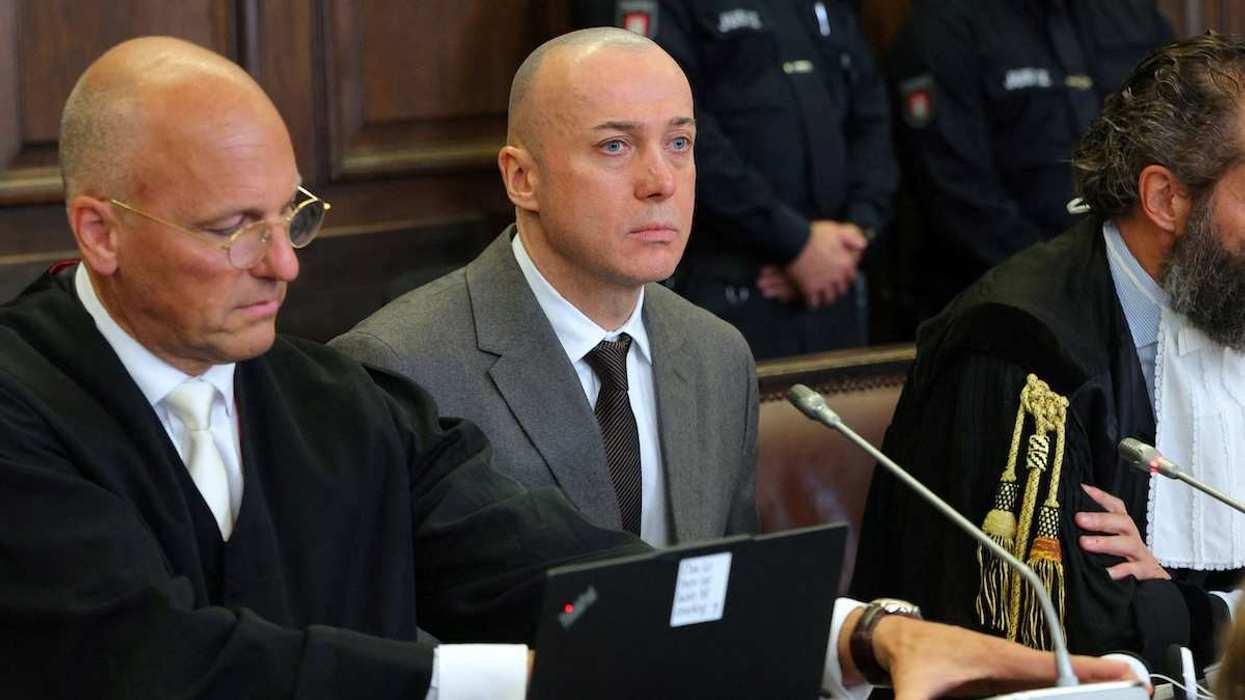
PM Conte resigns in Italy: After weeks of political dysfunction, in which Italy's fragile coalition government narrowly survived a confidence vote in the Senate just last week, Prime Minister Giuseppe Conte now says he will resign, pushing the country into political chaos. The timing couldn't be worse: Italians are now left without a stable government amid a massive effort to rollout a COVID-19 vaccine and revive the pandemic-battered economy (Italy's GDP shrunk by a whopping 10 percent in 2020). There are a few potential scenarios going forward: One is that Conte could remain prime minister if the president appoints him to head a (weak and fractious) new coalition. Another option is that former prime minister Matteo Renzi's party — which triggered the latest upheavals by withdrawing from the government in a dispute over how to spend EU coronavirus relief funds — could return to government, with a different prime minister. Lastly, new elections could be called. One player who might particularly like to see that outcome is former interior minister Matteo Salvini, whose far-right Lega party is currently leading in polls.
India and China in another high border skirmish: The two Asian giants clashed again over their ill-defined frontier in the Himalayas, with Indian sources reporting that its troops repulsed a Chinese patrol that had crossed into Indian territory. The situation along the strategically important high altitude border has been unresolved for decades, but things have gotten more tense again over the past year. Last June a melee of sticks and fisticuffs left dozens dead, and last fall the two sides exchanged fire. With strongly nationalistic leaders in charge of both nations, the border has become a flashpoint in a broader increase of India-China tensions as the world's two most populous countries vie for supremacy in Asia.