September 02, 2025
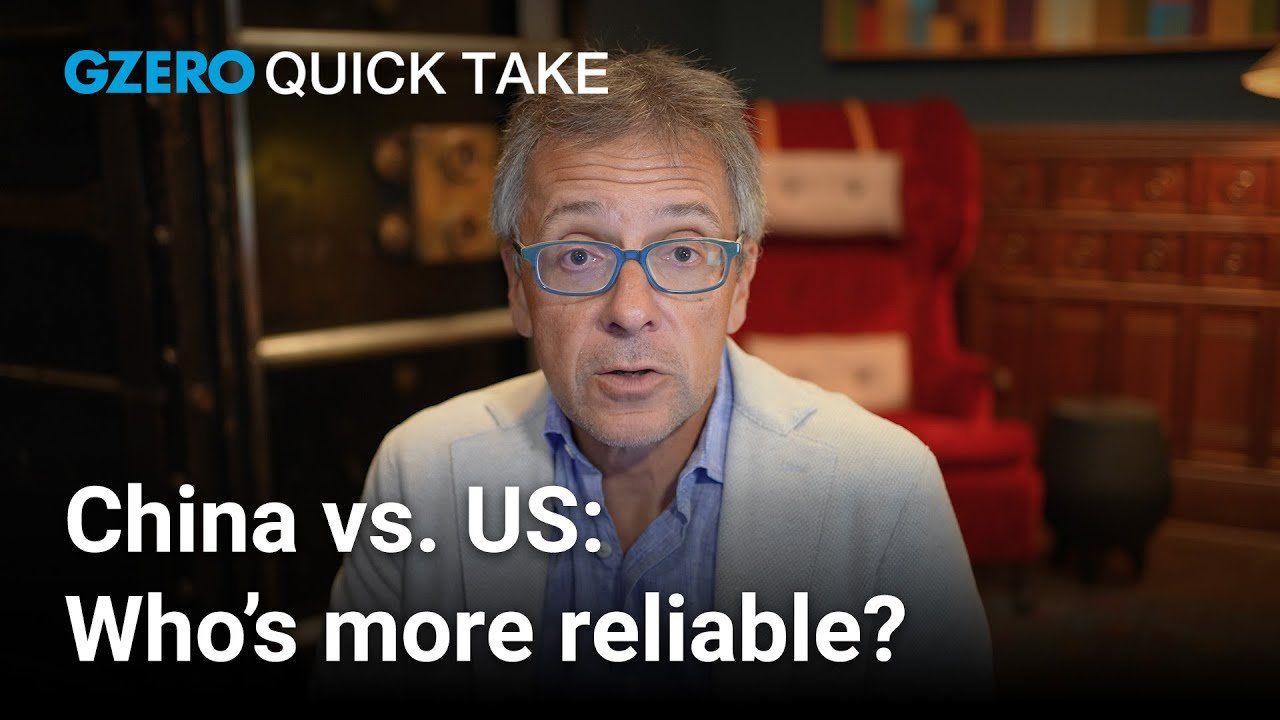
In his latest Quick Take, Ian Bremmer reflects on America’s role on the global stage.
“The United States is becoming less predictable, less reliable, at least in the eyes of non-American leaders,” he explains. That uncertainty has left countries hedging their bets, with China seizing the opportunity to present itself as the more stable long-term partner.
But Ian notes the limits: “These countries are not particularly aligned,” he says of members of the Shanghai Cooperation Organization, noting deep divides between China and India. Yet, US tariffs and unilateral policies are pushing even rivals to find common cause.
Reliability, Ian warns, matters more than unpredictability: “When countries around the world see that the United States is not a country they can rely on, they will make plans with those actors they feel they can.” And that, he says, “redounds to China’s benefit.”
More For You
U.S. President Donald Trump and Chinese President Xi Jinping talk as they leave after a bilateral meeting at Gimhae International Airport, on the sidelines of the Asia-Pacific Economic Cooperation (APEC) summit, in Busan, South Korea, October 30, 2025.
REUTERS/Evelyn Hockstein
China has defied Western sanctions for years and buys as much as 90% of Iran’s oil exports.
Most Popular
Sponsored posts
Show your undying devotion to The Regime
Sponsored posts
Invested in America’s curiosity
Think you know what's going on around the world? Here's your chance to prove it.
President Bola Tinubu faces strong headwinds in his bid for a second term.
Ukraine's Minister of Defence Mykhailo Fedorov speaks at a joint press conference with his Swedish counterpart Pal Jonson (not pictured), amid Russia's attack on Ukraine, in Kyiv, Ukraine, July 1, 2026.
REUTERS/Alina Smutko
Critics have said that Zelensky – now in his seventh year in office – has been in power for too long.
© 2025 GZERO Media. All Rights Reserved | A Eurasia Group media company.