News
Hard Numbers: EU bans (most) Russian oil, Israel-UAE trade deal, crowdfunded drone for Ukraine, Pokemon zero-COVID protest
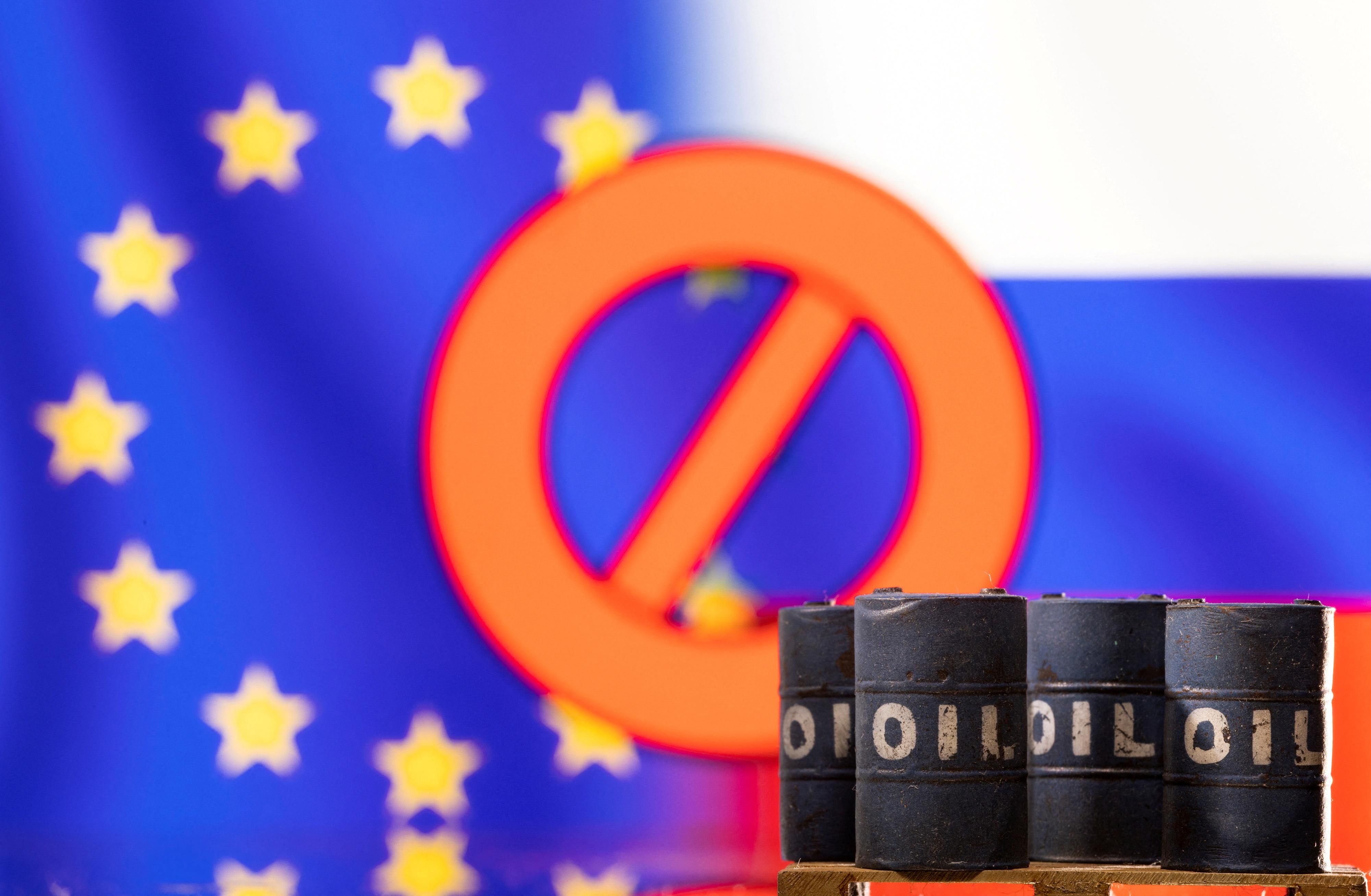
Models of oil barrels seen in front of a "stop" sign and the EU and Russia flag colors.
REUTERS/Dado Ruvic
2/3: After weeks of tense negotiations, EU leaders agreed late Monday to an embargo on two-thirds of the oil the bloc now imports from Russia. But there's a catch: holdout Hungary will likely get an indefinite exemption in order to drop its veto.
96: On Tuesday, Israel and the UAE will sign a landmark free trade agreement, Israel's first with an Arab country. The agreement will eliminate 96% of tariffs between the two countries, which normalized ties less than two years ago under the Abraham Accords.
5 million: Lithuanians chipped in 5 million euros ($5.4 million) in an online crowdfunding drive to buy a Bayraktar TB2 military drone for Ukraine. The Turkish-made UAVs are making a difference on the battlefield for the Ukrainians because they enable high-precision airstrikes.
200: A Pokemon character who always has a headache has become one of China's most in-demand toys because people are using it to vent about the government's zero-COVID policy. Plastic figures of Psyduck, given away in KFC children's meals, are being resold for $200 after going viral on social media.
This comes to you from the Signal newsletter team of GZERO Media. Subscribe for your free daily Signal today.
China has defied Western sanctions for years and buys as much as 90% of Iran’s oil exports.
Think you know what's going on around the world? Here's your chance to prove it.
President Bola Tinubu faces strong headwinds in his bid for a second term.
Critics have said that Zelensky – now in his seventh year in office – has been in power for too long.