Kim Jong Un to meet Vladimir Putin
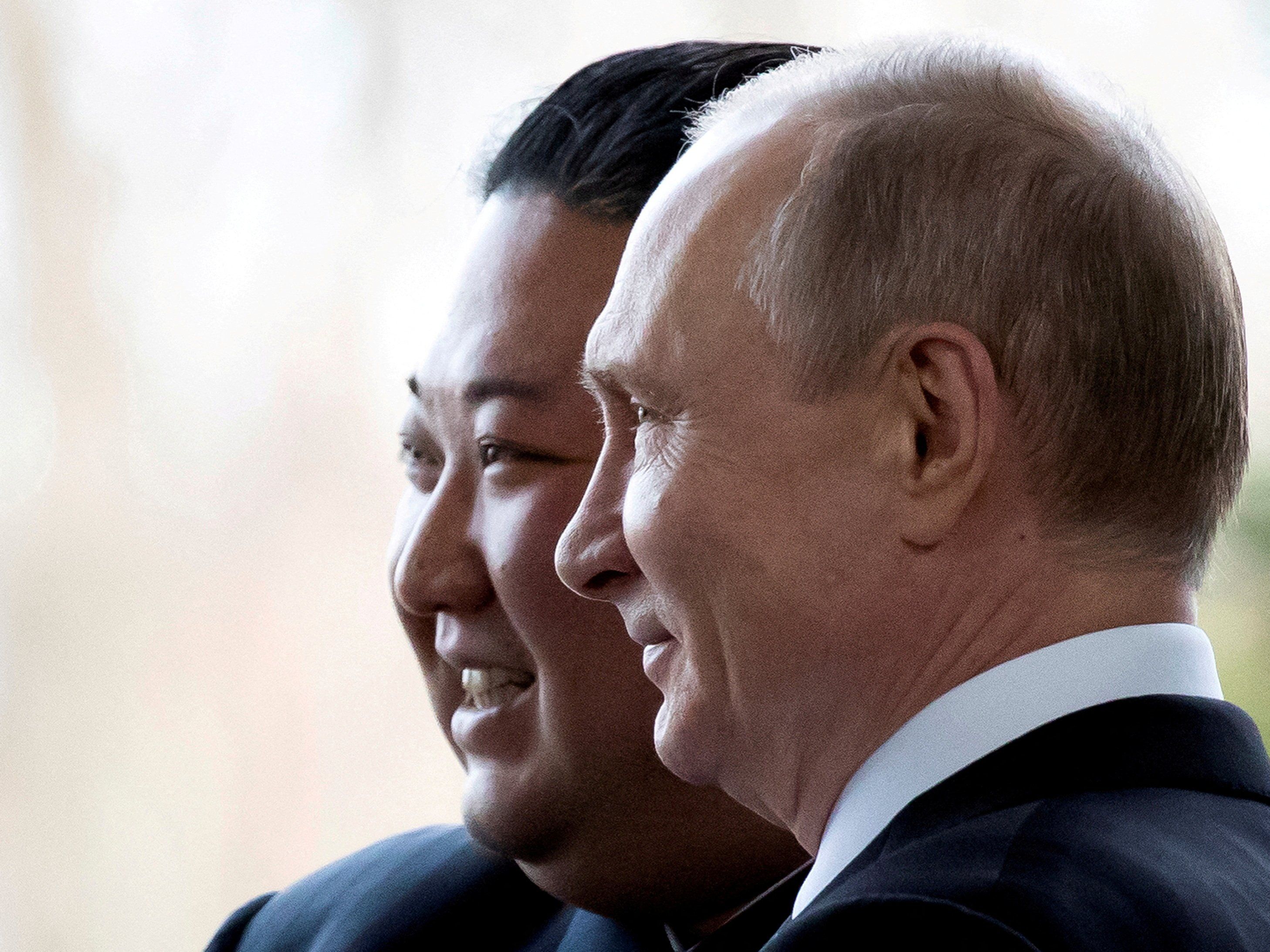
Russian President Vladimir Putin and North Korea's leader Kim Jong Un meet in Vladivostok, Russia, in 2019.
Alexander Zemlianichenko/Pool via REUTERS//File Photo
Russian President Vladimir Putin and North Korea's leader Kim Jong Un meet in Vladivostok, Russia, in 2019.
North Korea’s Kim Jong Un reportedly plans to travel to Russia this month to meet with Russian President Vladimir Putin and further discussions about Pyongyang providing Moscow with artillery shells and antitank missiles to aid its war in Ukraine. In exchange, Kim wants Russian technology for satellites and nuclear submarines — plus some food for his starving country. Officials say both men would attend the Eastern Economic Forum, Sept. 10-13, in Vladivostok.
The notion of these authoritarian leaders joining forces is a concern for Washington and could pose a challenge to the ongoing support the West is providing to Kyiv. The White House has not yet publicly discussed the planned meeting, but a US official has urged North Korea “to cease its arms negotiations with Russia and abide by the public commitments that Pyongyang has made to not provide or sell arms to Russia.”
We’ll be watching to see whether Kim really makes this rare trek outside North Korea and whether he and Putin make progress in striking a deal.
Think you know what's going on around the world? Here's your chance to prove it.
Critics have said that Zelensky – now in his seventh year in office – has been in power for too long.
Washington and Ottawa are down to the wire with last-minute talks to reach an agreement by 12:01 a.m. Wednesday, when President Donald Trump has threatened to impose 50% tariffs on over $20 billion of Canadian goods.
On Monday, public health officials said the virus had killed 2,325 people.