What We're Watching
Russia announces battlefield nuke drill
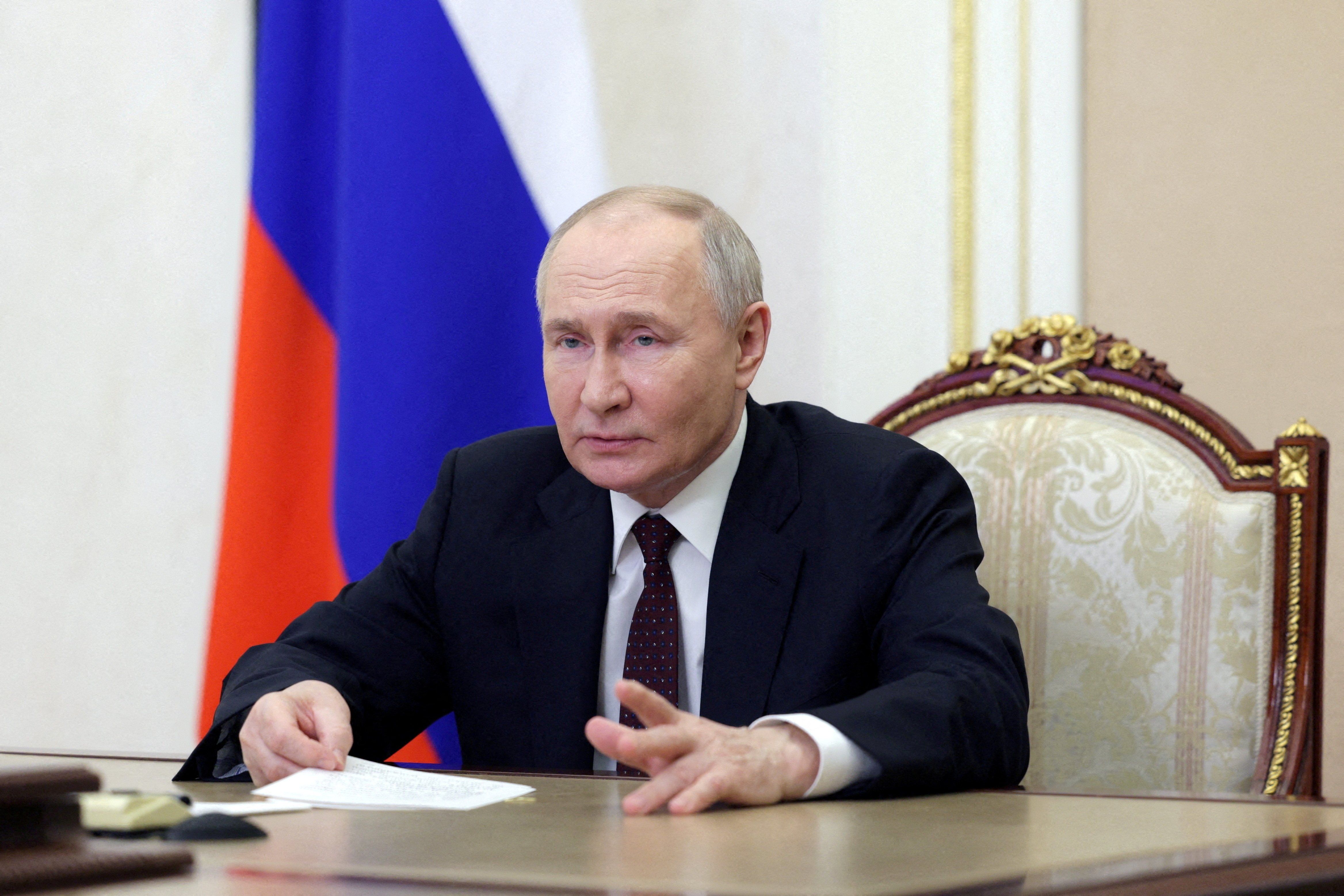
Russian President Vladimir Putin at the Kremlin in Moscow, Russia May 3, 2024.
Sputnik/Aleksey Babushkin/Kremlin via REUTERS ATTENTION EDITORS
It’s also a flex from Vladimir Putin ahead of his fifth inauguration as president taking place today and Thursday’s annual Victory Day celebration, which marks the defeat of Nazi Germany. This is the first time Russia has publicly announced drills that include so-called tactical nuclear weapons, which are far less powerful than warheads that can be fitted to intercontinental ballistic missiles.
Western governments will take this public threat seriously, but Russia’s use of these weapons remains highly unlikely. Putin knows that tactical nukes might well unite, rather than divide, Ukraine’s Western allies and sharply increase the risk that NATO fully enters a war that Russia can still win if it can isolate Ukraine further from its backers.
When eager minds need a weekend pass to an unforgettable museum, we are there. Learn more.
America used to be the anchor of the global humanitarian system, David Miliband tells Ian Bremmer on GZERO World, but after the US pullback of foreign aid, the world is confronting the consequences of what happens when that anchor is pulled up.
In the Pacific Northwest, acoustic monitoring is helping detect endangered southern resident orcas and alert nearby vessels in real time. By combining underwater sensors, edge computing, and AI, Microsoft and conservation partners are helping ships reduce noise and collision risks in critical feeding areas. The initiative offers a glimpse of how emerging technologies can support biodiversity conservation while balancing environmental and commercial interests. Read the full story here.
In his latest Quick Take, Ian Bremmer asks whether the United States should be pushing countries to choose between American and Chinese technology as the AI race accelerates.