GZERO North
The Graphic Truth: Tracking the Liberal comeback
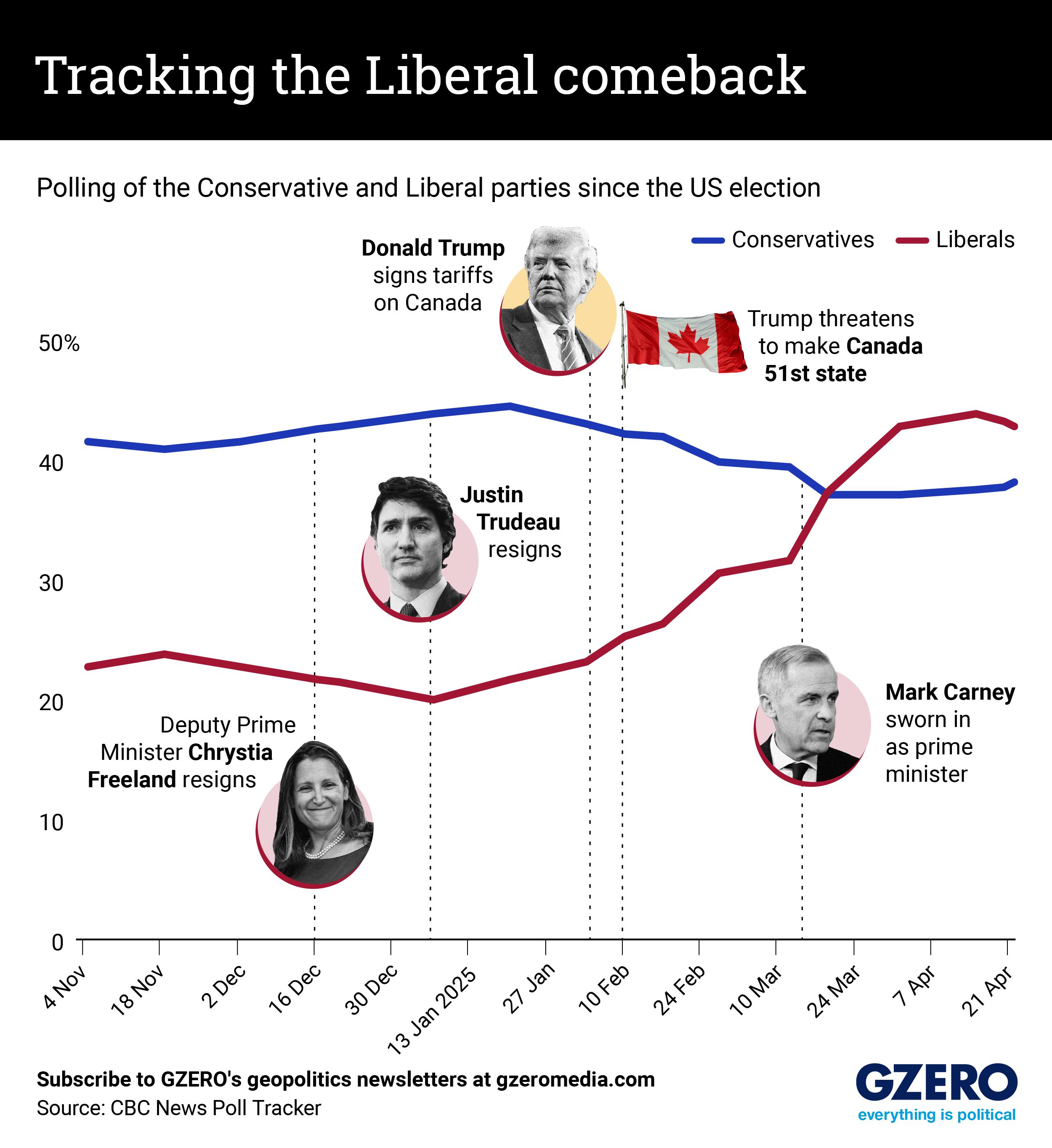
This Graphic Truth lays bare how a party in political freefall has roared back to life.
Annie Gugliotta
Despite the two parties narrowing by a point in the polls since they released their platforms this past week, looking at the arc of the race overall, it appears that the Conservatives peaked too early and the Liberals have made an impressive resurgence.
When Deputy Prime Minister Chrystia Freeland resigned — accusing the Liberal leadership of being unprepared to face the growing threat of Donald Trump — it sent shockwaves through the party and delivered a major blow to Justin Trudeau’s leadership. The Liberals were already tanking in the polls, and many saw no way back.
But since Trudeau stepped down, the party has been on a sharp upswing. Trump’s renewed threats against Canada have sparked a surge in Canadian nationalism — a momentum the Liberals have tapped into. It’s too soon to call the results, but as the election comes to a close, this Graphic Truth lays bare how a party in political freefall has roared back to life.
A Democratic sweep in 2026 could shake up Washington. Will it change Trump’s grip on power or set the stage for 2028? Amy Walter and Liam Donovan join Ian Bremmer on GZERO World.
With Trump's popularity sinking ahead of the midterms, Republicans face a difficult choice: embrace the president or distance themselves from him? Amy Walter and Liam Donovan explain how both parties are navigating the final weeks of the campaign.
With the midterms just weeks away, Democrats are hoping for a blue wave, while Republicans are fighting to hold onto Congress. Amy Walter and Liam Donovan join Ian Bremmer to break down the races, the issues driving voters, and what the results could mean for Trump's presidency.
With the midterms just weeks away, Democrats are eyeing control of Congress as Republicans struggle with the political fallout from the Iran war, rising prices, and Trump's unpopularity. Amy Walter and Liam Donovan join Ian Bremmer to break down what could happen in November and what it means for the future of both parties.