Last fall, Haiti created a transitional presidential council tasked with regaining control over the gang-ravaged Caribbean country and ushering in elections by February 2026. On Tuesday, the transitional government passed a law calling for elections in August, missing the original deadline but calming fears that leaders intended to indefinitely delay the vote to stay in power.
But calling an election and actually steering a country toward democracy are two very different challenges. Especially when gangs control an estimated 90% of the capital and are continuing to expand their influence across the country.
Gang violence, once concentrated in the capital Port-au-Prince, has spread deep into southern and central Haiti, particularly the Artibonite and Centre provinces. One in four people now live in gang-controlled neighborhoods. While it's impossible to know exactly how large the gangs are, Juan Marquez, head of the country office for UN Office on Drugs and Crime in Haiti says their ranks are rapidly outpacing the state’s security forces. “Poverty and inequality are major fuel for the population to end up joining gangs. It becomes a source of revenue for individuals who do not have any other kinds of livelihoods.”
The cascade of gang activity has left Haitians with fewer safe places to flee, made armed groups harder to police, and further eroded what remains of state authority. This weekend, one of the deadliest assaults of the year left half of central Artibonite under gang control. Survivors fled toward the coast, pleading for the government to intervene — or to arm them so they are able to defend themselves. Furious demonstrators later tried to storm the mayor’s office, vowing to “take justice into [their] own hands.”
"It's a natural response because at the end of the day,” Marquez said, “the state cannot be present in a lot of these territories so the communities are coming together to protect themselves although this might represent a risk for the future."
As state authority crumbles, criminal groups are filling the void. They have tightened their grip on key trade routes, allowing them to extort the population and drive up the cost of essentials like cooking fuel and rice. The result: more than half the country — about 5.7 million people — are facing severe food shortages. And with gangs now in control of ports and key strategic corridors, Marquez says that “transnational organized crime is fueling the security crisis,” turning the country into a hub for drug trafficking. A record 1,045 kilograms of cocaine was seized in July 2025, Haiti’s largest drug bust in over 30 years.
Meanwhile, The Department of Homeland Security announced that temporary immigration protections for Haitians in the US will end on Feb. 3, slating 348,000 people for deportation. Haiti was also included in the list of countries from which the US is pausing green card and citizenship applications.
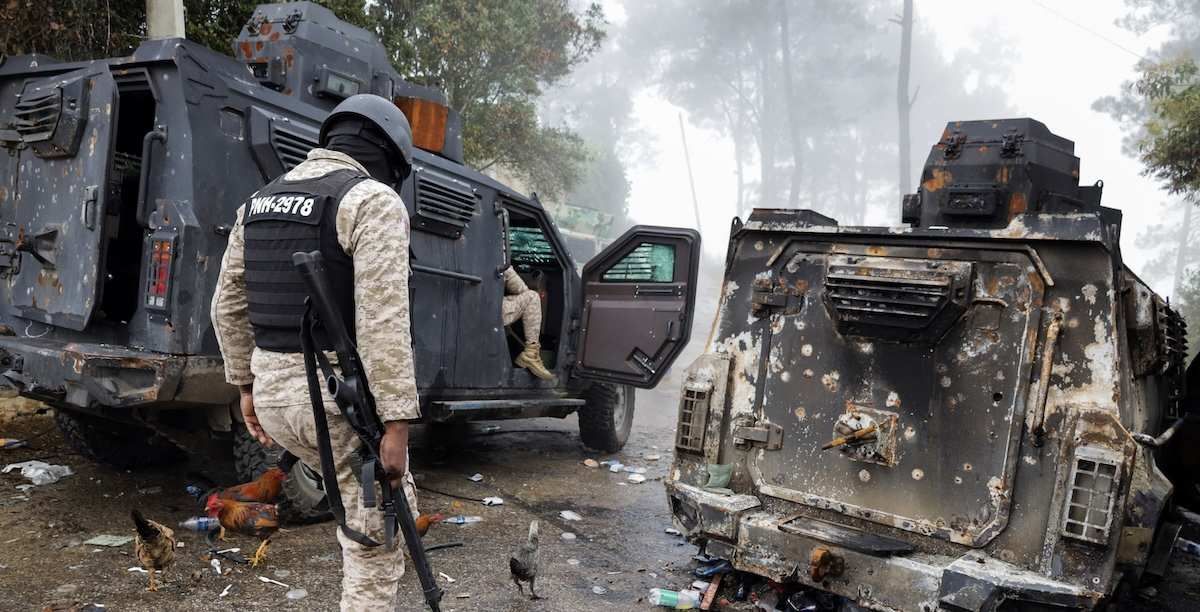
The international response has been insufficient. A UN-backed multinational mission led by Kenyan police deployed to Haiti last year to help confront the spiraling violence. But it remains understaffed and underfunded, with only about 40% of the 2,500 personnel originally envisioned.
With a depleted national police force, an underdeveloped army, and a multinational mission lacking sufficient resources, experts warn that gangs will continue to hold the upper hand without far stronger international backing. Until then, Haiti’s transitional government faces the monumental task of restoring security and delivering an electoral process in a country where Marquez says the very notion of state control is rapidly slipping away. "Little by little, the gangs have been gaining more leverage, more territorial control, and more fire power.”