October 07, 2025
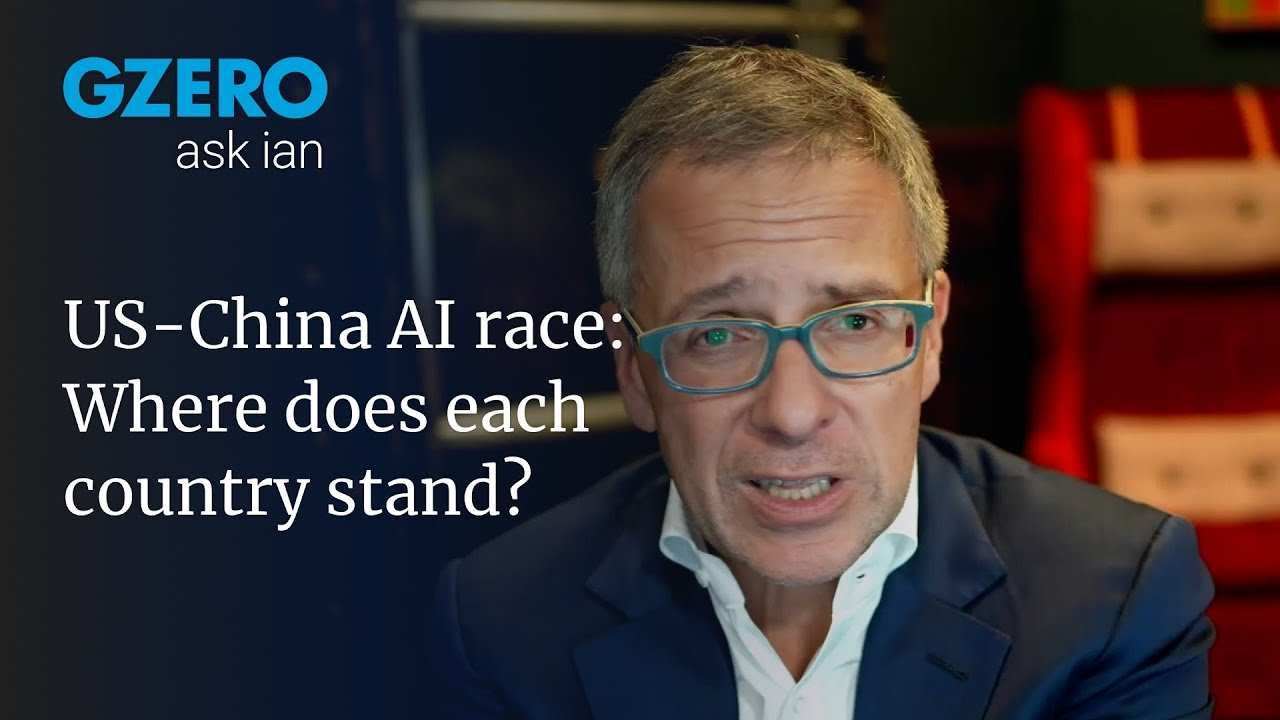
In this episode of "Ask Ian," Ian Bremmer explores the evolving AI landscape and competition between the US and China.
Both countries lead in AI capabilities but differ in strategy. The US focuses on developing foundational Large Language Models (LLMs), aiming for consumer engagement and significant valuation increases. In contrast, China seeks to deploy AI in core industrial sectors like biotechnology and space. Ian notes that China wants “more efficiency, they want better energy use.”
Ian also highlights a shift in US policy, citing Nvidia's deal with Trump on chip sales to China. He contrasts the geopolitical significance of TikTok to Trump's agenda with how Taiwan matters to Xi Jinping.
Lastly, Ian warns of societal risks due to AI's psychological impact, advocating for stringent regulations and cautioning against unchecked consumer AI deployment: "We need far better regulations, and we need far more safety for society and for our mental and emotional well‑being.”
More For You
Could Chinese AI give Europe an edge? | The Debrief with Heather West
Could China give Europe a shortcut in the AI race?
Europe has struggled to build models that compete with American and Chinese rivals. But Chinese models that companies can download, customize, and run themselves could offer another way forward—with more control over data and security.
Most Popular
- YouTube
With the midterms just weeks away, Democrats are hoping for a blue wave, while Republicans are fighting to hold onto Congress. Amy Walter and Liam Donovan join Ian Bremmer to break down the races, the issues driving voters, and what the results could mean for Trump's presidency.
With the midterms just weeks away, Democrats are eyeing control of Congress as Republicans struggle with the political fallout from the Iran war, rising prices, and Trump's unpopularity. Amy Walter and Liam Donovan join Ian Bremmer to break down what could happen in November and what it means for the future of both parties.
Since returning to power in 2025, the Trump administration has drastically changed the answer to this question, pursuing an ‘America First’ philosophy that is dramatically more transactional: the US will give you money, but you must give the US something valuable in return.
© 2025 GZERO Media. All Rights Reserved | A Eurasia Group media company.