GZERO World with Ian Bremmer Podcast
Where Trump-Musk bromance goes from here, with Semafor’s Ben Smith
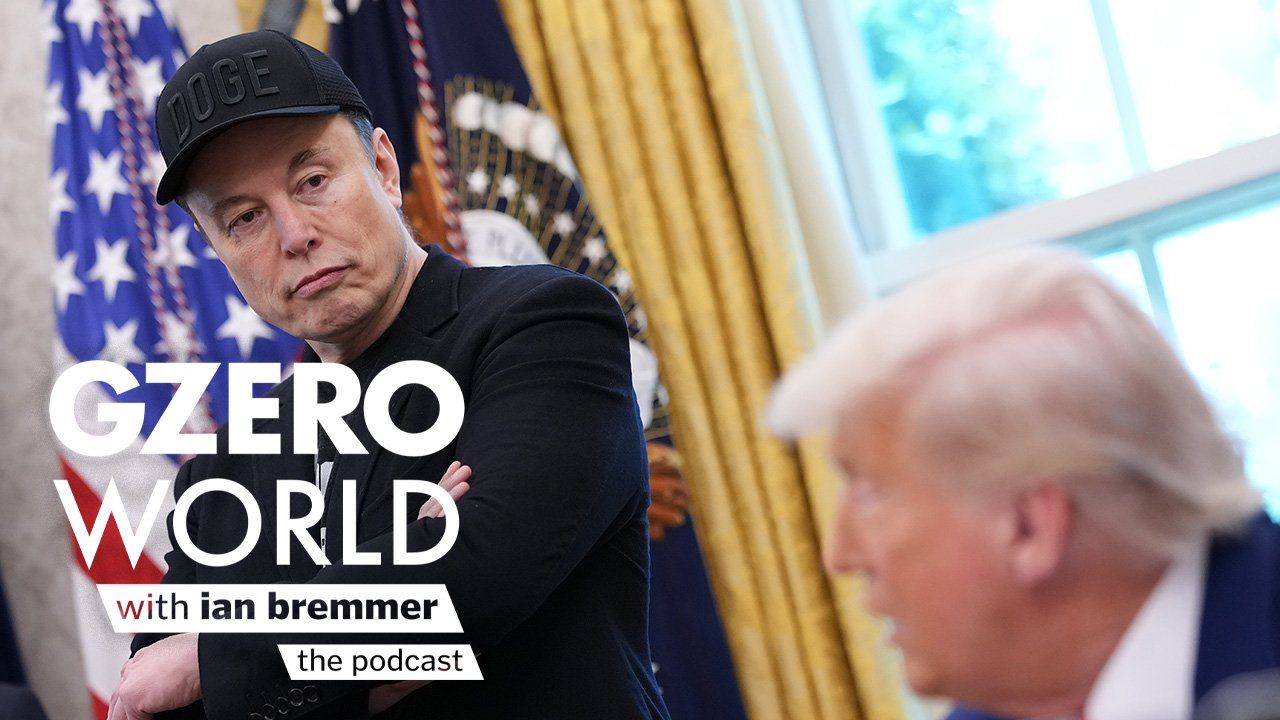
It was an extraordinary public fight between two billionaires—President Donald Trump, the world’s most powerful man, and Elon Musk, the world’s richest. On a special bonus episode of the GZERO World Podcast, Ian Bremmer sits down with Semafor co-founder and editor-in-chief Ben Smith to talk about Trump and Musk’s messy breakup, what led to the explosive public fallout, and whether there’s any chance of reconciliation.
Though their feud appears to be cooling down, there’s still a lot at stake for both men: namely, Musk’s political funding for the GOP ahead of the 2026 midterms and billions in government contracts and subsidies for his companies, which Trump has threatened to cancel. In the battle between politicians and tech oligarchs, who holds more power? Will President Trump’s ability to punish his enemies in consequential ways have long-term consequences for Musk? And how does a fight like this change the nature of political journalism when everything is happening in real time in full view of the public? Smith and Bremmer break down the end of the bromance that has defined President Trump’s second term and where the administration’s relationship with Silicon Valley goes from here.
Subscribe to the GZERO World Podcast on Apple Podcasts, Spotify, Stitcher, or your preferred podcast platform, to receive new episodes as soon as they're publishedAt the 2026 AI for Good Global Summit in Geneva, Robert Opp, Chief Digital Officer at the United Nations Development Programme (UNDP), explores whether artificial intelligence can help countries make progress amid growing development challenges and shrinking resources.
At the 2026 AI for Good Global Summit in Geneva, Switzerland, Frederic Werner, AI for Good co-creator and chief of strategic engagement at ITU, explains why optimism about artificial intelligence is growing across many developing countries even as skepticism rises in Europe and North America.
In his latest Quick Take, Ian Bremmer weighs in on President Trump’s intervention with FIFA after US star Flo Balogun received a red card suspension ahead of the team’s match against Belgium.
How do the choices of the past help us navigate the future? Microsoft's new video series explores pivotal moments in US history and the decisions that helped shape innovation, opportunity, and progress. By connecting historical turning points to today's technology and policy questions, the series offers a perspective on the choices that continue to shape what comes next. Watch the first episode here.