Search
AI-powered search, human-powered content.
scroll to top arrow or icon

What does it mean to be human in the age of AI

As AI becomes increasingly embedded in everyday life, a deeper question is emerging: What does it mean to remain human in a world shaped by technology? Speaking on a Global Stage conversation during the 81st UN General Assembly, Rev. Daniel G. Groody discusses the Borgo Dialogues, a forum designed to bring people together for conversations with “moral clarity, intellectual rigor and practical impact.”

Groody says the discussions are intended to create space to consider other ways of being human beyond a world increasingly shaped by technology and what Pope Francis called a “technocratic paradigm.” He also highlights Borgo Laudato Si’ as a place to reconnect with nature, beauty and community.

“I worry ... that we're reducing too much of what we are to algorithms and technology,” Groody says. He argues that humanity must not lose sight of “the mystery of love,” connection and communion as technology continues to evolve. This conversation is presented by GZERO Media in partnership with Microsoft.

The Global Stage series convenes global leaders for critical conversations on the geopolitical forces reshaping our world.
More from Global Stage

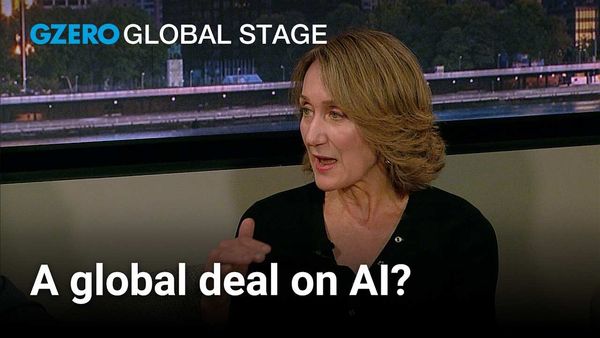
Is the world moving toward a global agreement on AI governance?

Could UNGA81 mark the beginning of a new global approach to governing AI? United Nations Foundation President and CEO Elizabeth Cousens says governments are rapidly recognizing the need to address AI safety, inequality, and access, and that the demand for international coordination is growing.

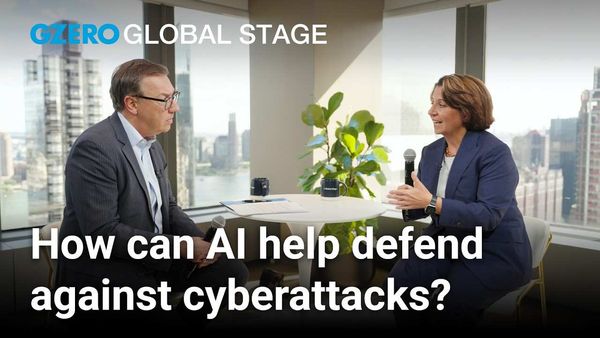
How can AI help defend against cyberattacks?

As AI reshapes the cyber threat landscape, governments and businesses are confronting new challenges around security, sovereignty, and resilience. Lisa Monaco, President of Microsoft Global Affairs, joins GZERO’s Tony Maciulis to discuss how AI is changing cybersecurity and the role of governments in defending against emerging threats.

How can AI enhance human progress?

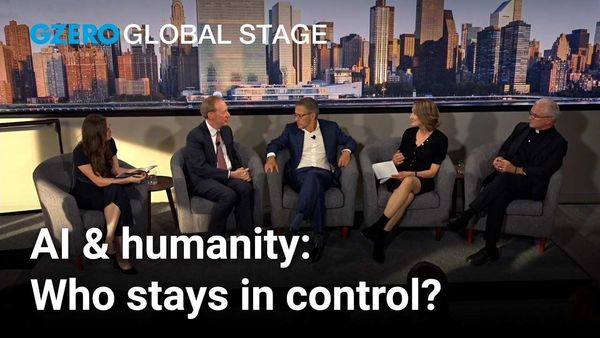
As artificial intelligence becomes more powerful and more deeply embedded in everyday life, how can we ensure it remains a tool for human progress, and under human control?

The real risk of AI is how humans use it

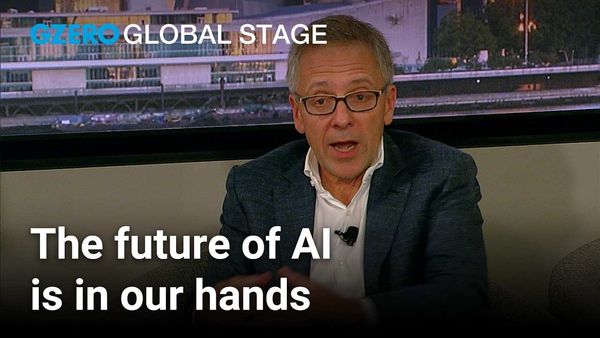
As the US and China race to develop and deploy AI, the biggest risks may come not from the technology itself, but from how humans choose to use it. Speaking on a Global Stage panel during the 81st UN General Assembly, Ian Bremmer examines how the AI race is reshaping geopolitics and changing perceptions of the technology.

AI’s role in wildfire detection, healthcare, and education

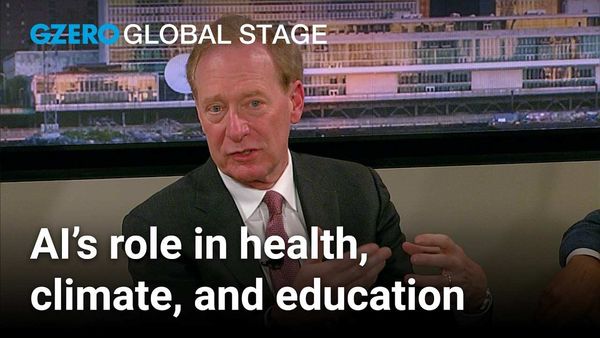
From detecting wildfires before they spread to giving doctors more time with patients, AI is opening new possibilities for how technology can serve the public good. Speaking on a Global Stage panel during the 81st UN General Assembly, Microsoft Vice Chair and President Brad Smith explores how AI is being applied across climate, health care, and education.

Can AI work for everyone? ITU’s Fred Werner on closing the global AI gap

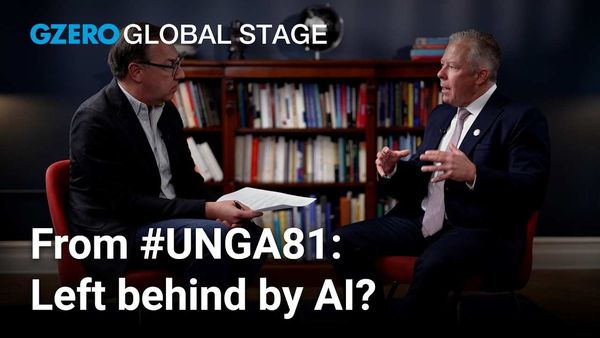
On the sidelines of the 81st United Nations General Assembly, GZERO Media’s Tony Maciulis sits down with Fred Werner of the International Telecommunication Union (ITU) to discuss the opportunities and risks shaping the next phase of artificial intelligence.