Skip to content
Search

Latest Stories

GZERO AI

Nvidia forges deals in American Southwest and Southeastern Asia

The NVIDIA logo seen at the American GPU manufacturer NVIDIA Taipei office.

The NVIDIA logo seen at the American GPU manufacturer NVIDIA Taipei office.

Walid Berrazeg / Hans Lucas via Reuters Connect
Nvidia, the world’s leading AI chip designer, has plans to expand its footprint both in the United States and around the globe.

The California-based chip giant is negotiating with Taiwan Semiconductor Manufacturing Company, or TSMC, the world’s top contract chipmaker, to manufacture its top-of-the-line Blackwell AI processors at TSMC’s Arizona facility. TSMC has invested billions to bring its high-tech manufacturing to the Southwest US, thanks in part to a $6.6 billion cash infusion from the Biden administration as part of the CHIPS and Science Act. Apple and AMD have reportedly already signed on to get their chips made in the Arizona plant when it starts production in the first half of 2025. That said, the chips won’t be entirely made in America: Final packaging is done back in Taiwan, which complicates and prolongs an already lengthy manufacturing process.

Halfway around the world, Nvidia CEO Jensen Huang met with the Thai and Vietnamese prime ministers last week as the company makes inroads in Southeast Asia. Nvidia also announced plans to establish Nvidia’s first research and development center in Vietnam, along with the acquisition of Vietnamese healthcare startup VinBrain for an undisclosed sum. In Thailand, the company signed a cloud deal with a company called SIAM.AI Cloud. Huang also emphasized the importance of “sovereign AI,” meaning that every country should have its own AI infrastructure and models.

In China, however, Nvidia is facing new scrutiny: The State Administration of Market Regulation is reportedly investigating whether the chipmaker violated antitrust laws when it acquired the Israeli-American company Mellanox in 2020. China previously gave conditional approval of the nearly $7 billion deal, but more than four years later, with the US restricting Nvidia from selling its most powerful chips to Chinese companies, the country is seeking new ways to gain leverage. A Nvidia spokesperson said the company is “happy to answer any questions regulators may have about our business.”


More For You

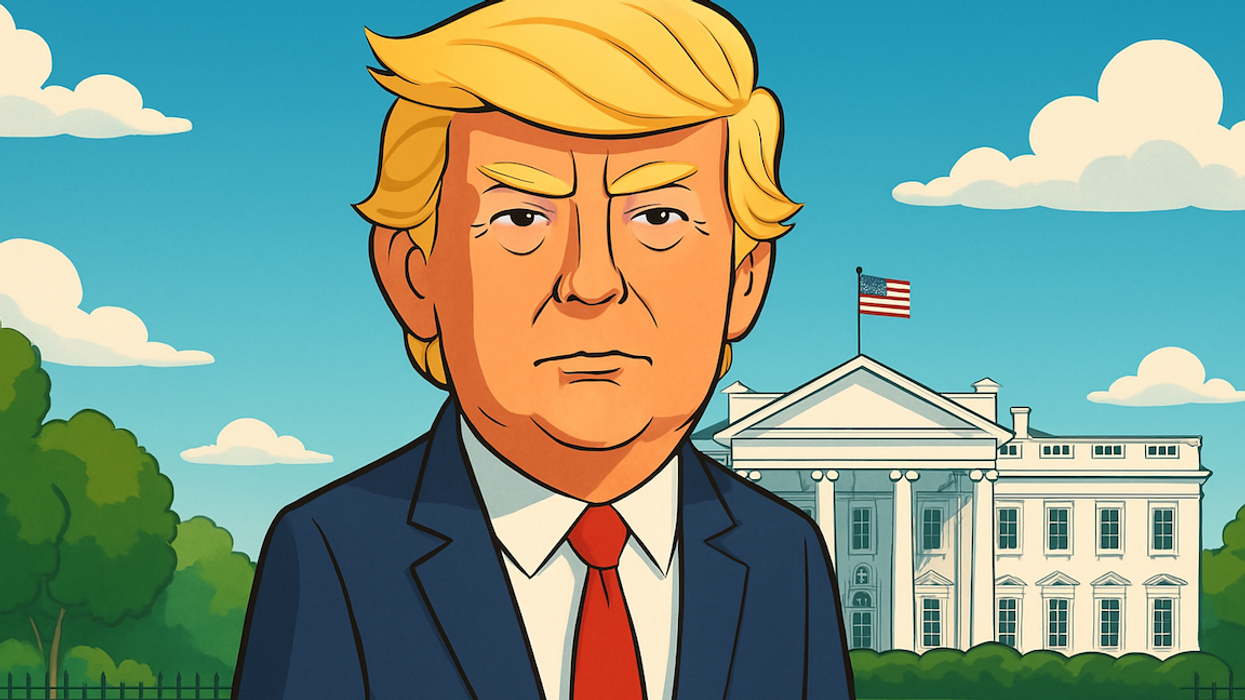
What we learned from a week of AI-generated cartoons
Courtesy of ChatGPT
Last week, OpenAI released its GPT-4o image-generation model, which is billed as more responsive to prompts, more capable of accurately rendering text, and better at producing higher-fidelity images than previous AI image generators. Within hours, ChatGPT users flooded social media with cartoons they made using the model in the style of the [...]
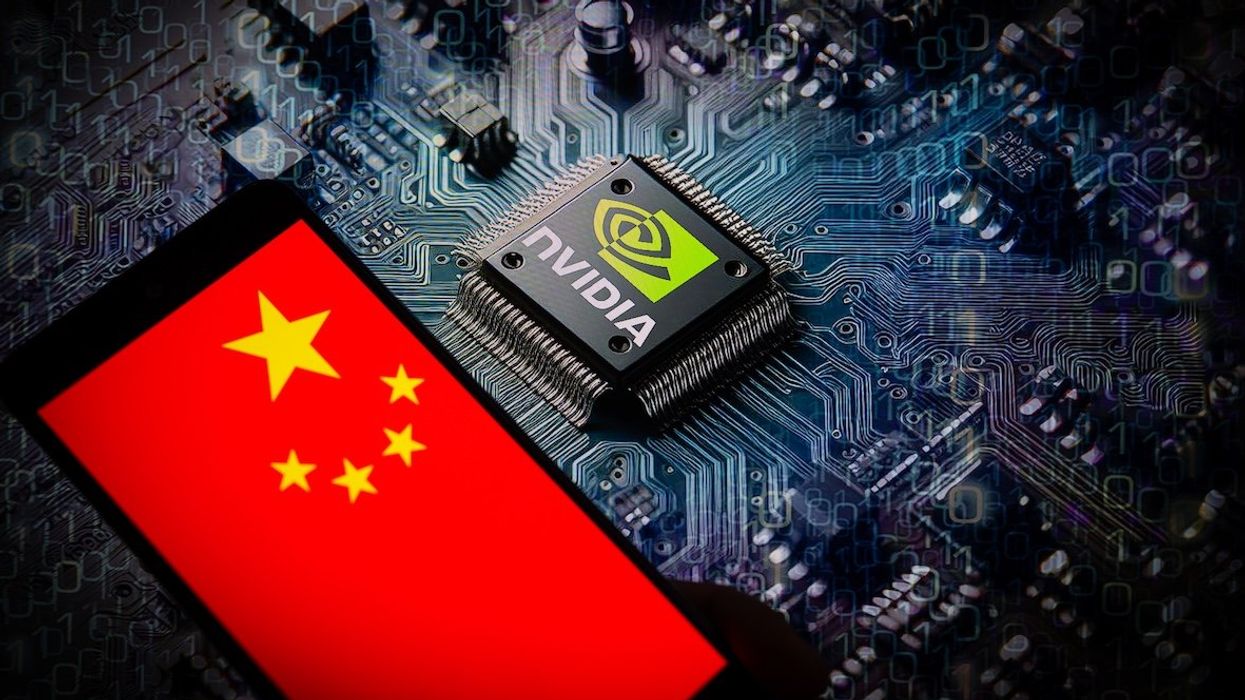
The flag of China is displayed on a smartphone with a NVIDIA chip in the background in this photo illustration.

The flag of China is displayed on a smartphone with a NVIDIA chip in the background in this photo illustration.

Jonathan Raa/NurPhoto via Reuters
H3C, one of China’s biggest server makers, has warned about running out of Nvidia H20 chips, the most powerful AI chips Chinese companies can legally purchase under US export controls. [...]
​North Korean leader Kim Jong Un supervises the test of suicide drones with artificial intelligence at an unknown location, in this photo released by North Korea's official Korean Central News Agency on March 27, 2025.

North Korean leader Kim Jong Un supervises the test of suicide drones with artificial intelligence at an unknown location, in this photo released by North Korea's official Korean Central News Agency on March 27, 2025.

KCNA via REUTERS
Hermit Kingdom leader Kim Jong Un has reportedly supervised AI-powered kamikaze drone tests. He told KCNA, the state news agency, that developing unmanned aircraft and AI should be a top priority to modernize North Korea’s armed forces. [...]
The logo for Isomorphic Labs is displayed on a tablet in this illustration.

The logo for Isomorphic Labs is displayed on a tablet in this illustration.

Igor Golovniov/SOPA Images/Sipa USA via Reuters
In 2024, Demis Hassabis won a Nobel Prize in chemistry for his work in predicting protein structures through his company, Isomorphic Labs. The lab, which broke off from Google's DeepMind in 2021, raised $600 million from investors in a new funding round led by Thrive Capital on Monday. The company did not disclose a valuation. [...]