It’s the moment he always knew would come. Eight months after the death of his mother, Queen Elizabeth II, King Charles III will be crowned at a coronation ceremony on May 6 – though he did officially become king at the time of her death. (And who could forget his first royal row with … a pen!)
It’s been hard to escape the spectacle of this event, Britain’s first coronation in 70 years. Some 2,200 people are expected to attend the ceremony at Westminster Abbey, while the broader three-day extravaganza will cost British taxpayers at least £100 million ($125 million) amid a painful cost-of-living crunch.
But for all the displays of pageantry to celebrate a king who most Brits feel little more than indifferent toward, the role of the British royal family is mostly symbolic, and the monarch’s powers are extremely limited.
Queen Elizabeth II, for her part, skillfully stayed above the fray of party politics during her seven decades on the throne. That will now be her son’s challenge. Still, when push comes to shove, power remains concentrated in the hands of Britain’s political class.
The same can’t be said, however, of other monarchies around the world that yield enormous power at home and abroad. Here are some of them.
Saudi Arabia: The buck stops with MBS
Saudi Arabia is an absolute monarchy, meaning that the king, who heads the House of Saud (royal family) also serves as or chooses the prime minister. Since the modern Saudi state was established in 1932, successive kings have amassed vast power, steering the oil-rich state’s domestic and foreign policies.
To be sure, a 150-person Consultative Assembly, tapped by the king and known as the Shura Council, is meant to serve as an advisory policy body, which includes the mandate of drafting legislation. In practice, however, the buck traditionally stops with the head of the monarchy.
Still, the royal who has yielded the most power in modern Saudi history is not actually a king. Crown Prince Mohammed bin Salman (known as MBS), the seventh son of King Salman bin Abdulaziz al-Saud, 87, has been the de facto leader of the petrostate for some six years, overseeing key portfolios, such as the economy, defense, and foreign policy.
And MBS is making big moves. At home, he oversaw a sweeping anti-corruption drive in 2017 that purged dozens of Saudi elites, while also reversing a ban on female drivers as part of the kingdom’s bid to diversify and modernize the Saudi economy.
Meanwhile, MBS – widely believed to have orchestrated the 2018 murder of journalist Jamal Khashoggi – has embarked on a combative foreign policy trajectory, including launching a war against Iran-backed Houthi militants in Yemen that’s turned into one of the world’s worst humanitarian crises.
Crucially, he also calls the shots over the Saudis' global energy policy, which has put him on a collision course with the Biden administration after he rebuffed Washington’s request to increase oil output to offset price increases caused by Russia’s war in Ukraine.
Thailand: The king isn’t messing around
Officially, Thailand – an absolute monarchy until 1932 – has a constitutional monarchy, meaning that the king should be removed from day-to-day politics. But throughout decades of political turmoil in the country, the monarchy has used oppressive tactics to amass unrivaled power over politics and society.
During his tenure, King Bhumibol (1950-2016) served as the final mediator of Thailand’s many coups d'état. The military has only gotten more beholden to the monarchy in recent years after King Vajiralongkorn, who assumed the throne after his father died in 2016, gave his blessing to current PM Prayuth Chan-ocha, a former general who seized power in a coup in 2014.
What’s more, Thailand has some of the world’s most draconian royal defamation laws, which sets out prison terms of up to 15 years for those who defame members of the royal family. Consider that in 2021, a former civil servant was given a 43-year sentence for criticizing the king on social media.
The monarch’s iron-fisted reign sparked one of the largest youth-led protest movements in Thai history in 2020 – with protesters flashing a three-finger salute of youth resistance popularized by the “Hunger Games” franchise.
On May 14, Thailand heads to the polls for the first time since those protesters rocked the country and dared to ask a long-taboo question: How much political power should the king have?
Eswatini: Africa’s last absolute monarchy
King Mswati III has ruled the landlocked African country of 1.1 million with an iron fist since he assumed the throne in 1986 at age 18 after his father, King Sobhuza II, died. (Fun fact: Mswati was the youngest of his father’s known 68 sons.)
While some members of parliament are elected by popular vote, political parties are banned from participating in elections in Eswatini, and the cabinet is appointed by the king.
The king, referred to as Ngwenyama, meaning “lion” in the Siswati language, yields complete power and tolerates no dissent. Consider that in 2018, Mswati decided on a whim to change the country’s name from Swaziland to Eswatini – and that was that.
And while he lives a life of luxury, most of the population lives in poverty. After years of economic ruin, around one-third of all Eswatinis are unemployed – while the country has the world's highest HIV rate for 15-49-year-olds.
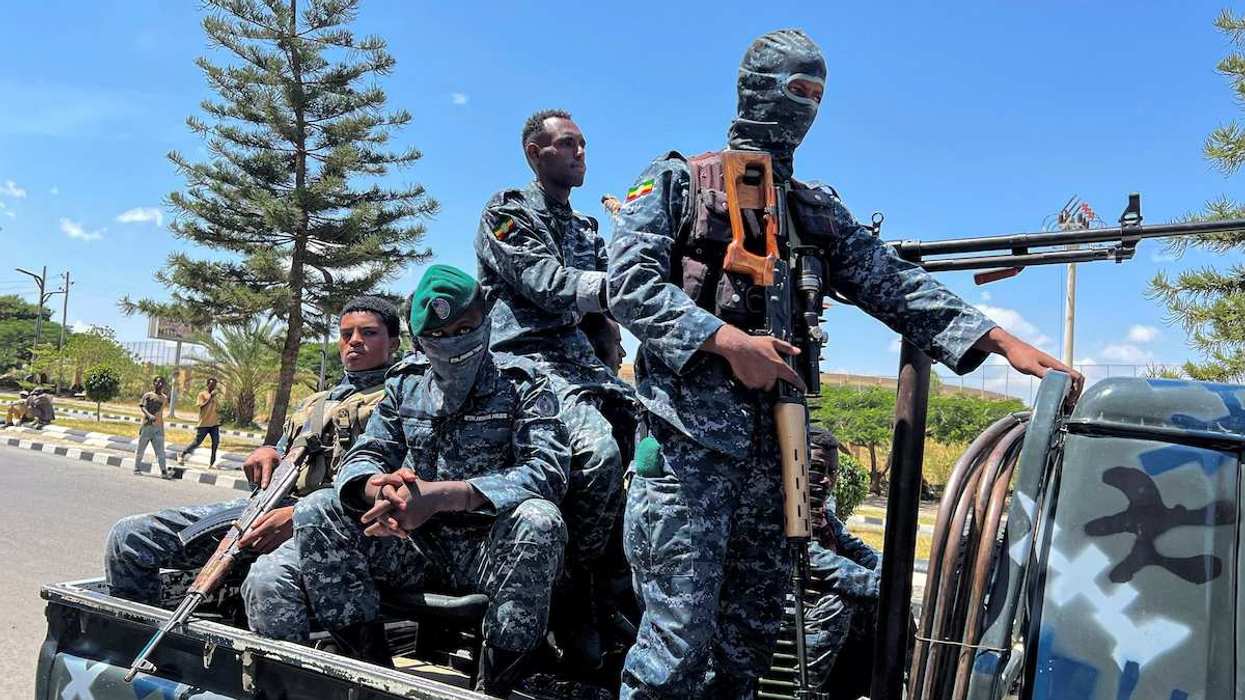
The brutal killing of a student at the hands of Mswati's security forces in 2021 gave rise to rare anti-royal protests in the country that left dozens dead after Mswati ordered security forces to fire at protesters.
In Eswatini, speaking out against the king is literally a matter of life and death.
Be sure to subscribe to GZERO Daily to get the world's best global politics newsletter every day.