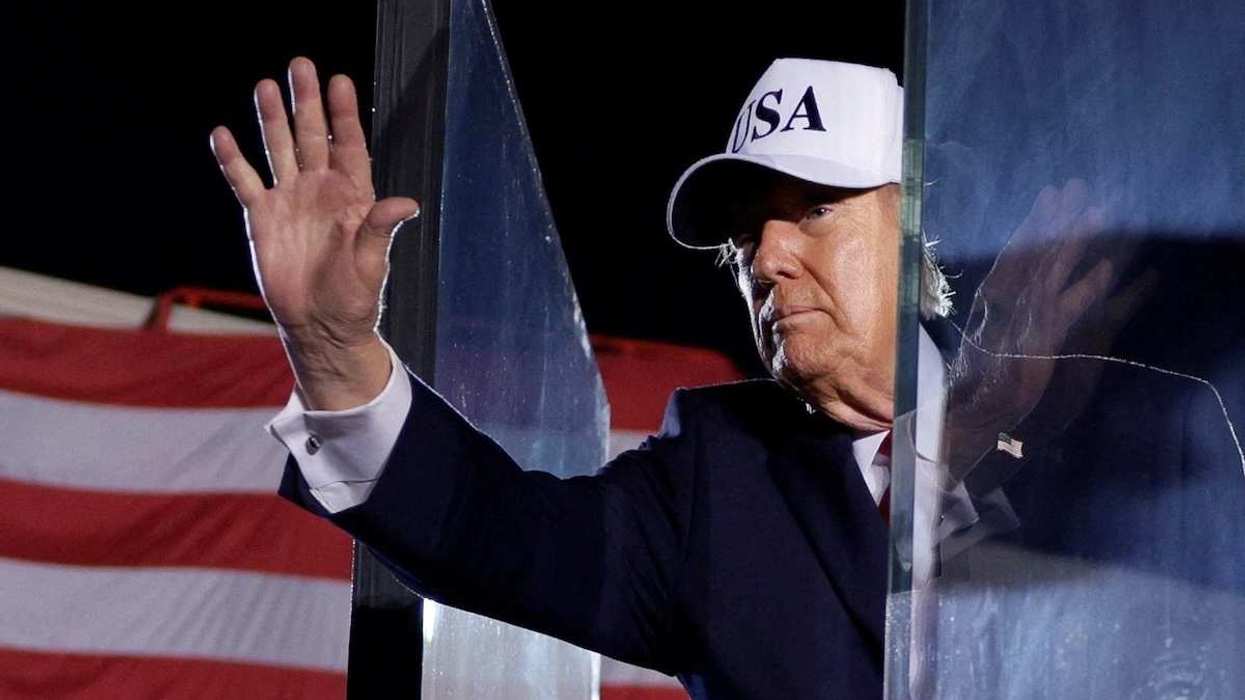
It’s a fascinating moment for world politics and global markets. Geopolitically, the world is in turmoil, primarily because the United States, still the superpower, has become a fundamentally unreliable actor. President Donald Trump is actively pulling apart the international order that Washington built and led over the past 80 years. Yet, financial markets are riding high – in the US, East Asia, South America, and much of Europe.
Are investors wrong? Or is the picture more complex? There are three prime forces that will shape the next several years for global politics and markets.
First, there are no political constraints on the accelerating development of artificial intelligence. This is the driving force behind the United States market rally and beyond, and for better and for worse, it’s set to continue virtually unchecked (the executive order that the White House issued this week only asks AI firms to voluntarily give the government oversight of new models). The most important technological revolution in history – which will create both extraordinary opportunities and unprecedented dangers – has arrived at a time of “geopolitical recession,” an historical moment when the existing global system is giving way to something new that we can’t yet see.
This intensifying breakdown in relations among governments will leave artificial intelligence with virtually no effective regulation. The companies that create and produce AI are now functioning as sovereign geopolitical players in their own right because their inventions will prove essential to our future security and prosperity. This is the law of the jungle applied to cutthroat (and exceptionally well-funded) technology competition – an AI “arms race” between the United States and China, but also among companies like OpenAI, Anthropic, and their competitors. The incentives for growth over caution are undeniable.
Second, the market effect of go-go AI growth will be offset by a continuing political tax on globalization. For half a century, the biggest driver of global economic growth was the American push for open markets to accelerate cross-border flows of ideas, information, people, goods, services, and – most importantly – capital. But the United States is no longer driving globalization. Instead, it is leading a push to insert political interests into trade and financial relationships for narrow political gain, forcing other governments to embrace protectionism as a way to preserve their own industries and workers. (Trump has intensified this trend, but he didn’t create it. America’s Democrats were backing away from trade before the president came down the golden escalator at Trump Tower.)
The result is a profound shift from positive-sum to zero-sum thinking on global economics as other governments respond to US trade pressure. Some countries remain reluctant to scrap globalization, and we’ve seen breakthrough trade agreements involving the EU, India, the South American bloc Mercosur, China, Canada, and others. But the global trend toward politically-inspired protectionism remains the rule.
Third, the world is producing more “tail risks,” high-stakes dangers that remain unlikely – but are no longer as improbable as they once were. An unreliable superpower forces its traditional allies to hedge their security and economic bets as rivals test to see what has become possible. Greater friction among governments makes international problems more difficult and costly to resolve.
Take the US-Israeli war with Iran. President Trump’s decision to attack Iran was born of overconfidence, but also from the breakdown in US relations with its allies – Europe, for example, had no influence on Trump’s decision-making, and wasn’t even informed of the strikes beforehand. The result was the most impactful trade disruption since the pandemic. The war has not yet triggered a global economic recession, but whatever happens with the near-term future of the Strait of Hormuz and the possible opening of yet another round of negotiations over Iran’s nuclear program, the risk that this war could reignite at any time will remain elevated, with even larger global implications in the next round. More broadly, a more dangerous Middle East, with more space for rogues to operate and fewer constraints on American retaliation, will embolden more actors – whether militant groups like the Houthis in Yemen, or terrorist groups like IS and its descendants, or lone wolves empowered by dangerous new technologies.
There are other globally consequential, geopolitically-induced tail risks. At the moment, it appears Ukraine has built some momentum in its war with Russian invaders, leaving Vladimir Putin in an increasingly dangerous isolation. The closer this war comes to humiliation for the Kremlin, the greater the risk that a desperate Putin might turn to a tactical nuclear strike on Ukraine or more aggressive and direct attacks on frontline NATO countries to change the game. These outcomes are made more plausible by the recent White House decision to renounce any role in brokering an end to the fighting. None of these dangerous scenarios is likely, but all are more likely than many are willing to admit.
Those are just the risks that are already visible. A lack of governance on AI and other new weapons of war will make any future conflict less predictable and more dangerous. The absence of coordination on global health, with the US government less willing to lead and the World Health Organization with fewer resources, makes a future pandemic more likely to develop and less likely to be contained.
In short, the technological breakthroughs that have markets surging are likely to continue, but the risk of large-scale disruption is rising too. That will make the next several years as exceptionally difficult to forecast as any moment in living memory.