
Skip to content
Search

Latest Stories

The United States will no longer play global policeman, and no one else wants the job. This is not a G-7 or a G-20 world. Welcome to the GZERO, a world made volatile by an intensifying international battle for power and influence. Every week on this podcast, Ian Bremmer will interview the world leaders and the thought leaders shaping our GZERO World.

Presented by

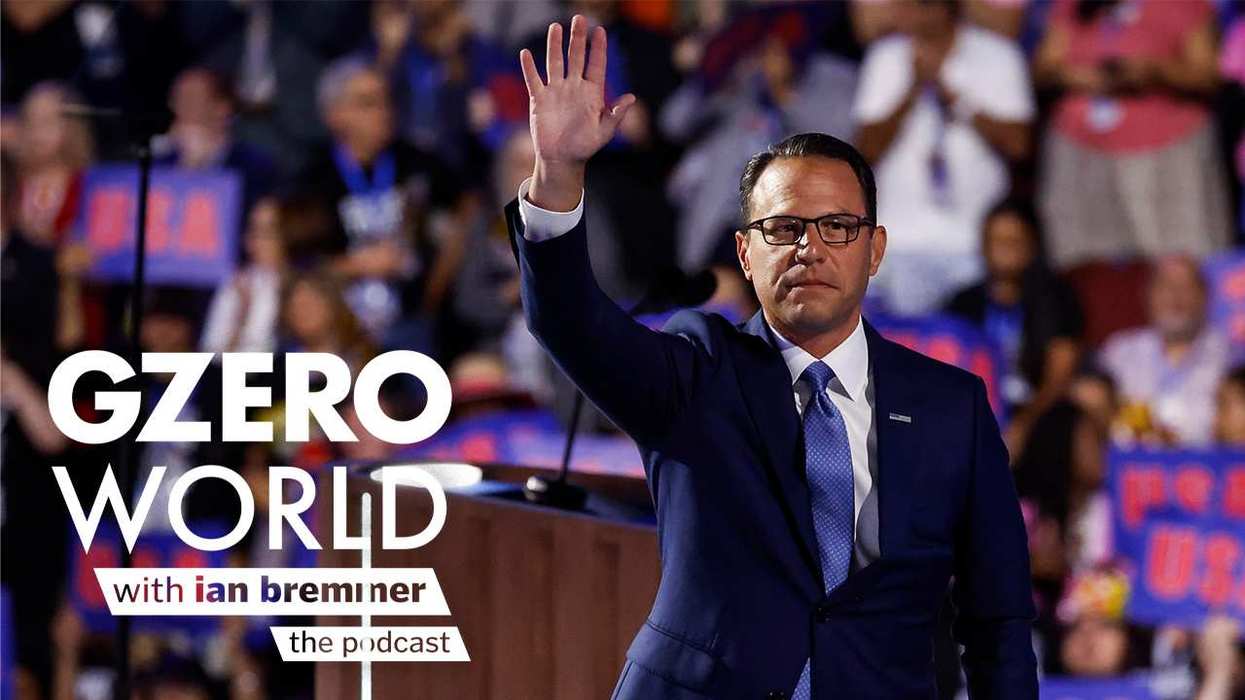
Governor Josh Shapiro at a rally

The future of the Democratic party, with Josh Shapiro


As Democrats search for a path forward after 2024, Pennsylvania Governor Josh Shapiro argues that voters aren't looking for more political rhetoric - they're looking for results.

What can Democrats learn from winning in America's ultimate swing state? On the latest episode of the GZERO World podcast, Ian Bremmer sits down with Pennsylvania Governor Josh Shapiro to discuss the future of the Democratic Party, the growing crisis of trust in American institutions, and the biggest challenges facing the country at home and abroad.


The conversation spans a wide range of issues: the future of North American trade and USMCA, the economic impact of tariffs, the war in Iran, changing US policy toward Israel, and the challenge of regulating artificial intelligence without stifling innovation. Shapiro also explains why he believes government must play a more active role in overseeing emerging technologies and protecting the public from the risks posed by AI.

Throughout the discussion, Shapiro returns to a theme that has defined his time as governor: trust is earned through results. Whether the issue is economic opportunity, public safety, education, healthcare, or foreign policy, he argues that voters want leaders who can solve problems and improve people's lives.

As speculation continues about the next generation of Democratic leadership, Shapiro offers a window into how one of the party's most closely watched figures thinks Democrats can win again, and what government must do to earn back the public's trust.
More from GZERO World Podcast

The human cost of Iran's war, with Yeganeh Torbati

Iran’s government emerged from the war with a powerful new story to tell: it withstood attacks from the United States and Israel, kept its grip on power, and gained fresh leverage in the region. But that is not how the conflict looks from inside the country.

For ordinary Iranians, the conflict has brought more fear, deeper economic pain, and little sign that the political change many hoped for is any closer. The protest movement that shook the country has been pushed underground by a brutal crackdown, while the government uses internet restrictions to make it harder for people to organize, communicate, and show the world what is happening.

On the latest episode of the GZERO World podcast, Ian Bremmer speaks with New York Times Iran correspondent Yeganeh Torbati about life inside Iran during the war. They discuss why Tehran feels more emboldened, how ordinary people are navigating repression and a worsening economy, why some Iranians feel betrayed by Donald Trump’s promises of support, and whether the frustrations that drove millions into the streets could eventually erupt again.

Iran’s regime has survived the war, but ordinary Iranians are still living with fear, repression, and a collapsing economy. Yeganeh Torbati joins Ian Bremmer to explain what comes next for the people... More >

America at 250: Patriotism, Trump, and America's future, with Bill Maher

America turns 250 at a time when even celebrating the country can feel political. In the latest episode of the GZERO World podcast, Ian Bremmer sits down with comedian and political commentator Bill Maher to discuss patriotism, polarization, and the arguments Americans are having over what their country represents.

Keep reading... Show less

As America marks its 250th birthday, Bill Maher joins Ian Bremmer to discuss patriotism, political division, Donald Trump, and why the country is still worth celebrating.... More >

World Cup politics, with the Financial Times' Simon Kuper

The World Cup arrives in North America this week, bringing with it billions of viewers, billions of dollars, and no shortage of political controversy. But according to Financial Times columnist Simon Kuper, none of that is new - the tournament has always reflected the world around it.

Keep reading... Show less

The World Cup is the planet's biggest sporting event, and the most political one. This year, it will also be the most profitable spectacle of all time.... More >

The Supreme Court's biggest tests ahead, with Emily Bazelon

From birthright citizenship to the independence of federal agencies, the Supreme Court is poised to decide a series of cases that could redefine the balance of power in Washington. Yale legal scholar and New York Times Magazine staff writer Emily Bazelon joins Ian Bremmer to assess what's at stake and whether the judiciary remains an effective check on presidential authority.

Keep reading... Show less

The Supreme Court is facing some of the biggest legal and political questions of the Trump era. Emily Bazelon joins Ian Bremmer to break down the rulings that could reshape executive power, voting... More >

GZERO Podcasts

Iran’s regime has survived the war, but ordinary Iranians are still living with fear, repression, and a collapsing economy. Yeganeh Torbati joins Ian Bremmer to explain what comes next for the people... More >

Listen: What does global energy transition look like in a time of major geopolitical change, including rebalancing of trade? In this special episode of "Energized: The Future of Energy,” host JJ... More >

Creating artificial human retinas in zero gravity. Mining rare minerals on the moon. There seems to be no limit to what could be possible if we continue to take our more important industries to... More >

More than half of Americans believe their job is vulnerable to AI. The data tells a more complicated and in some ways more hopeful story.... More >

In this episode of The Ripple Effect: Investing in Life Sciences, host Dan Riskin speaks with Patrick Horber, President of Novartis International, and David Gluckman, Vice Chairman of Investment... More >