Skip to content
Search

Latest Stories

wolfgang ischinger

Next steps for a world at a make-or-break moment: Davos 2022
GZERO World with Ian Bremmer

Next steps for a world at a make-or-break moment: Davos 2022

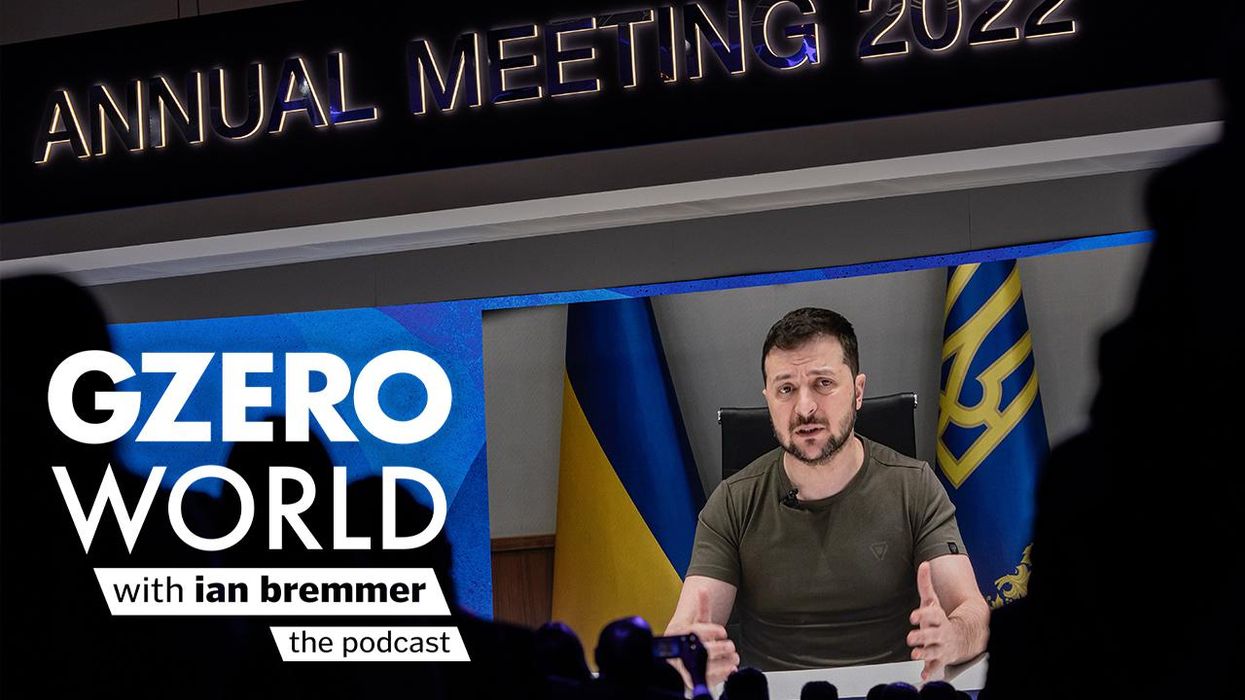
For years, titans of industry and government have visited the tiny alpine village of Davos in Switzerland to discuss how to fix the world's problems. They pushed a globalist agenda, promoting things like liberal democracy and cooperation to address big problems like climate change. But fewer people are buying what Davos is selling in 2022. Blame the pandemic and Russia's war in Ukraine. So, what were the main takeaways at this year's geopolitical WEF?

Podcast: When allies unified by Ukraine confront upended security & war fatigue
GZERO World with Ian Bremmer Podcast

Podcast: When allies unified by Ukraine confront upended security & war fatigue

Listen: At the 2022 World Economic Forum in Davos, Switzerland, it was clear that history is at a turning point, with a war in Europe whose cascading impact can be felt all over the globe. Ian Bremmer speaks to thought leaders at Davos on the GZERO World podcast.

Highlights from Davos 2022
Global Stage

Highlights from Davos 2022

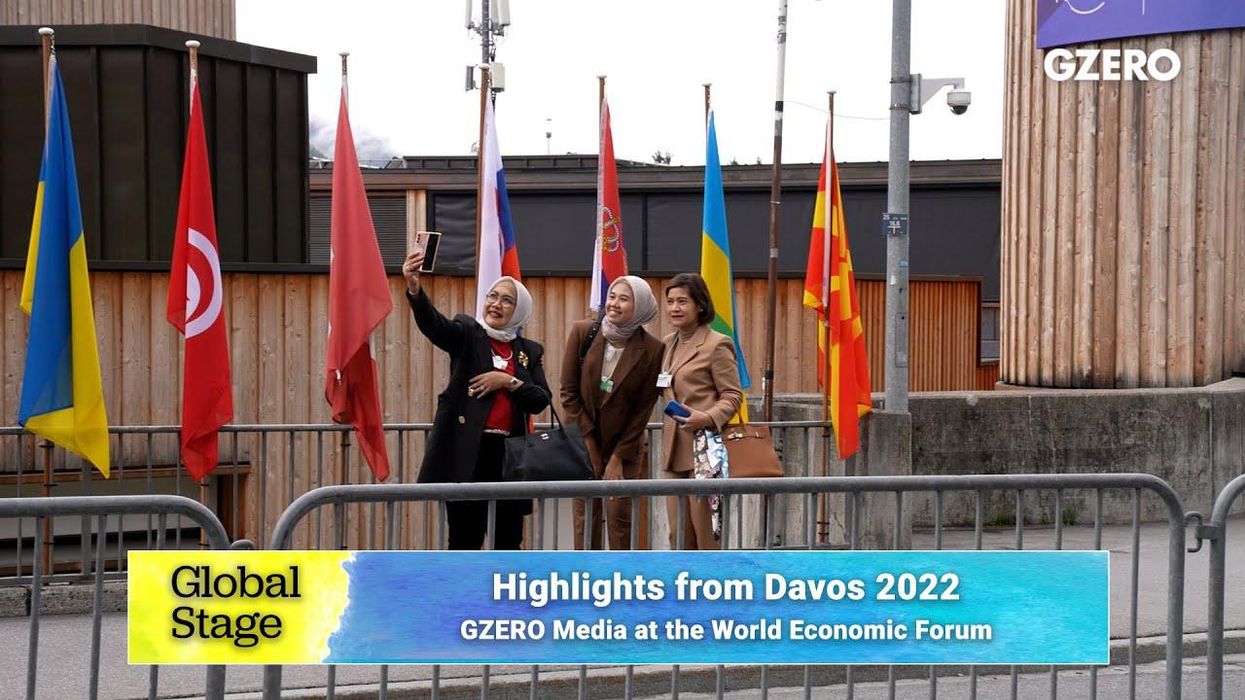
World leaders gathered this week in Davos, Switzerland, for the World Economic Forum at a moment of heightened global uncertainty. Three months into the Russian war in Ukraine, the conflict seems no closer to resolution. A global food crisis — made worse by the war — is putting more than a billion people at risk of food insecurity. Meanwhile, cyberattacks and misinformation continue to wreak havoc around the globe. The world faces many dangerous challenges, but the biggest one may be this: “you can’t solve a problem unless you agree on what the problem is,” says GZERO’s Ian Bremmer.

Wolfgang Ischinger: Ukraine made German foreign policy go "out the window"
Crisis Recovery

Wolfgang Ischinger: Ukraine made German foreign policy go "out the window"

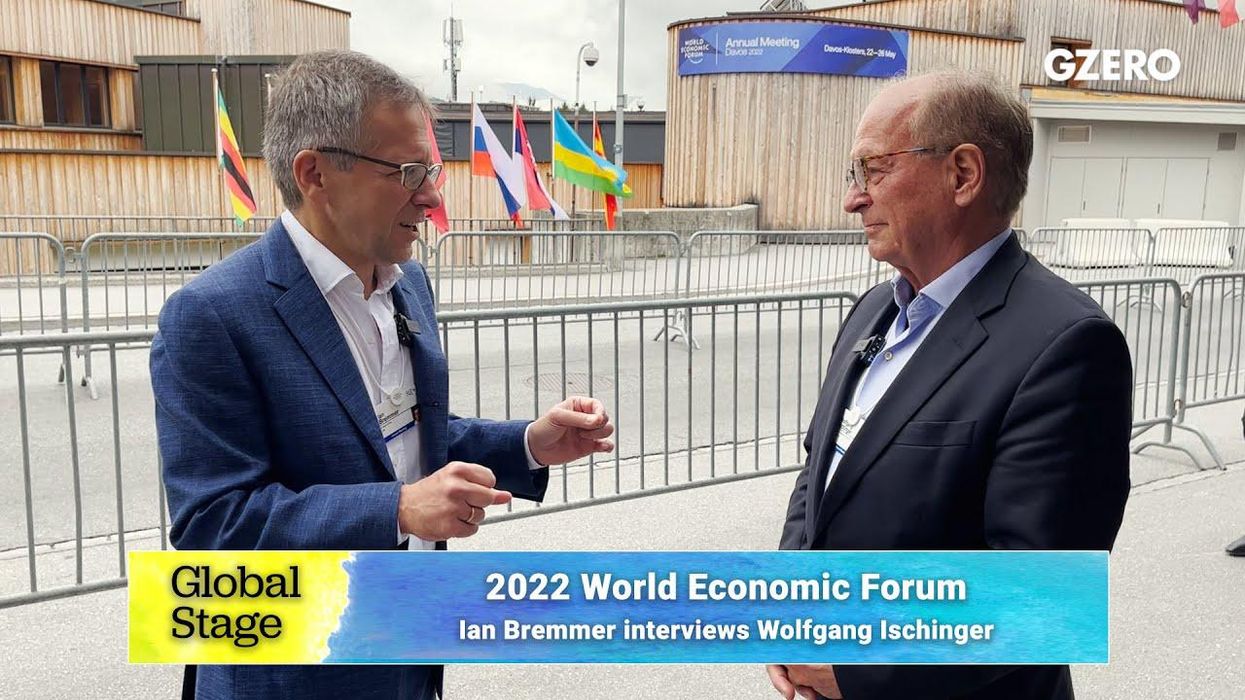
For Wolfgang Ischinger, former chair of the Munich Security Conference, the state of transatlantic relations is in good shape right now, although whether we'll have the stamina to stay on course is uncertain. In a Global Stage interview with Ian Bremmer, he seems more worried about American war fatigue than the Europeans — although the EU has Viktor Orbán and it's hard for Germany to cut off Russian gas. One lesson Ischinger has learned from the current crisis is that Europe must have America's back on China, especially with Taiwan. And he calls German Chancellor Olaf Scholz's recent foreign policy U-turns as "going out the window."

Highlights from our live conversation on cybersecurity challenges
Digital Governance

Highlights from our live conversation on cybersecurity challenges

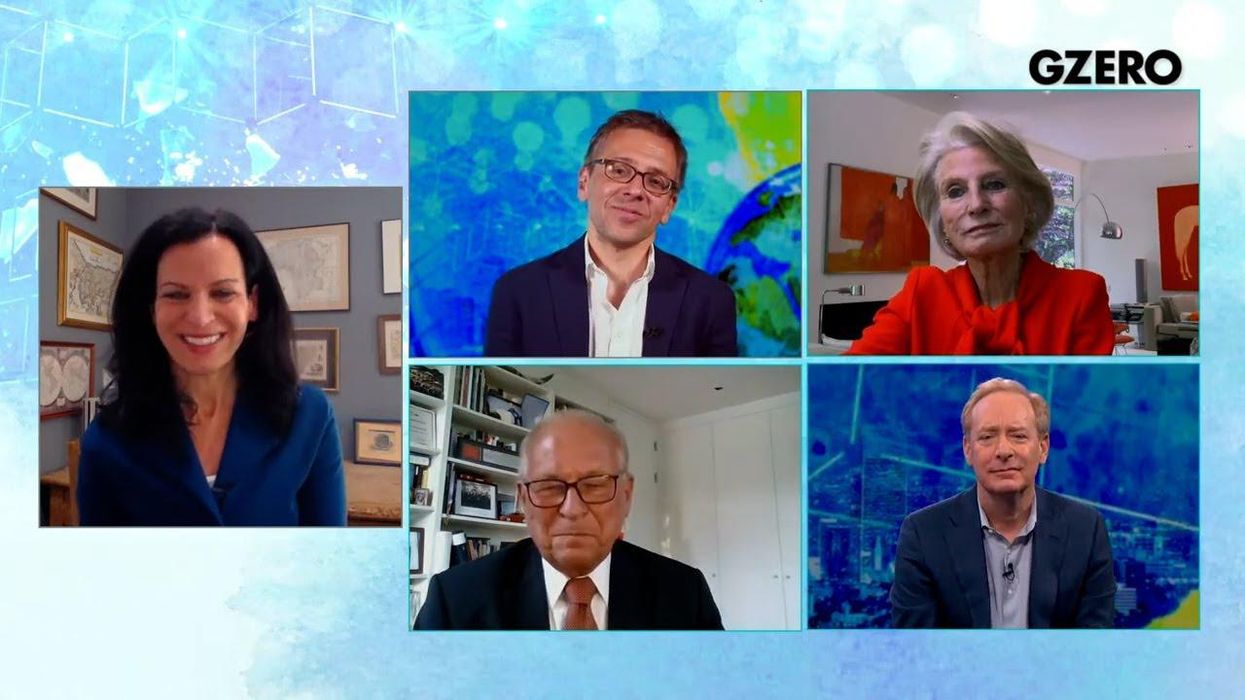
Here are a few highlights from our May 18 Global Stage event, "Beyond SolarWinds: Securing Cyberspace," hosted by GZERO Media and Microsoft, and held in collaboration with the Munich Security Conference as part of their "Road to Munich" series. Watch more at https://www.gzeromedia.com/global-stage/.

A (global) solution for cybercrime
Events

A (global) solution for cybercrime

There is no longer a distinction between cyber and physical security. The world runs on tech, so people are right to worry about it, Microsoft President Brad Smith said during a livestream discussion on cybersecurity hosted by GZERO Media and Microsoft. The conversation, "Beyond SolarWinds: Securing Cyberspace," held in collaboration with the Munich Security Conference as part of their "Road to Munich" series, was moderated by former US Homeland Security senior official Juliette Kayyem.

Wolfgang Ischinger: "Europeans don't even trust their own governments"
Posts

Wolfgang Ischinger: "Europeans don't even trust their own governments"

In a discussion about cyber security and data privacy, Wolfgang Ischinger, Chairman of the Munich Security Conference, shared concerns that the public in Europe have a deep distrust of governments and the private sector. "Europeans across the board, don't even trust their own governments. They don't trust their own companies. They trust them a little more than they trust the American government and American companies," he explained, referencing recent polling data. "But the really worrisome thing is that they mistrust Americans almost as much, as you just pointed out, as they mistrust the Chinese."

Quick Take: "America Is Back": Biden on Munich's virtual tour
Quick Take

Quick Take: "America Is Back": Biden on Munich's virtual tour

Ian's Quick Take: If it was any other year, I'd actually be in Munich right now for the annual Munich Security Conference. It's the largest gathering every year of foreign and security policy leaders and experts from the transatlantic community, and increasingly from around the world. It's, for obvious reasons, postponed this year,, but that didn't stop some of the most prominent leaders across the transatlantic partners from speaking virtually at an event that streamed live over a few hours today. I thought I'd give you a quick response on what I thought was happening and answer some of your questions.

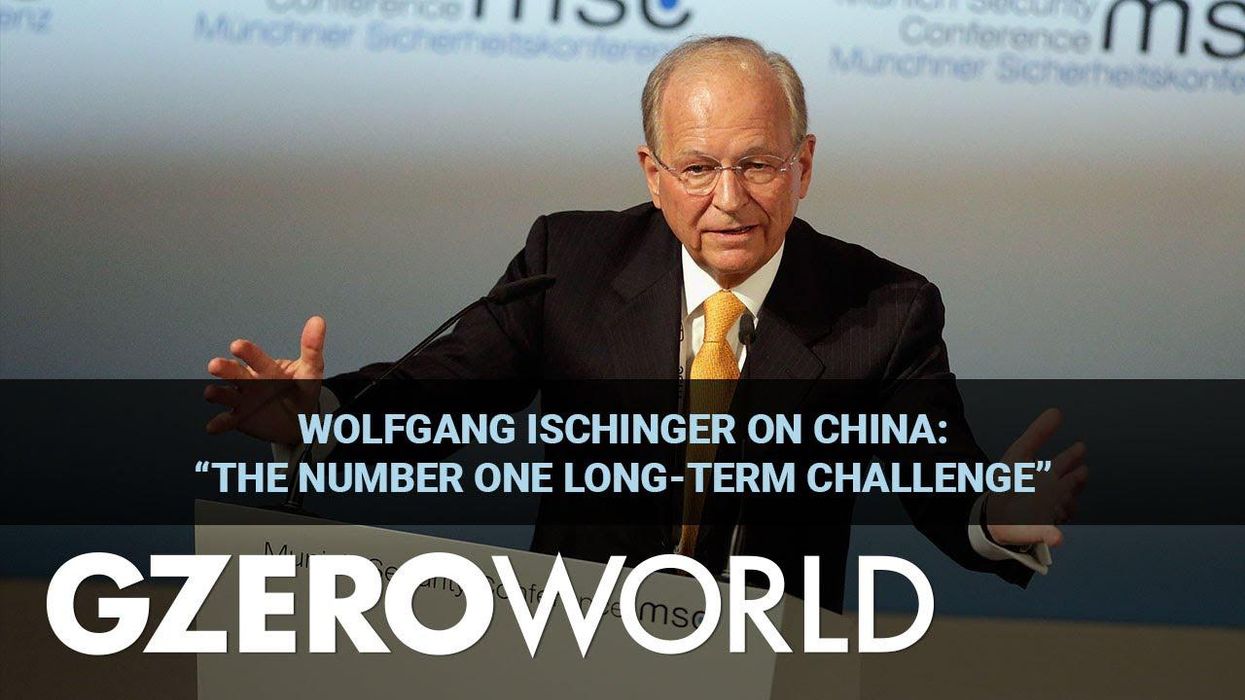
Wolfgang Ischinger on China: “The number one long-term challenge”
GZERO World Clips

Wolfgang Ischinger on China: “The number one long-term challenge”

In his decades of diplomatic service, Wolfgang Ischinger has handled many global threats and challenges and studied the evolving relationship between Europe and the United States, from the deep commitments of multilateralism following WWII to President Trump calling the EU a "foe" in recent years. Now, as President-elect Joe Biden is set to take the oath of office in the US, Ischinger reflects on the other elephant in the room, China, and how Europe and America's approach to the world's second biggest economy may differ.

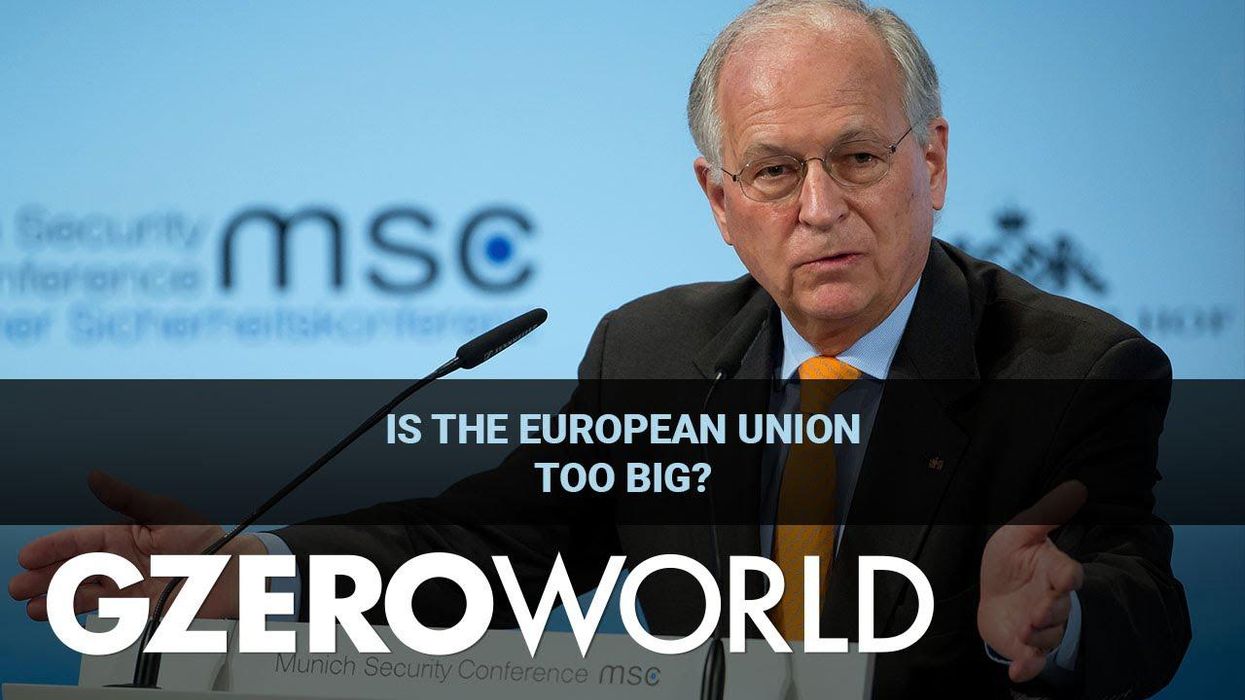
Is the European Union too b​ig? Wolfgang Ischinger on the EU's future
GZERO World Clips

Is the European Union too b​ig? Wolfgang Ischinger on the EU's future

One of Europe's top diplomats, Wolfgang Ischinger, joins GZERO World in our latest episode to discuss a wide range of geopolitical issues—from US/EU relations to China. In this clip, the former ambassador to the US and UK and current Chairman of the Munich Security Conference offers his thoughts on the rise of populism in EU nations like Hungary and Poland, and what it means for the future of the union.