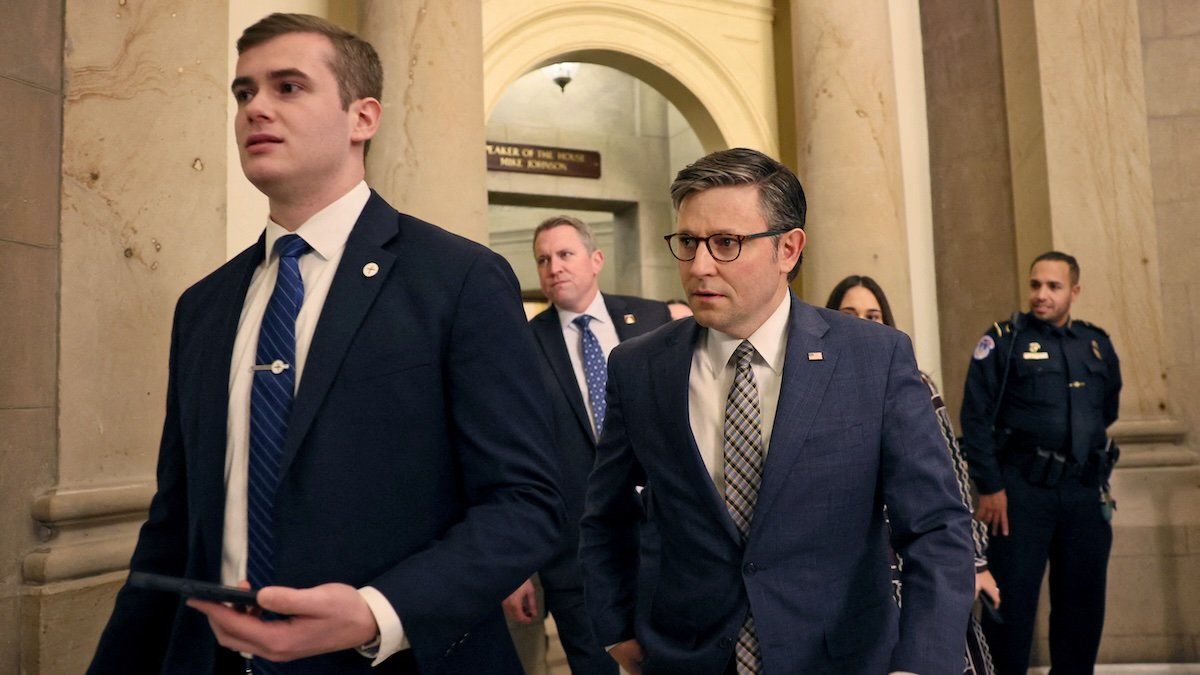
It’s shutdown season in Washington again (and again, and again). Congressional lawmakers have until Friday to avert a shutdown that would close 20% of the government. If the deadlock lasts until March 8th, the rest of the government would turn out the lights too.
With little promise of a deal in sight, President Joe Biden plans to meet with congressional lawmakers on Tuesday in the hopes of hammering out an agreement.
What’s driving the dysfunction? GOP House Speaker Mike Johnson is struggling to steer the ship: He has a paper thin majority which in principle means he needs to find bipartisan compromises, but the far right wing of his party are digging in on an array of policy demands – on issues ranging from immigration and abortion to climate change and foreign policy – that Democrats can’t or won’t agree to.
The ongoing deadlock has raised questions as to how long Johnson will last as Speaker. His predecessor was ousted in October after making a deal with Democrats that prevented a shutdown.
Congressional squabbling has also continued to delay further vital aid to Ukraine, which the MAGA wing of the GOP generally opposes. Ukrainian President
Volodymyr Zelensky on Sunday bluntly warned that Ukraine needs more funding within a month or its position on the battlefield
will only get weaker.