News
What We’re Watching: Contentious SCOTUS decisions, Russia's Snake Island retreat, Israel’s new PM, G7's topless fantasies
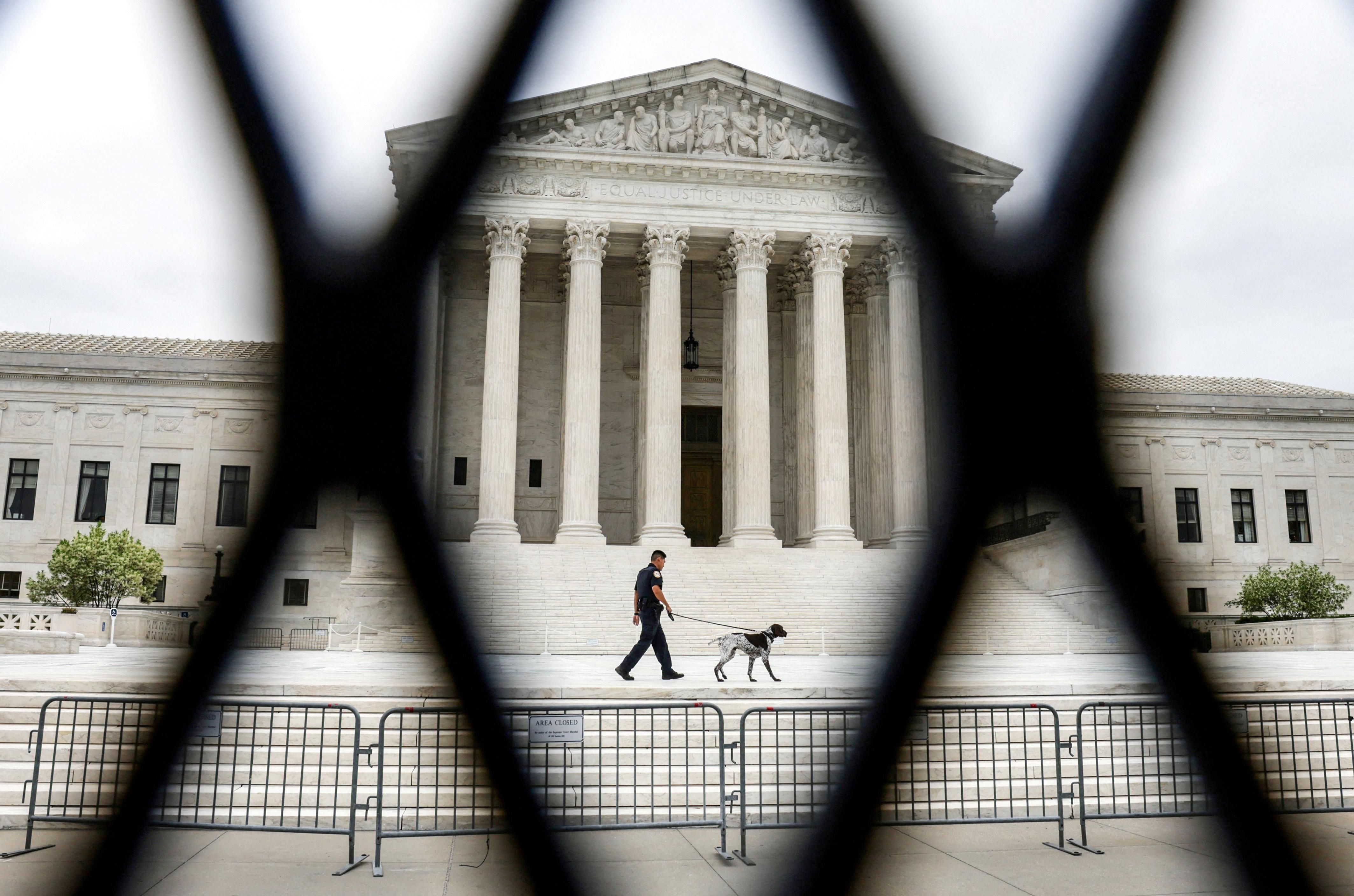
REUTERS/Evelyn Hockstein
The US Supreme Court on Thursday handed down decisions in two closely watched cases. First, the court ruled that the Environmental Protection Agency can’t enforce rules limiting carbon emissions at existing power plants. The six conservative justices who backed the majority opinion said only Congress should regulate climate policy. The long-running case – which made its way through the courts during the Obama, Trump, and Biden presidencies – is emblematic of the broader fight between coal-loving Republican states and Democrats pushing for more action on climate change. The decision will also complicate Biden’s pledge to switch the power grid to clean energy by 2035 – and to reach net-zero emissions by 2050. Crucially, the US is the world’s second-largest carbon emitter after China. SCOTUS’s subsequent ruling, however, went in Biden’s favor: two conservative justices joined the court’s progressive wing to scrap the “Remain in Mexico” policy, a Trump-era immigration law requiring some migrants to wait in Mexico while their asylum claims are processed. Still, a federal judge has blocked Biden from lifting another Trump-era immigration restriction, so this ruling is unlikely to have a significant impact on the immigration landscape ahead of November’s midterms.
On Thursday, Russia retreated from Snake Island, the Black Sea outcrop it invaded on the first day of its war against Ukraine. Russia claims it was a “gesture of goodwill” to prove it wasn’t blocking Ukraine's food exports, but Ukrainians say that’s a lie and that their missile strikes drove the Russians out. Prior to the war, Ukraine exported five million metric tons of grain per month, and the blockade has caused global food prices to soar, and created fear of famine in some African countries. Zmiinyi Island — as it is known in Ukraine — is 22 miles off the coast of Ukraine and offers several strategic advantages. While hard to defend, the island in Russian hands had crippled Kyiv’s ability to defend the entire southwestern coast of the country, including its largest port, Odesa. Russia was also using it to support a naval blockade and to control crucial shipping lanes in the Black Sea. While clearly a win for Ukraine – and a much-needed morale boost – it doesn’t change the Kremlin’s focus on claiming the Donbas region in southeastern Ukraine. And without a strong navy to defend it, Ukrainian ships will likely still be unable to resume movement of food exports in the Black Sea — at least for now.
Israel again has a new prime minister after the Knesset, Israel’s parliament, voted to dissolve itself after a series of political crises. Yair Lapid, head of the centrist Yesh Atid Party, will serve as interim PM until elections on November 1 – the country’s fifth since 2019. Meanwhile, outgoing PM Naftali Bennett, who partnered with Lapid to form the unwieldy coalition that ousted longtime PM Benjamin “Bibi” Netanyahu in 2021, says he won’t run in the next election. At home, Lapid will mainly be focused on ensuring that right-wing parties in his coalition don’t jump ship to the opposition headed by Netanyahu. Such a move could return Bibi to power (he is 3-4 seats short of a parliamentary majority, according to polls). Lapid, meanwhile, hopes to bolster his image as an elder statesman. Next week, he heads to the Élysée to meet with French President Emmanuel Macron before hosting President Joe Biden in Israel. There are also rumors that the Saudis will sign onto the Abraham Accords when Biden tours the region next month. Indeed, a three-way handshake between Lapid, Biden, and Saudi Crown Prince Mohammed bin Salman would surely be a boon for the interim Israeli PM ahead of the nail-biter November polls.
World leaders pretend to read just like the rest of us. What’s on Vladimir Putin’s nighttable? How about Trump’s, Modi’s, Lula’s, or Merz’s? #PUPPETREGIME
Russia may be on the back foot in the war, but life near Ukraine’s front lines remains brutal. On GZERO World, David Miliband talks about the human cost of war and why winning on the battlefield means nothing if Ukraine can’t sustain its people.
A year after USAID shut down, we’re seeing the effects of such a drastic drop in foreign aid during some major crises. David Miliband joins Ian Bremmer on GZERO World to discuss the shock to the system and what comes next.
Humanitarian aid isn’t just charity—it’s the world’s safety net against disease, conflict, and instability. David Miliband joins Ian Bremmer to unpack what America’s retreat from global aid means for the world and what comes next.