GZERO World Clips
Why Yemen’s doctors and teachers work without pay
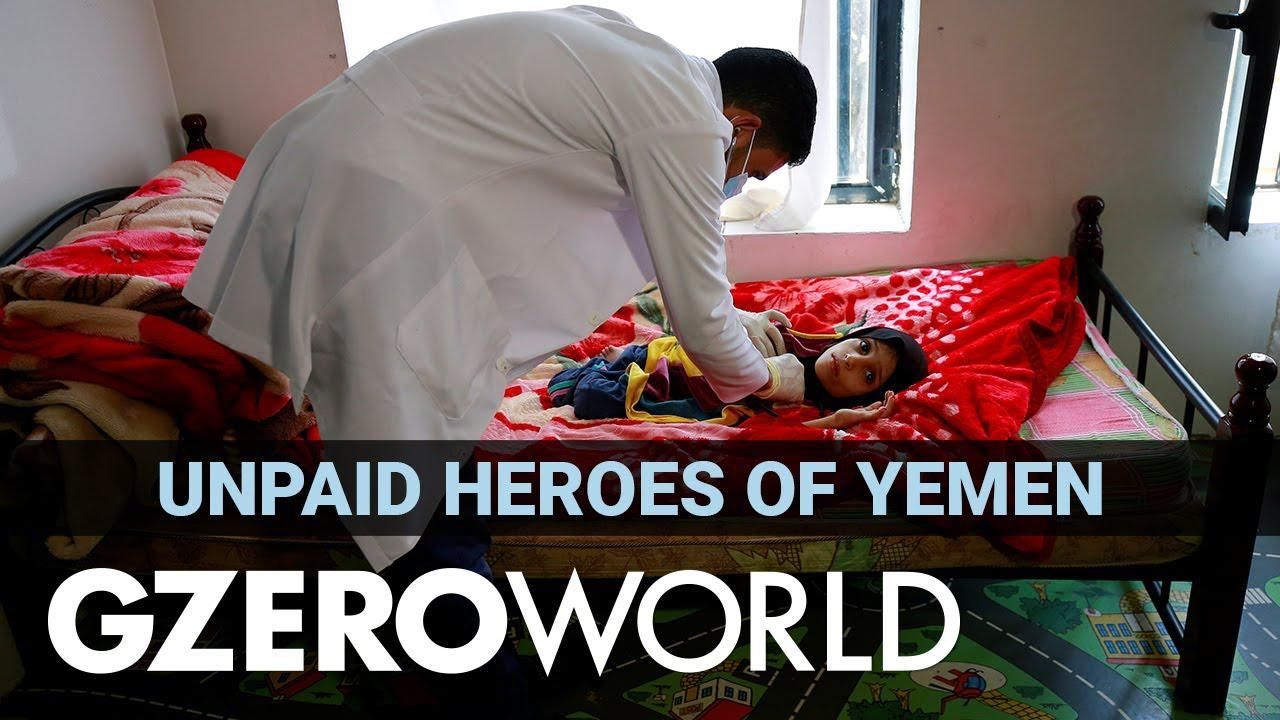
Why Yemen’s Doctors and Teachers Work Without Pay | UN's David Gressly | GZERO World
Around 1.2 million government employees, including teachers and doctors, show up to work every day in Yemen with unpaid or partially paid salaries, committed to their fellow Yemenis. UN Coordinator David Gressly emphasizes that if their contributions are lost, the state will collapse.
In his 40 years of experience working as a humanitarian worker, he’s seen that war can often cause destruction of infrastructure and more importantly, a loss of the public sector. Therefore, preserving Yemen’s civil service is a pressing issue that has both short—and long-term consequences, and should be immediately addressed.
Watch the GZERO World episode: Caught in the crossfire: Yemen’s forgotten war
Over the past two weeks, President of El Salvador Nayib Bukele has sent around 2,000 troops to Haiti to rescue four Salvadoran nationals working in Haiti who were kidnapped by gangs. But the self-proclaimed “world’s coolest dictator” may have bigger ambitions.
In the end, the long-predicted “blue wave” turned into a tsunami as the Democrats, harnessing widespread frustrations over high living costs, opposition to the war in Iran, and misgivings about Trump’s deportation policies, swept back to power on Capitol Hill.
Last night’s wins were not only pivotal, but also broke multiple glass ceilings in American politics.
The elections are widely seen as a referendum on the African National Congress (ANC), the party that has governed South Africa since the end of apartheid, amid frustration over pervasive corruption, crumbling public services, and rising migration.