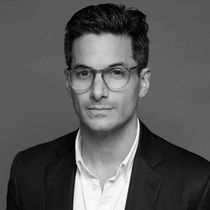
As of this week, for the first time since Gwen Stefani was topping the charts with Hollaback Girl, Germany is not run by a person named Angela.
Olaf Scholz — the pragmatic, robotic, determined leader of the center-left SPD party — now holds the reins of Europe’s largest economy.
But he also leads a three-party coalition, the first in Germany’s modern history, with the progressively, climate conscious Greens and the business-friendly fiscal hawks of the Free Democrats party. The coalition is known as the “traffic light” owing to the colors of its three members.
Here are a few immediate and longer-term challenges for Scholz.
His first big test is COVID. Germany is currently in the throes of its worst surge since the onset of the pandemic. Between the upcoming Christmas holiday and uncertainty about the omicron variant, Scholz has his work cut out for him. So far he has not announced any new society-wide lockdowns or restrictions. But with Germany’s vaccination rate of 70 percent now an EU laggard, he’s embraced a broad vaccine mandate and wants to get 30 million jabs done by the end of the year.
Foreign policy: Russia on day one. Scholz comes into office right as tensions around Ukraine are soaring again. He will quickly have to stake out a position towards Moscow that satisfies German industries, which rely on Russian markets and energy, but that also reflects the views of the Greens, Russia hawks who see the Kremlin as a menace both to the climate and to democracy. With the Greens’ leader Annalena Baerbock as foreign minister, this is going to be a tough balance to strike.
A crucial near-term decision for Scholz is whether he is willing to include suspension of the Nord Stream 2 Russian gas pipeline project as part of a package of German sanctions meant to deter Russian aggression against Ukraine… at a time of sky-high gas prices.
Going green without getting into the red. Scholz’s government has pledged a massive push on the climate front, promising to phase out coal entirely by 2030, eight years earlier than originally planned, and to double the renewable share of electricity generation to 80 percent by then as well.
These goals are practically existential for the Greens, but getting there will require massive investment — where’s the money going to come from? Scholz has already pledged to reimpose constitutional limits on debt, and the Free Democrats, who control his finance ministry, are opposed to raising taxes.
A bigger question: Can Scholz make social democrats cool again? The SDP victory was something of a stunner for a party that had seemed, just months ago, like it was on the brink of extinction. What’s more, across Europe traditional labor-oriented parties have suffered in recent years.
Now Scholz has a chance to prove that the traditional European center left has some fight in it, at a time when the right — in both its centrist and populist versions — has been defining the landscape for the last decade. Scholz believes the SPD can reconnect with working-class voters — and his coalition’s pledge to raise Germany’s minimum wage for about 10 million people is an immediate part of that.
About a third of EU member states are currently run by social democrats of one stripe or another. They will be watching to see if Scholz can use the bloc’s largest economy as a showcase for the center-left’s bonafides after a long time in the wilderness.
The unknown unknown: the next crisis. Will it be immigration? A terror attack? A financial meltdown? A political scandal? Scholz’s predecessor didn’t come into office as a crisis manager, but she sure left as one. How the new German chancellor holds together his somewhat oddball coalition under unforeseen pressures could prove decisive.