Search
AI-powered search, human-powered content.
scroll to top arrow or icon

Are markets becoming immune to disruptive geopolitics?

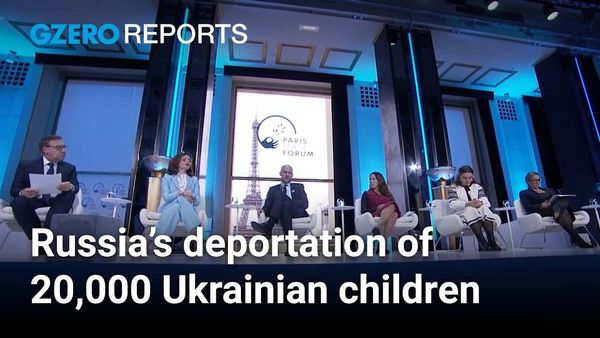
There’s no escaping the intricate link between economics and geopolitics. Today, that link has become a crucial factor in investment decision-making, and who better to speak to that than Margaret Franklin, CEO of CFA Institute, a global organization of investment professionals? Franklin sat down with GZERO’s Tony Maciulis at a Global Stage event for the IMF-World Bank spring meetings this week.

Economists once predicted that sovereign debt would overwhelm global markets. But now, having been through the pandemic, the advent of AI, and wars in the Middle East and Ukraine, “there's almost a level of immunity,” she says, “to the dramatic nature of it until something really cataclysmic happens.”


And then? “The response, generally speaking, has been pretty positive,” Franklin says, with central bank intervention saving markets and building resilience.

In much the same way, the World Bank is trying to boost investor confidence by making changes that leverage private sector capital for public sector goals by better evaluating what level of risk the private sector will accept.

Individual investors should do the same, Franklin advises. “Really evaluate your risk profile … making sure you diversify,” she says, noting that fixed-income offerings have become more attractive. Younger investors, meanwhile, need to be cautious with getting their information on social media, she adds.
For more of our 2024 IMF/World Bank Spring Meetings coverage, visit Global Stage.

More from Global Stage

The fight to bring Ukraine’s children home

What will it take to bring thousands of Ukrainian children home? As Russia’s war against Ukraine continues, the fate of children taken from their families has become an urgent international challenge, raising difficult questions about justice, accountability, and the path to lasting peace.

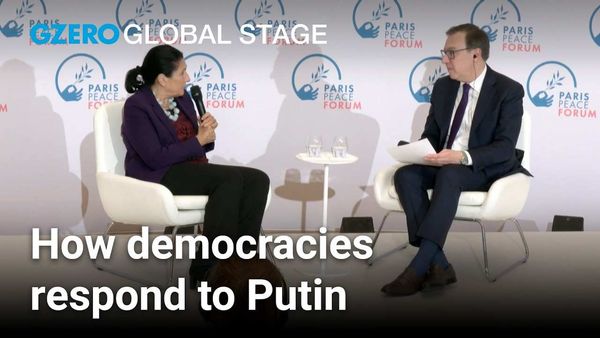
Salome Zourabichvili on Putin, Trump, and the West’s response to Russia

At the 2026 Paris Peace Forum, former Georgian President Salome Zourabichvili reflects on why Western democracies failed to respond more forcefully to Vladimir Putin’s efforts to expand Russian influence over neighboring countries and challenge European security, despite years of warning signs.

Building safer AI products for children

AI is creating new ways for children to learn and interact, but how are companies building these tools with young users in mind?

New Paris Peace Forum chief on kids, AI and a shifting world

Can sovereignty and cooperation go together? Franck Paris, the new director general of the Paris Peace Forum, says sovereignty without cooperation is "just an illusion."

France’s Éléonore Caroit on children's safety online and youth protests

As children face growing risks from social media, artificial intelligence, and other global challenges, France is calling for stronger international action to protect younger generations.

How can AI enhance human progress?

As artificial intelligence becomes more powerful and more deeply embedded in everyday life, how can we ensure it remains a tool for human progress, and under human control?