Skip to content
Search

Latest Stories

popular

US-China communications brighten over trade

U.S. Commerce Secretary Gina Raimondo arrives for a meeting with her Chinese counterpart Wang Wentao

U.S. Commerce Secretary Gina Raimondo arrives for a meeting with her Chinese counterpart Wang Wentao

REUTERS
Make us preferred on Google

It's no secret that the US and China aren’t communicating well these days. But Commerce Secretary Gina Raimondo said that she and her Chinese counterpart, Wang Wentao, made significant strides toward changing that when they met in Beijing on Monday.

Over the past year, the US has used export controls and investment restrictions to deny China access to advanced technology. National Security Advisor Jake Sullivan has called export controls the “new strategic asset” for imposing “costs on adversaries” and keeping the US as far ahead as possible in important technologies, but China has condemned them as being part of a new containment strategy.


Raimondo, for her part, is trying to narrow the scope of export controls and investment restrictions, asserting that the majority of US-China trade is unrelated to national security. She is hoping to increase exports of non-national security-related items like agricultural, health and beauty products, and entertainment to China as a result of the meetings.

Ahead of Raimondo’s trip, 27 Chinese companies were removed from a blacklist limiting access to US technology, a signal that Washington wanted this meeting to be about increasing cooperation and de-escalating trade tensions.

The two commerce secretaries committed to taking part in working groups and in information sharing about trade issues, a remarkable improvement in communications.

This progress reflects the importance of the US-China trade relationship to both countries. China is eager to revive international investment amid its economic downturn, and the Biden administration wants to “de-risk” the relationship – maintaining cooperation and communication, and benefiting from China’s gigantic market while keeping key technologies out of Beijing’s hands.

More For You

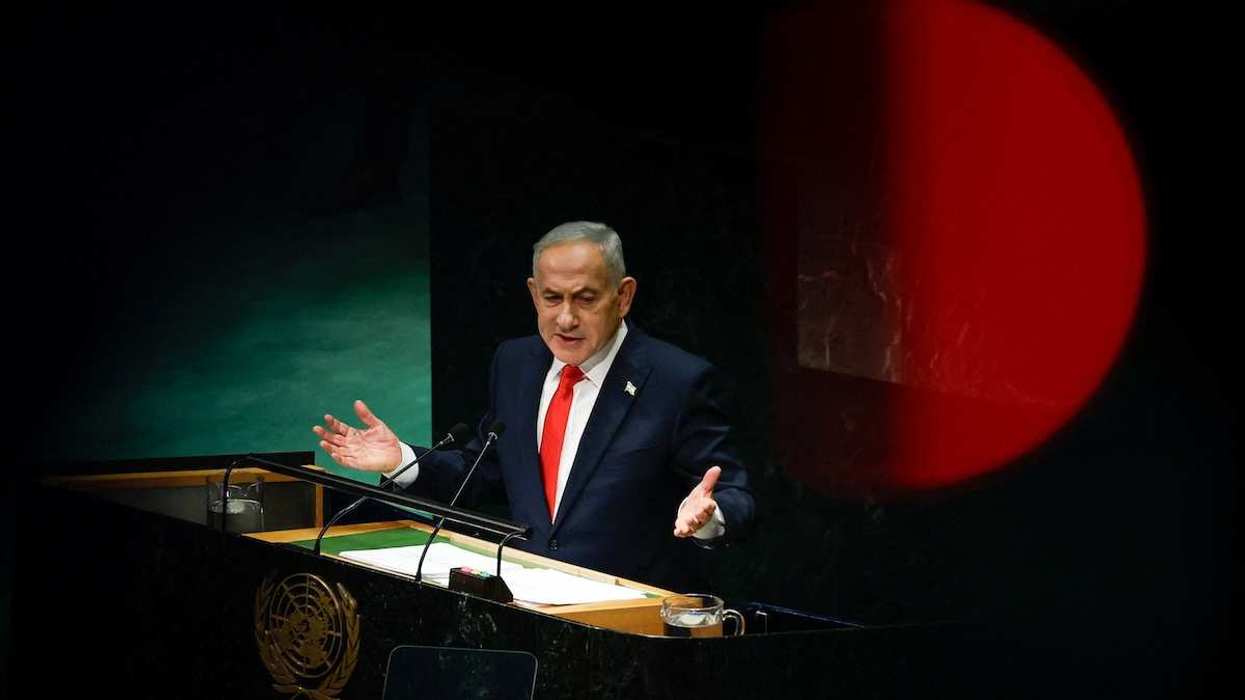
​Israel’s Prime Minister Benjamin Netanyahu attends a ceremony commemorating Israel’s Remembrance Day for fallen soldiers on Mount Herzl in Jerusalem, on April 21, 2026.

Israel’s Prime Minister Benjamin Netanyahu attends a ceremony commemorating Israel’s Remembrance Day for fallen soldiers, or Yom HaZikaron, at the Military Cemetery on Mount Herzl in Jerusalem, on April 21, 2026.

ILIA YEFIMOVICH/Pool via REUTERS
The United States and Iran seem to be moving closer to a deal to end the war, recent skirmishing and mixed signals notwithstanding. If concluded – still a big if – this agreement would reopen the Strait of Hormuz, lift the US blockade, unfreeze Iran’s frozen assets (via Qatar), and extend the ceasefire – while kicking nuclear negotiations down the [...]
You vs. the News collage
Think you know what's going on around the world? Here's your chance to prove it. [...]
The tide is turning in the Russia-Ukraine war
In the early hours of May 17, more than 500 Ukrainian drones punched through three of Moscow’s four air-defense rings. They hit oil infrastructure, military-industrial plants, and apartment buildings in and around the capital, killing at least four and wounding a dozen. Coming three days after a deadly Russian barrage that Ukrainian officials [...]
Russia's costly invasion
Eileen Zhang
Russian President Vladimir Putin heads to China this week to meet his counterpart Xi Jinping. Under the leadership of these two men, who have met dozens of times, Russia and China have forged what they call a “no limits” partnership. Russia is a major source of natural resources for China, while Beijing has helped Moscow weather increasingly harsh [...]