The world’s longest-ruling female leader is facing the most serious threat to her power in years.
Prime Minister Sheikh Hasina, who has run Bangladesh since 2009 and has been lauded as the Iron Lady of South Asia for her firm decision-making and economic prowess, faces a united opposition, an economic downturn, and international pressure against her regime’s deteriorating human rights record as fresh protests have swelled in the country over the past few days.
How did we get here? Having ruled one of South Asia’s most dynamic economies for almost 20 of its 51 years of independence (she had an earlier stint as PM in the 1990s too), Hasina is accused of increasing attacks on the political opposition as well as cracking down on civil society. The head of the largest opposition party has been detained for corruption, leaders of the biggest religious party have been executed, and scores of dissidents have vanished, triggering US sanctions against Dhaka.
Even though elections are slated for Jan. 2024, the opposition is demanding Hasina step down and let a caretaker government hold fresh elections. Previous elections held under her watch — like the one which gave her a third consecutive term in 2018 — were marred by irregularities, violence, voter intimidation, and opposition boycotts. And as she faces a fresh wave of protests to preempt her regime’s handling of the next elections, Hasina is responding with force, continuing to arrest opposition leaders and dissidents.
The PM, however, had been able to claim credit for strengthening the economy. Once rated a “basket case” by Henry Kissinger, Bangladesh — one of the world's most densely populated countries, with 170 million living in an area slightly smaller than the US state of Iowa — emerged as an economic success story. It transformed itself into a garment manufacturing and export hub with the highest GDP per capita across South Asia.
But the economy is now in trouble. High energy prices triggered by the Russia-Ukraine war have reduced export orders, and the local currency has devalued. Foreign exchange reserves have dwindled by almost half to $26 billion in just one year.
The government has responded by hiking fuel prices, which in turn have raised food prices, creating a cost of living crisis. Opposition parties, long weakened by a strong Hasina and a once buoyant economy, have channeled public anger against increased prices into growing protests against the PM.
Still, is Hasina going to go? Good question.
“The opposition has reawakened, and these multiple protests show a level of sustained strength,” says Michael Kugelman, director of the South Asia Institute at the Wilson Center in Washington, DC. “But I would strongly caution against talk of an early exit for Hasina.”
Given her track record, Kugelman projects that Hasina is likely to crack down even harder when faced with such resistance. For now, the unrest is partisan, not comprising mass protests, with those on the streets being mostly members or close supporters of opposition parties, not necessarily suggesting a broader anti-government movement.
Also, he adds, Hasina’s Awami League still enjoys high levels of public support, especially for its earlier successes on the economic front and on reducing terrorism risks.
But the area to watch in the coming months is, again, the economy. “If it worsens and the government struggles to ease a growing economic crisis, then the Awami League runs the risk of seeing the emergence of a mass movement. But we’re not there yet, not even close,” says Kugelman.
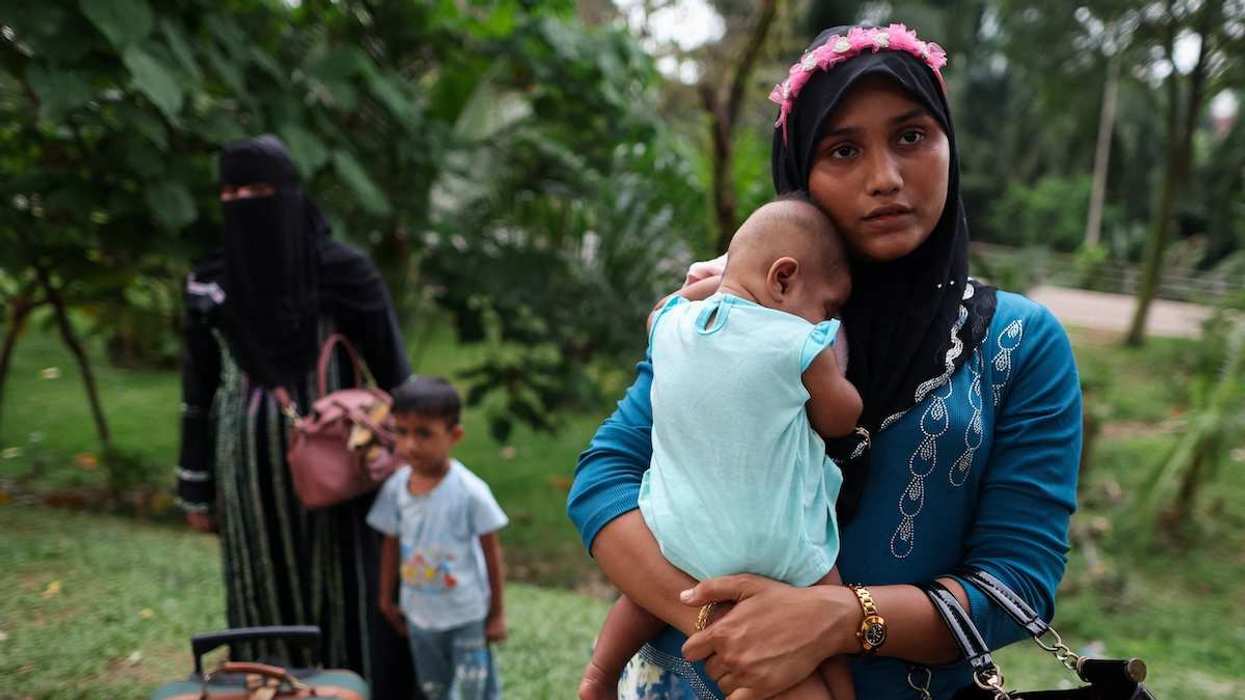
Under Hasina, Bangladesh has skillfully walked the diplomat tightrope. It has balanced the rivalries between India and China as well as China and the US and even the US and Russia. Yet the PM seems to be slipping when it comes to controlling the police and handling domestic human rights. Her security forces and laws have targeted the indigenous population, civil dissidents, the press, and even ordinary netizens and the Rohingya refugees from neighboring Myanmar.
For now, Hasina’s plan looks likely to push through toward the vote, cracking down if necessary. But as the year goes on, the operative question is a simple one.
Will the election be free and fair? “I wouldn’t count on it,” Kugelman says.
Given that the 2018 vote went through despite international observers crying foul over rigging, that the opposition National Party remains divided about who will lead it, and that regional heavyweights India and China still support the regime, it’s all but assured that South Asia’s Iron Lady will keep gunning for her detractors as she goes for a fourth consecutive term — whether she’s duly elected or not.