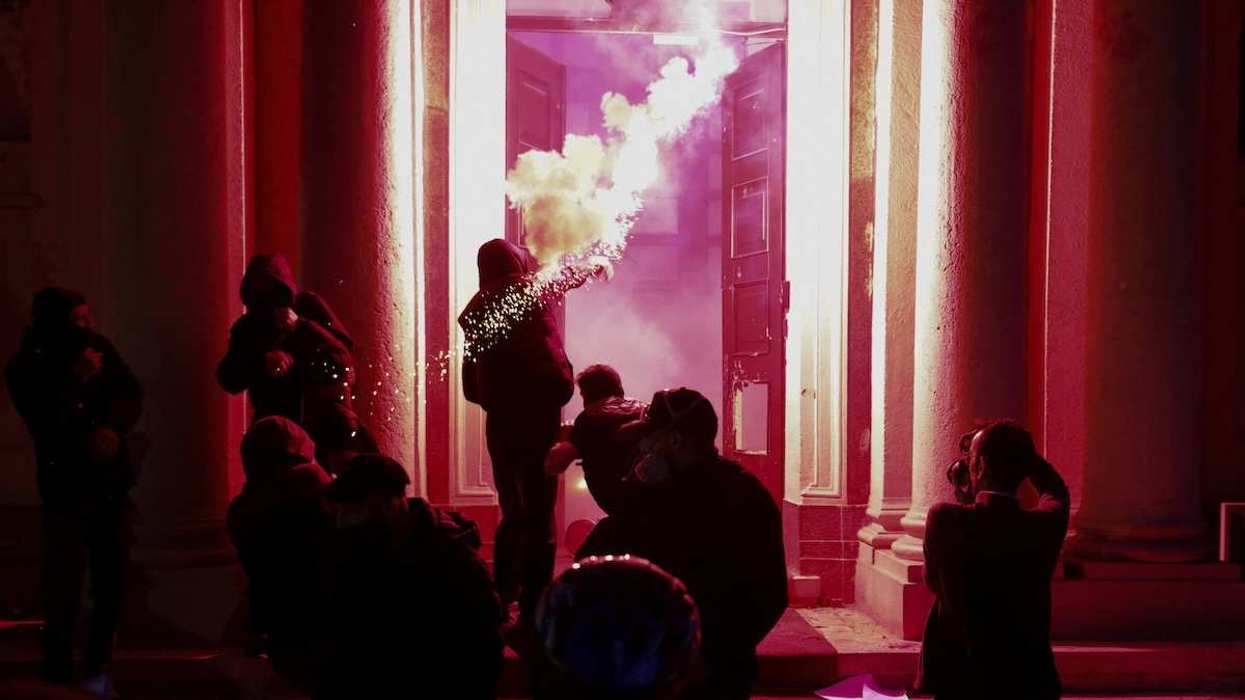
Iran launched ballistic missiles at two US bases in Iraq early on Wednesday, in retaliation for last week's US assassination of a top general, Quds Force commander Qassim Suleimani. Announcing the strikes, Iran's foreign minister said it had "concluded proportionate measures in self-defense" and did not seek a further escalation or war. This is a pivotal moment. Iran was bound to respond in some way to the US strike on Suleimani. Now it has done so, apparently without causing US or Iraqi casualties. This situation is still fluid, but for now, the limited strike and Tehran's careful language makes it look like Iran has given President Trump an opportunity to pocket a big victory in an election year while avoiding a wider conflict.
For his part, President Trump appears ready to take it. Flanked by senior military officials at the White House Wednesday, Trump seemed to backpedal on further military escalation with Iran. "Iran appears to be standing down," he said, noting that this "is a good thing for all parties concerned and a very good thing for the world." Instead, just weeks after France's President Emmanuel Macron said NATO was experiencing "brain death" – a tacit reference to Washington's shakier commitment to NATO – Trump called on NATO allies to ramp up their involvement in the Middle East. He also said that the US would be imposing additional "powerful" sanctions on Iran, which will remain in place until the regime changes its provocative behavior.
Bottom line: Trump appears to be continuing his well-established campaign of "maximum pressure" on the Iranians, while seeking to end this round of tit-for-tat retaliations – and even keeping the option of diplomacy on the table. Speaking directly to the Iranian people, President Trump adopted an uncharacteristically dovish tone: "The United States is ready to embrace peace with all who seek it."
Update: An earlier version of this piece has been updated to reflect new developments.