On Tuesday, in the first inning of Game 4 of the World Series in New York, the Yankees second baseman hit a towering fly ball down the right field line.
As thousands in the Bronx began screaming “Drop it! Drop it, you f&$king bum! Drop it!,” the Dodgers’ right fielder Mookie Betts settled under the ball and caught it, right up against the fence. Just then, two Yankee fans in the front row grabbed his arm and wrenched the ball out of his glove. It was a mugging, live on national TV, meant to help the Yanks. (As it turned out, a day later, they were beyond help — but I digress.)
This play can tell us a lot about a certain kind of fan but also about a big problem we have in America: “election interference.”
With just days before yet another installment of “the most important election of our lifetime,” many are worried that foreign agents will influence our votes in ways that make the outcome illegitimate.
In the past two weeks alone, Donald Trump has complained about British Labour Party volunteers campaigning for Kamala Harris, US officials have said Russia was behind a video falsely accusing VP candidate Tim Walz of unspeakable crimes, and Iran and China have reportedly hacked Trump’s phone. There is no shortage of examples.
But let me make a radical suggestion here: None of this is election “interference,” and calling it that misses the point.
Ever since the 2016 US election, in which Russian troll farms tried to sow discord and sway voters away from Hillary Clinton, we have focused a lot on foreign meddling. I get the logic: Voters make choices based on information. If the information is untrue, or biased, their choices will be illegitimate. Garbage in, garbage out, as data scientists say.
But this is too limited and utopian a vision of what an election is. Candidates always do their best to convince or manipulate people into believing that complex problems come down to simple choices. Activists on both political teams are always bending or even breaking the truth to help their “side.”
The idea of an election where everyone is a well-informed voter, making choices based on pristinely fact-checked information that comes only from honest people living within the borders of the United States, is a fantasy.
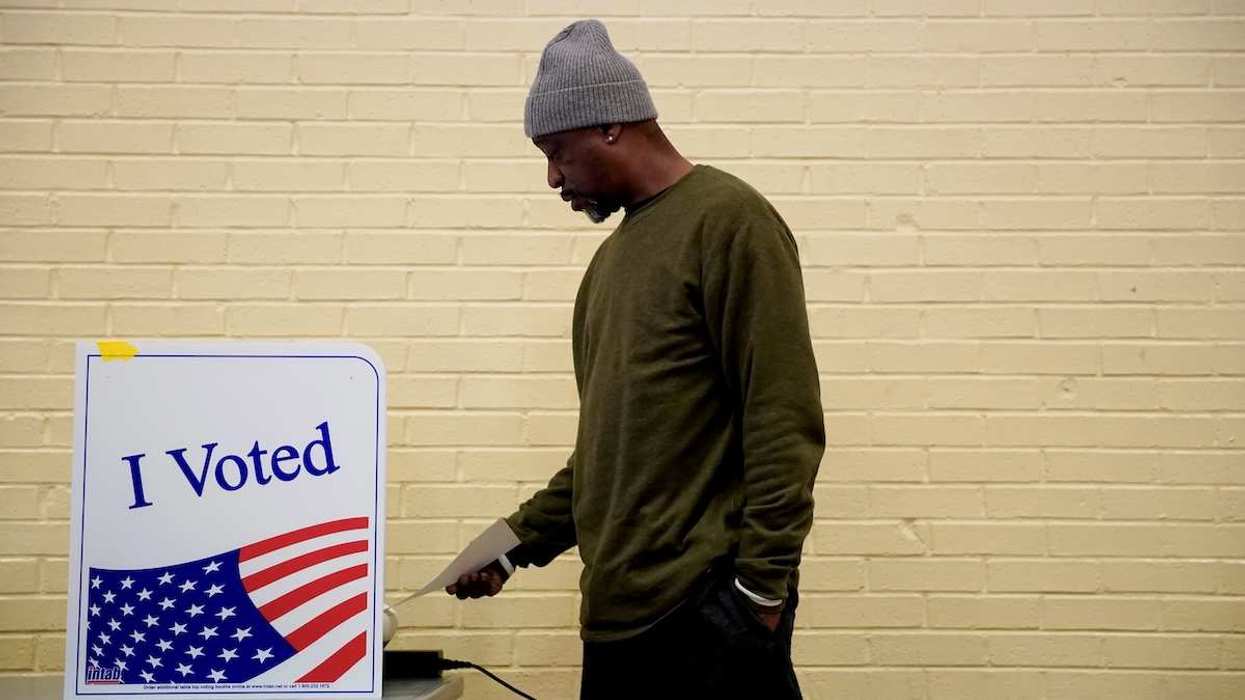
A better way to think about this? There is only one thing that is truly interference: efforts to change the outcome of the election by altering the vote tally, destroying ballots, or illegally preventing people from voting. Those mysterious ballot-box fires in Portland this week? That’s true election interference.
To illustrate, let’s go back to Yankee Stadium …
In the fly ball story, the play is the election, and the Dodgers right fielder is the voter. The thousands of fans screaming are one of the many factors — swirling wind, blinding lights, roaring crowd — that Betts has to negotiate as he tracks a fly ball through the night sky and into his glove.
A fan trying to rob the ball out of his glove to keep the Yanks from losing an out, however, is a direct attempt to alter the outcome of the play: interference. (And this is, in fact, how the umpires ruled it.)
Are there lots of actors in the crowd, both here and abroad, trying and lying very hard to manipulate your understanding of the election to influence your vote? Yes. Are some of them breaking US election laws by failing to register as foreign lobbyists or by hacking private information? Surely, and we should prosecute when laws are broken.
But in the wider conversation, when we blame “foreign interference” for screwing up our elections or helping the other side win, we are focusing on the wrong things.
The problem with American elections isn’t that trolls in Russia, Iran, or China are spewing lies into our social media. America has its own “Made in America” trolls, liars, and provocateurs as well.
The problem is that we have become so polarized and distrustful that a large number of American voters don’t seem equipped — or inclined — to discern what’s true and what’s not, no matter where it comes from.
Magically turning off the spigot of “fake news” from abroad — as if this were even possible — wouldn’t solve this problem. Blaming foreign actors for American choices, much less American vulnerabilities, is a comforting distraction. When two-thirds of Democrats believed that Trump won in 2016 because of Russian meddling, they were looking for an excuse, not an answer.
The good news? America’s top election security boss says our infrastructure is resilient and extremely difficult to hack or scramble. (For more on that, see our upcoming GZERO World interview with Jen Easterly, head of the US Cybersecurity and Infrastructure Security Agency.) In baseball terms, it will be very hard for a fan to rip the ball out of our glove.
The bad news? We are all increasingly vulnerable to the roar of the crowd, and a fly ball is coming right at us, alarmingly fast.