The select congressional committee investigating the January 6 attack on the U.S. Capitol kicked off a series of public hearings last Thursday to make the case to the American people that former President Donald Trump was directly involved in a violent and coordinated attempt to overturn the 2020 election.
Already the initial proceedings have made two things clear, a stark reminder of just how divided and dysfunctional our political system is.
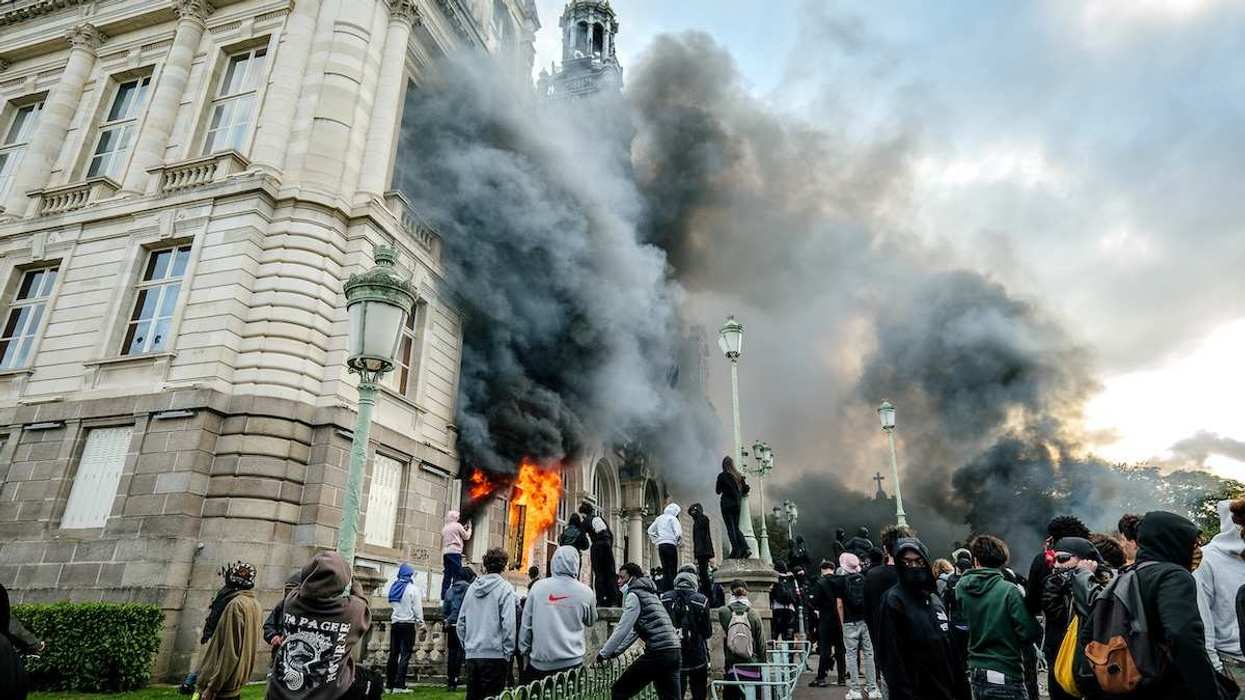
The first conclusion is that Donald Trump enthusiastically pushed the “big lie”—the debunked conspiracy theory that the election was stolen from him—even when he should have known it was false, that he was at the center of a systematic effort to unlawfully stop the transfer of power and overturn the election, that he deliberately encouraged his supporters to storm the Capitol, and that he did little to stop the violence that predictably ensued, even going as far as expressing approval for chants to “hang Mike Pence.”
Want to understand the world a little better? Subscribe to GZERO Daily by Ian Bremmer for free and get new posts delivered to your inbox every week.
In short, the former president was indeed responsible for the events of Jan. 6, in my view constituting the gravest violation of the oath of office by any president in the history of the nation.
Fortunately for us, Trump’s moral turpitude was hamstrung by his incompetence. The main reason January 6th failed to overturn the election and subvert the democratic order is not that the former president lacked the will or the power to do it—it’s that he was bad at it.
But while Jan. 6 failed, it still caused lasting damage. The event shattered democratic norms, fueled tribalism, deepened our crisis of truth, normalized political violence, delegitimized our system of governance, and pushed us closer to democratic failure than we’ve been since the failed election and constitutional crisis of 1876. Recent polls show that majorities of Democrats and Republicans doubt the other party will accept negative election results in states they control in the future, and 64% of Americans now believe US democracy is “in crisis and at risk of failing.”
The second conclusion is that the political impact of the January 6 committee will be next to zero, convincing few who hadn’t made up their minds in advance and having little effect on the electorate other than deepening their pre-existing feelings about Trump. Much like the two impeachment proceedings of the former president, this process is also broken and hyperpolarized—not along ideological partisan lines but along the Trump sympathy-antipathy axis.
The committee is actually bipartisan in the traditional sense of the word: it includes both Democrats and Republicans and is vice-chaired by Rep. Liz Cheney (R-WY), a bona fide conservative who has voted with former president Trump and with the Republican Party more than 90% of the time.
But polarization in the United States today is driven by feelings toward Trump more than it is by party affiliation. And although the correlation between the two is high, it is far from perfect. My own antipathy toward Trump, for instance, has nothing to do with him identifying as a Republican and everything to do with him being unfit for political office. My views of Trump as a human being were equally negative when he was a Democrat!
This disconnect will render the committee moot. It doesn’t matter how conclusively it is able to prove that the former president tried to subvert American democracy; if half of the country doesn’t buy into the legitimacy of the committee in the first place, nothing at all will change.
That’s dangerous.
January 6 was the result of decades of growing anti-establishment sentiment boiling over, a product of declining equality of opportunity, of a weak safety net that lets so many of our fellow citizens fall through the cracks, of political institutions that are widely seen as rigged, and of the wholesale loss of faith in the system’s ability to self-correct. Trump or no Trump, those conditions are still present and growing.
That’s why there’s every reason to think something resembling Jan. 6 can and will happen again in the future. Two-thirds of Americans see the events of that day as a harbinger of increasing political violence rather than an isolated incident. More young Americans than ever now say they would support a political revolution even if its ends were violent in nature, and most people expect the upcoming presidential elections to involve violence regardless of who wins.The same can be said for the two Republican members of the committee, Cheney and Rep. Adam Kinzinger (R-IL), who often agree with Trump on policy issues but are nevertheless transparently and deeply anti-Trump. That’s why you’re not hearing any dissenting opinions in the hearings or seeing any efforts to defend the former president’s actions. Not even Fox News—the only network not to carry the June 9 prime-time hearings live—is trying very hard to defend him, instead choosing to not focus on the issue at all.
That’s obviously not the case for the rest of the country, which remains massively divided over the issue. Far from repudiating the events of Jan. 6 and Donald Trump for his role in them, polls show that the Republican base has embraced Trump, excused the insurrection, and doubled down on the myth of the stolen election, with three-fourths of Republicans refusing to hold Trump accountable, 58% believing Biden is an illegitimate president, and 40% saying violence against the government can sometimes be justifiable.
If we don’t get serious about fixing our social contract and our politics, the next time someone tries to overturn an election—and there will be a next time—they may actually succeed.
🔔 And if you haven't already, don't forget to subscribe to my free newsletter, GZERO Daily by Ian Bremmer, to get new posts delivered to your inbox.