Trending Now
We have updated our Privacy Policy and Terms of Use for Eurasia Group and its affiliates, including GZERO Media, to clarify the types of data we collect, how we collect it, how we use data and with whom we share data. By using our website you consent to our Terms and Conditions and Privacy Policy, including the transfer of your personal data to the United States from your country of residence, and our use of cookies described in our Cookie Policy.
{{ subpage.title }}
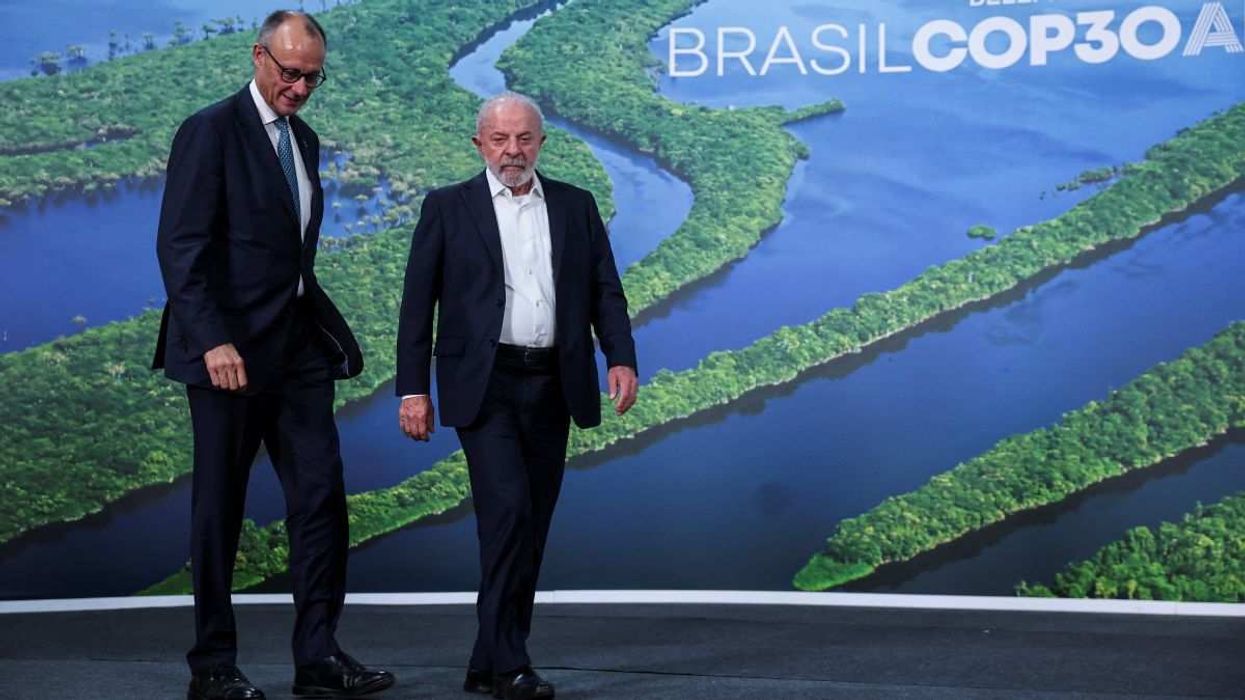
Brazil's President Luiz Inácio Lula da Silva and Germany's Chancellor Friedrich Merz walk after a bilateral meeting on the sidelines of the UN Climate Change Conference (COP30), in Belem, Brazil, on November 7, 2025.
Q+A: Climate tries for a comeback at COP30
When it comes to global warming, the hottest ticket in the world right now is for the COP30 conference, which runs for the next week in Brazil.
What’s COP30? It’s the 30th installment of an annual UN-backed event that brings together world leaders, diplomats, and experts for two broad purposes: finding ways to slow global warming and to address the impacts of climate change.
This year’s meeting, held in the Amazon rainforest city of Belém, comes amid huge new challenges to the climate agenda. The government of the world’s largest economy, the US, is once again actively hostile towards climate policy. The world’s leading philanthropist, Bill Gates, has recently downgraded climate change as a key concern.
What’s more, it’s been ten years since nearly 200 countries signed the Paris Agreement, pledging to reduce emissions in order to keep global temperature rises within specific targets. The efforts have largely failed, and the targets are now unreachable.
So what is achievable at this year’s COP? To learn more we sat down with Herbert Crowther, an energy and climate expert at Eurasia Group. Our conversation has been lightly edited.
GZERO: Herbert, you’re on your way to COP 30 in Brazil. How does this COP feel different from previous ones? Are the stakes higher? Lower?
This COP feels different because there isn’t a single trademark deliverable or negotiating point. Most other recent COPs have had that: last year at COP29 it was about setting financing targets, for example.
This year the larger question is how to find ways to address the current geopolitical obstacles. The Brazilian COP hosts have tried to frame this in terms of COP30 being about “implementation” of prior commitments rather than negotiating new commitments, but that framing has faced some pushback.
So it’s all much more unpredictable than other recent gatherings. From a negotiating point of view, the stakes are perhaps lower – but from a political sentiment point of view, the stakes are higher.
GZERO: The Trump administration has left the Paris Agreement. Bill Gates is focusing on other things. That means two huge, longstanding pillars of support for climate policy are now gone. Who is going to drive this stuff now?
Those are real headwinds. But there are other data points that are less foreboding. Besides the US, no other country has departed the Paris Agreement. The costs of low-carbon energy continue to drop, driven in significant part by Chinese manufacturers. The private sector generally remains bullish on decarbonization technologies. And many philanthropies will still engage in climate work, even as they change their public framing around it or prioritize other issues. The area where politics may be most disruptive is in the question of financing: projects may be more difficult to finance and more reliant on government support.
GZERO: What’s a realistic expectation of what can be achieved at this COP? What are you most optimistic about and what are you most pessimistic about?
We will likely see more agreements between countries on carbon trading, as well as some new targets for financing and monitoring projects that help countries to adapt to climate change.
I’m more pessimistic on the ability of COP30 to find a political message that will respond effectively to this geopolitical environment. In many ways, a positive vision for COP30 is simply to maintain credibility for the multilateral process, and to create conditions for a COP31 next year that has more time to identify solutions tailored to this geopolitical environment.
GZERO: A lay reader, or a person who doesn’t follow climate policy closely, might look at the headlines about how countries keep failing to meet their obligations, and wonder “why keep having COP at all?” How would you answer that?
That’s a very understandable concern. What is sometimes lost by those headlines is the value of the COP process as a choreography mechanism to encourage countries to regularly deepen their long-term climate ambitions. Most countries have done this ahead of COP30 with new 2035 targets, even if those commitments are not as ambitious as many observers would like. Recalibrating expectations and finding a new political framework for the whole process will be a topic of discussion in Belém.
No matter what happens, you’ll be in Brazil! What’s one thing you’re excited to do there that has NOTHING to do with climate change?
I am looking forward to seeing Belém – my first time in the Amazon! I will be consuming lots of Brazilian espressos throughout the week.
Have a couple for us too – enjoy!
Will Trump's energy policies set back climate progress?
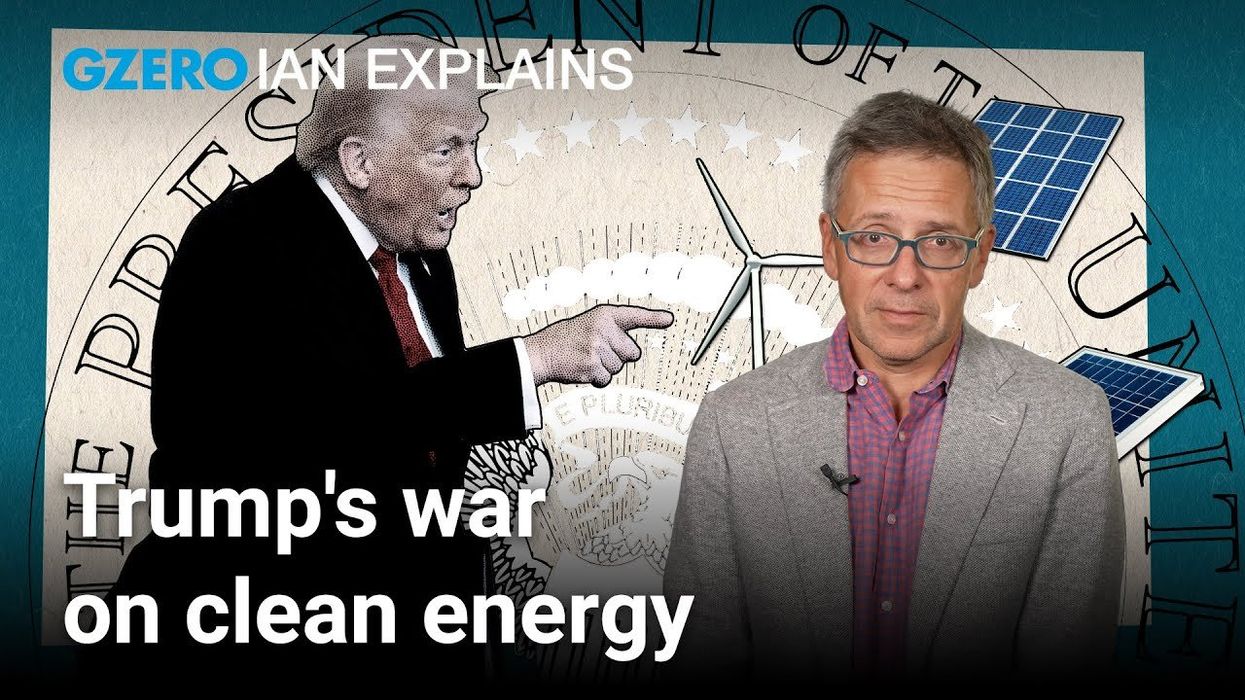
President Trump has made no secret of his distaste for wind and solar and preference for fossil fuels. His administration has canceled subsidies for renewable projects, lifted drilling restrictions on federal land, and is pressuring allies to buy more American oil and gas. On Ian Explains, Ian Bremmer breaks down the reality of the energy transition and whether US policies will slow down global progress in moving toward a renewable future.
No matter what the White House says, the incentives for renewables are hard to ignore. From Texas to Saudi Arabia, India to China, governments all over the world are embracing solar and wind not just for the planet, but for economic and security reasons. Clean energy is now the cheapest power source almost everywhere. And, amid rising instability, energy independence has become a safety and security issue. You can’t embargo the sun. No one controls the wind. Fossil fuels still matter, but the question is no longer if the world will transition. It's how fast.
GZERO World with Ian Bremmer, the award-winning weekly global affairs series, airs nationwide on US public television stations (check local listings).
New digital episodes of GZERO World are released every Monday on YouTube. Don't miss an episode: subscribe to GZERO's YouTube channel and turn on notifications (🔔). GZERO World with Ian Bremmer airs on US public television weekly - check local listings.
Norway's PM Jonas Støre says his country can power Europe
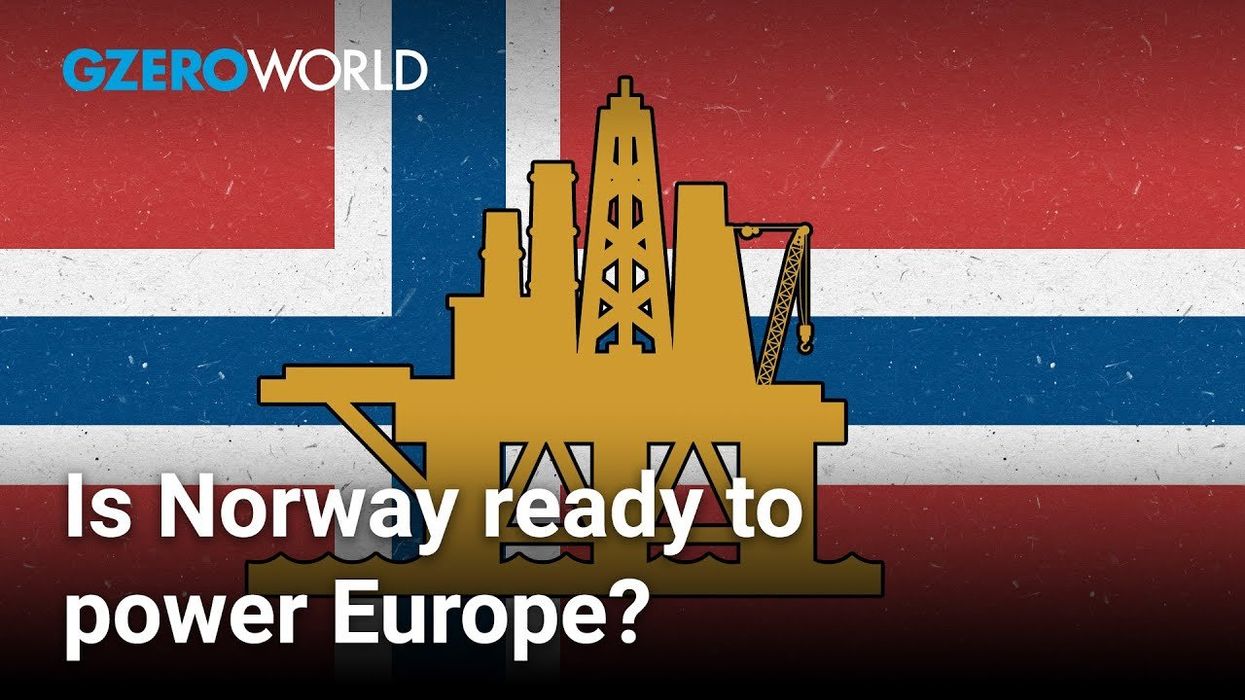
Norwegian Prime Minister Jonas Støre is optimistic about his country’s progress in the global energy transition, particularly regarding the pivot from reliance on fossil fuels to a broader adoption of renewable energy sources. And given Norway’s increased importance in supplying Europe with energy, the transition could not come a moment too soon. “I think the energy transition is happening... For the first time you have written down in text all agreeing that there will be a transition out of fossil fuels,” Støre tells Ian in a wide-ranging interview for GZERO World on the sidelines of the Munich Security conference. Støre extolls the significant strides being made despite the prevailing geopolitical tensions and environmental challenges.
Støre points out the collaborative spirit of the international community, which he witnessed at COP 28. The Prime Minister emphasizes the importance of market incentives, technological innovation, and political will in driving these changes. “You cannot make it unless you make the market economy be at the service of the transition." Støre and Ian also touch on the need for a loss and damages fund to support the countries most affected by climate change, underscoring the ongoing efforts to provide financial mechanisms for environmental preservation and sustainable development.
Watch full episode: Solving Europe's energy crisis with Norway's power
Catch GZERO World with Ian Bremmer every week online and on US public television. Check local listings.
- Ian Explains: If the US steps back from Ukraine, can Europe go it alone? ›
- The Graphic Truth: The European Union's energy mix ›
- Norway takes helm of icy Arctic Council ›
- Will Norway pull the plug on itself? ›
- How does Europe balance AI and energy transition? - GZERO Media ›
- International markets and global energy transitions - GZERO Media ›
- Resource-rich Alaska is crucial to the future of energy in America — Gov. Dunleavy - GZERO Media ›
Al Gore is optimistic about our climate future
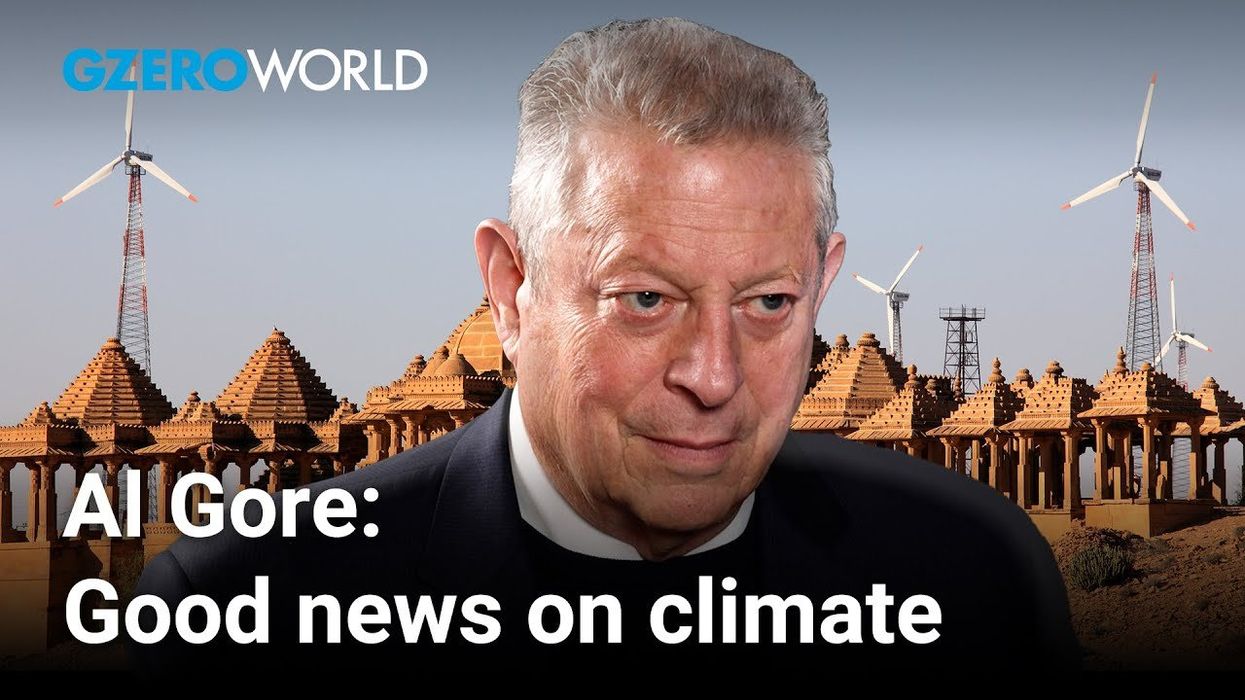
Former US Vice President Al Gore is known to many as the Paul Revere of climate change, alerting the world to the dangers of a warming planet and other "inconvenient truths" at a time when only 2/5 Americans were onboard with his message. It earned him a Nobel Peace Prize.
But today, Al Gore has good news to share. In a wide-ranging interview with Ian Bremmer on the sidelines of the World Economic Forum in Davos, Gore is clear-eyed but optimistic about our climate future.
"If we get to true net zero and stop incrementally adding to the amount of heat-trapping gas that's there, the temperatures will stop going up almost immediately with a lag of as little as three to five years. Now, that's new science. It's well-confirmed now. They used to believe that it would keep going even after we reach net zero, but no, it will not. The even better news is that if we stay at true net zero, then half of all the human-caused CO2 and methane will fall out of the atmosphere in as little as a quarter of a century."
Watch the full GZERO World episode: Al Gore on US elections & climate change
Catch GZERO World with Ian Bremmer every week at http://gzeromedia.com/gzeroworld or on US public television. Check local listings.
Al Gore's take on American democracy, climate action, and "artificial insanity"
Listen: In this episode of GZERO World podcast, Ian Bremmer sits down with former US Vice President Al Gore on the sidelines of Davos in Switzerland. Gore, an individual well-versed in navigating contested elections, shared his perspectives on the current landscape of American politics and, naturally, his renowned contributions to climate action.
While the mainstage discussions at the World Economic Forum throughout the week delved into topics such as artificial intelligence, conflicts in Ukraine and the Middle East, and climate change, behind the scenes, much of the discourse was centered on profound concerns about the upcoming 2024 US election and the state of American democracy. The US presidential election presents substantial risks, particularly with Donald Trump on the path to securing the GOP nomination.
Subscribe to the GZERO World Podcast on Apple Podcasts, Spotify, Stitcher, or your preferred podcast platform, to receive new episodes as soon as they're published.
- Podcast: Can the US get its act together? Susan Glasser & Peter Baker on "the world’s greatest geopolitical crisis" ›
- America vs itself: Political scientist Francis Fukuyama on the state of democracy ›
- Divided we fall: Democracy at risk in the US ›
- Francis Fukuyama: Americans should be very worried about failing democracy ›
- Al Gore: "Artificial insanity" threatens democracy ›
- Ian Bremmer: How AI may destroy democracy ›
- Trump's immunity claim: US democracy in crisis ›
- Trump's close call and the RNC: Brian Stelter and Nicole Hemmer weigh in on a historic week in US politics - GZERO Media ›
Water scarcity: How Suntory is optimizing for beverage production
You won't be surprised to hear that companies that make drinks need a lot of water. Suntory, one of the leading beverage producers in the world, is no exception. However, they have come up with an exceptional response to the issue, according to Shigeaki Kazama , Executive Officer and Division Deputy COO of the Sustainability Management Division at Suntory Holdings..
To offset the water Suntory draws from Japan's underground aquifers, they manage a vast system of forest preserves. They help recharge the resource by maintaining a cool, wet environment that allows groundwater to seep back into the earth rather than run off or evaporate.
"We now manage 22 forest areas that total over 12,000 hectares, which recharge twice the amount of groundwater that we take for our production in Japan," he said during a GZERO Live event organized by the Sustainability Leaders Council, a partnership between Eurasia Group, GZERO Media, and Suntory.
Watch the full livestream conversation: The global water crisis and the path to a sustainable future
- High and Dry: Tackling Global Water Stress ›
- The global water crisis and the path to a sustainable future - GZERO ... ›
- Hunger Pains: The growing global food crisis ›
- COP28’s challenge: growing problems, shrinking credibility ›
- Saving the planet is big business | Minoj Jain - GZERO Media ›
- The world is way behind on water policy | James Dalton - GZERO Media ›
- Why businesses are leapfrogging governments on water issues - GZERO Media ›
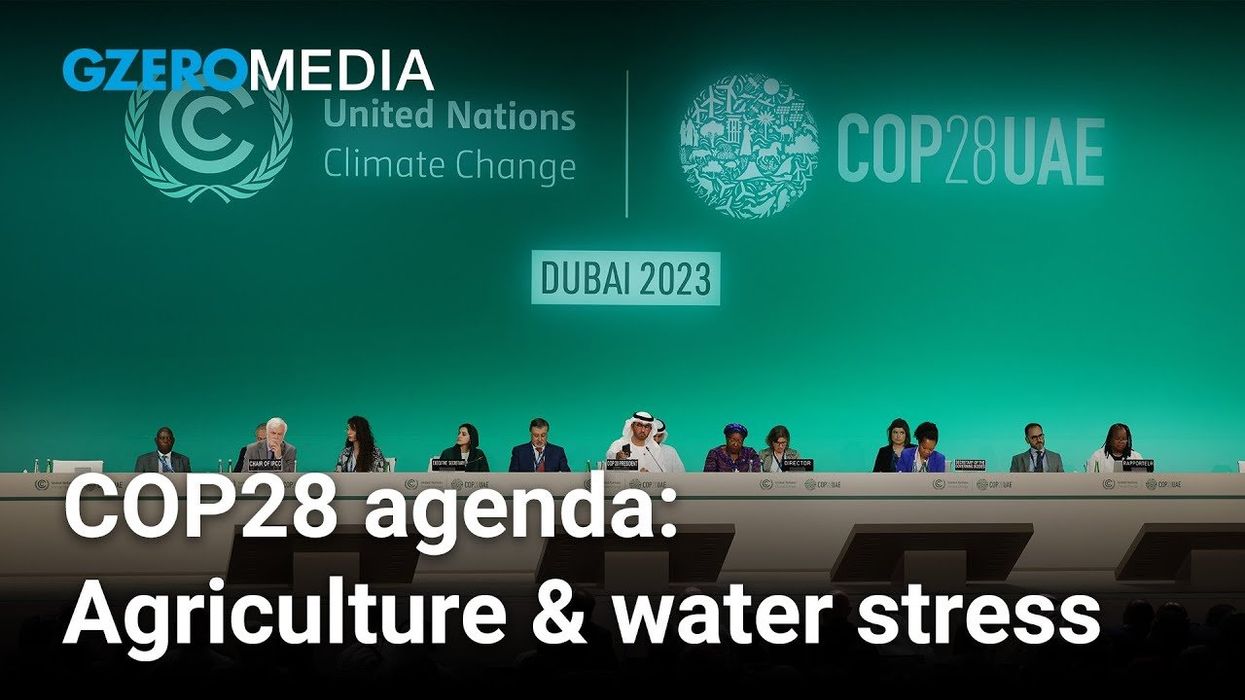
COP28: Why farmers need to be front and center in climate talks
Agriculture is the foundation of human civilization, the economic activity that makes every other endeavor possible. But historically, says International Fertilizer Association Director General Alzbeta Klein, the subject hasn't received attention in climate talks.
"It took us 23 climate conferences to start thinking about agriculture," she said during a GZERO Live event organized by the Sustainability Leaders Council, a partnership between Eurasia Group, GZERO Media, and Suntory. "The problem is that we don't know how to feed ourselves without a huge impact on the environment."
The good news is, leaders are catching on to the notion that a holistic approach is the only way forward.
Watch the full livestream conversation: The global water crisis and the path to a sustainable future
- Controversies at COP28 and the future of climate change ›
- COP28 climate talks complicated by UAE oil deals ›
- Hunger Pains: The growing global food crisis ›
- Who's to blame for sky-high food prices? ›
- Hunger Pains: The Growing Global Food Crisis - GZERO Media ›
- COP28’s challenge: growing problems, shrinking credibility ›
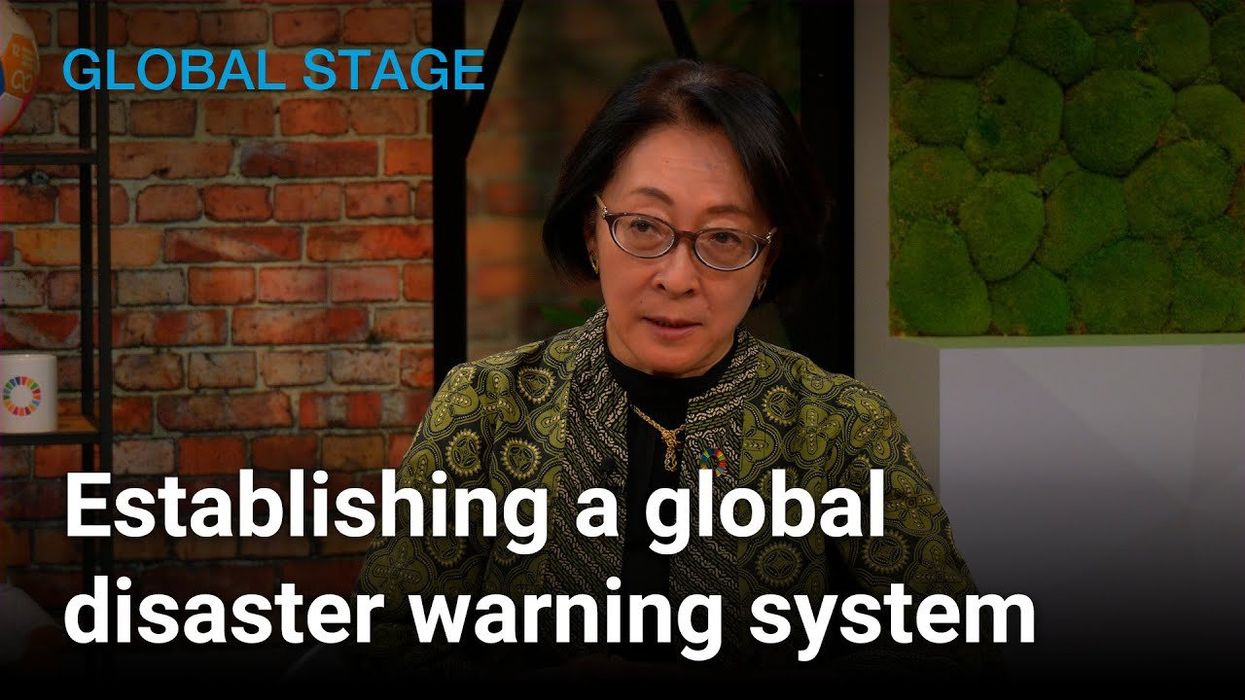
An early warning system from the UN to avert global disasters
Imagine a world in which all climate catastrophe's are preceded with an early warning system. That is exactly what the UN's "Early Warnings for All" initiative intends to provide for the world by 2027.
"If you have a 24-hour before-the-disaster warning, you can save up to 30% of economic loss, and more importantly, mortality is eight times less," says Mami Mizutori who works on the Disaster Risk Reduction team at the United Nations.
Mizutori highlights how 30 countries have already joined the initiative and there was wide support at the recent Climate Ambition Summit at UNGA78.
The discussion was moderated by Nicholas Thompson of The Atlantic and was held by GZERO Media in collaboration with the United Nations, the Complex Risk Analytics Fund, and the Early Warnings for All initiative.