China and the United States — geopolitical challenger and defending champion— were on a collision course long before COVID-19 took hold. The rivalry has been building for a generation and has intensified in the past three years.
China's President Xi Jinping grabbed Washington's attention in 2017 when he announced a "new era" in which China would move "closer to [global] center stage" and offer "a new option for other countries." That is, an alternative to US leadership in the world. President Donald Trump upped the ante with a declaration of trade war on China.
Then came the novel coronavirus, which began in China and has inflicted its worst damage in the US. Each government has pointed fingers at the other to deflect criticism of its own COVID failings.
How might the pandemic, and its aftermath, alter the rivalry between the world's two largest economies?
China's COVID initiative – In some ways, coronavirus has boosted China's international image. Its success in containing the virus, the relative COVID chaos in the US and Europe, and China's willingness to help struggling governments, even in Europe, with critical medical supplies and cash, has allowed Beijing to claim a crisis leadership role that once fell to Washington. Meanwhile, China's economic growth looks to be less affected by the pandemic, as the IMF predicts Chinese GDP will continue to expand this year, even while America's contracts.
Continuing US advantages – China's rise doesn't imply a post-COVID US decline. In fact, though COVID has wreaked political and economic havoc in the United States, and government dysfunction is a large and growing problem, the US has lasting advantages that gives it staying power as a central international actor.
The US has long been the world's number one food exporter, and game-changing innovations in energy production have made the US the world's top oil producer. In addition, dollar dominance won't last forever, but today's governments still need greenbacks, allowing the US to continue borrowing as no other country can.
But the biggest post-COVID US advantage is the current dominance of its tech companies. That's why technology is the arena where the post-COVID US-China rivalry will become most intense.
The tech battlefield – Today, 11 of the world's 13 largest internet companies are US-based, and the US produces more of the tech startups that will drive innovation in the AI and other cutting-edge technologies that will soon dominate global economic development. COVID enhances those US advantages, because contact tracing, immunity passports, and remote work, enabled by new technologies that US companies have a jump on, are now more important.
Chinese companies, with priority backing from their government, are working in all these same areas and will continue to make progress, and China's government is going all in to make China a technology superpower over the next decade.
Which country will assume the lead in the race for 5G? Will one country gain an insurmountable advantage that allows its regulators to write the rules that govern these technologies? That will be the US-China battleground where the stakes are highest.
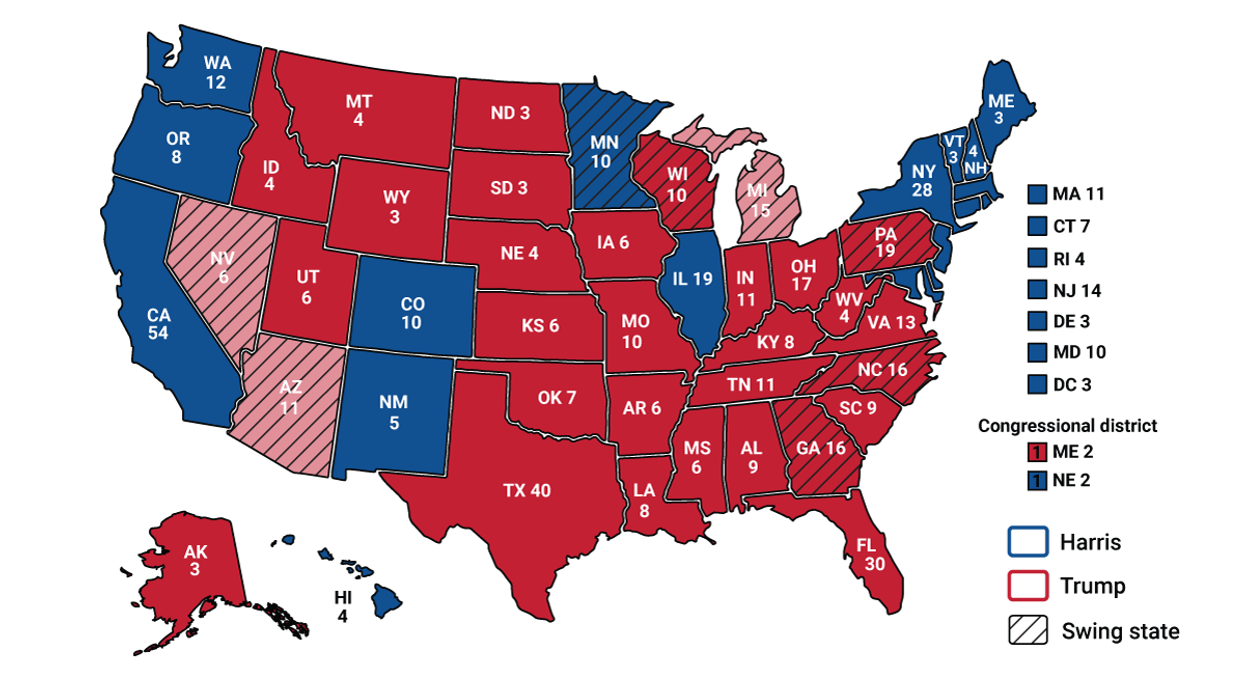
The election wildcard – The outcome of the US elections in November will also mark a turning point in US-China relations. On the one hand, no matter who wins, Washington and Beijing will remain on a collision course: opposition to some of China's trade practices and the ways it uses data to limit individual freedom are rare issues on which Democrats and Republicans agree. And the US public's distrust of China is at its highest level since polling on the issue began 15 years ago.
If President Trump wins re-election, he's likely to continue the current aggressive unilateral US approach on trade and intellectual property questions. But a President Biden would likely be much more inclined to coordinate pressure on China with likeminded traditional allies in Europe and Asia. That's why Chinese officials may have more to fear from Biden's alliance-building than from Trump's more impulsive go-it-alone approach. If so, a Biden win might ease the tone of the rivalry in the near-term, but broaden and deepen its substance over time.