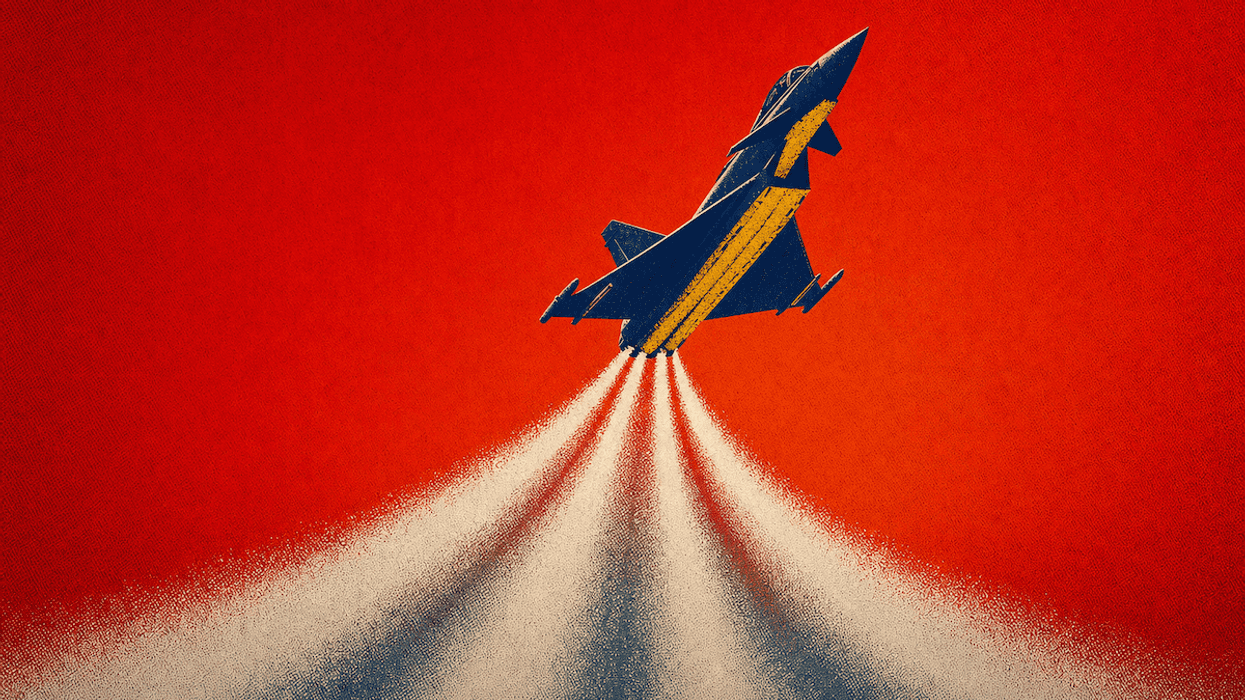
The combined message from Kyiv could not have been clearer: we may be far smaller and – on paper at least – weaker, but we can strike hard and reach far into Russia. Using drones produced indigenously for less than the cost of an iPhone, Ukraine took out strategic bombers worth upward of $100 million each – many of which are nearly impossible to replace due to sanctions and Russia’s degraded industrial base. At a 300,000-to-one return on investment, this is the kind of asymmetric operation that can upend the rules of modern warfare.
Just as significant as the material damage is what the attacks revealed: that a small but determined and innovative nation can deploy cheap, scalable, and decentralized tech to challenge a much larger, conventionally superior foe – and even degrade elements of a nuclear superpower’s second-strike capacity. The lessons will reverberate globally, from Taipei to Islamabad.
Perhaps the biggest impact of Ukraine’s battlefield coup may be to challenge the core strategic presumption that has guided Vladimir Putin’s thinking for over three years: that time is on his side. Since the invasion began, Putin has bet on outlasting Ukraine – grinding down its defenses, draining Western support, and waiting for the political winds in Washington and Europe to shift. That assumption has underpinned his refusal to negotiate seriously. But the success of Ukraine’s drone and sabotage operations challenges that theory of victory. It shows that Ukraine is not simply holding the line or surviving a war of attrition; it is shifting the battlefield and expanding the costs of continued war for Russia in ways the Kremlin has not anticipated.
That shift matters, especially in the diplomatic context. The timing of the drone campaign – just 24 hours before a direct round of talks between Russian and Ukrainian officials in Istanbul – was hardly coincidental. Kyiv’s actions were designed to signal that Ukraine is not negotiating from a position of weakness and won’t be coerced into a bad deal. Though the Istanbul meeting itself was predictably fruitless – lasting just over an hour and reinforcing the irreconcilability of the two sides’ positions – the fact that the Kremlin showed up fresh off such a high-profile embarrassment suggests it may be starting to realize that Ukraine has cards to play and continuing the war carries risks for Russia.
This may not be enough to bring Russia to the negotiating table in good faith, but it could make it more open to limited agreements. To be sure, a permanent peace settlement remains as distant as ever. Kyiv continues to push for an unconditional ceasefire that Russia rejects out of hand. In Istanbul, Moscow proposed two equally unacceptable alternatives: either Kyiv retreats from Russian-claimed territories or accepts limits on its ability to rearm, including a halt to Western military aid. But the right kind of pressure from the United States, coordinated with European allies, could now stand a better chance of extracting a first-phase deal – whether that’s a 30-day ceasefire, a humanitarian corridor, or a prisoner swap – that could then potentially turn into something bigger and more durable.
At the same time, Ukraine’s gains increase the tail risks of dangerous escalation. Russia’s deterrent posture has been eroded. Putin’s red lines – on NATO enlargement, Western weapons use, attacks inside Russia – have been crossed repeatedly without serious consequence. That makes him look weak but also increases the risk that he will feel compelled to escalate the conflict more dramatically to restore his credibility at home and abroad.
Russia’s immediate response to the recent attacks will be more of the same: heavier indiscriminate bombing of Ukrainian cities and infrastructure. But a darker possibility is that, boxed in and humiliated, Putin might consider a tactical nuclear strike. The threshold for such an extreme step is high – not least because China, Russia’s most important global partner, strongly opposes nuclear use. That scenario remains unlikely, but less so than before June 1. And Putin is emboldened by the belief that the West – particularly Trump – fears direct military confrontation more than anything. If he assesses that Russia’s position in the war is becoming untenable or its conventional deterrence is crumbling, his calculus could change.
Ukraine has just reminded the Kremlin – and the world – that it can shape events, not just react to them. This doesn’t put it on a path to victory or bring the war to an end. But by showing that it has leverage and that Moscow has more to lose than it thought, Ukraine has altered the strategic equation and opened a narrow window for diplomacy – even if the endgame remains as elusive as ever. The alternative is a deeper and more unpredictable conflict that grows more dangerous the longer it drags on.