Last week, the US and Ukrainian governments agreed to pursue a 30-day ceasefire with no preconditions. Putin said yesterday on that call that he agrees – as long as the halt to fighting applies only to strikes on energy infrastructure, a major military target for both sides in recent months. That’s far short of the pause on fighting by land, sea, and air that Trump wanted, though Putin did say he was also ready to talk about a pause on attacks on Black Sea shipping. (Clearly, the Russian president is tired of daily briefings on the successes of Ukrainian air and sea drones.)
In the meantime, Russian forces will continue to push for more territorial gains on the ground, and Russia remains free to launch air attacks on civilian populations. We saw more of that last night. Since spring is here and power losses will no longer leave Ukrainians in the freezing cold, the promise to hold off on attacking energy infrastructure costs Russia little.
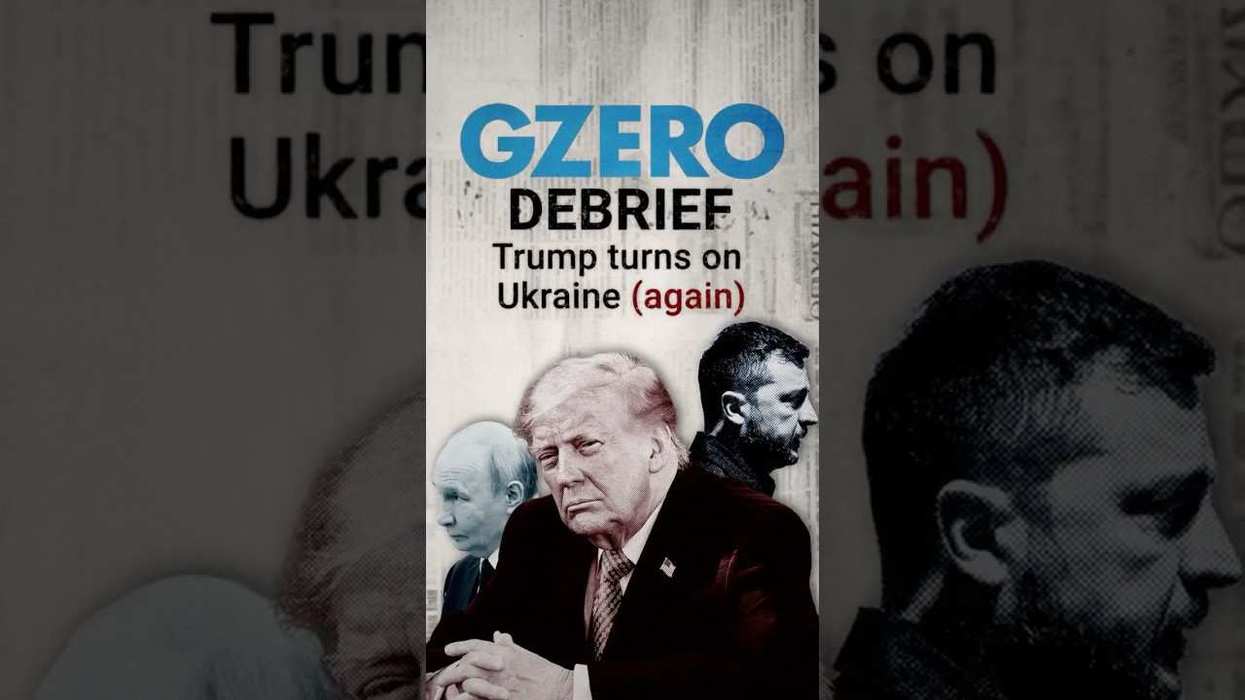
Putin offered Trump enough to encourage the US president to continue talks on a broader US-Russia rapprochement, one that includes benefits for both economies. Trump also has no reason to begin insisting that Ukrainians and Europeans participate in future negotiations, another prize for Putin.
Any halt or slowdown in the intensity of attacks will keep more civilians alive, at least for now. That's good news, and there's likely to be further movement toward a broader ceasefire at some point later in the year, maybe by the end of April.
But a durable peace agreement is another question. Putin made clear to Trump that he has some bright red lines that must be respected. For example, the Russian president insisted there could be no ongoing military and intelligence support for Ukraine from either the US or Europe. (The US readout of the call doesn’t mention that, but the Kremlin version does.) Ukraine’s Volodymyr Zelensky will turn quickly to the Europeans for help, and he’ll get it. Neither Ukraine nor Europe has any reason to accept an end to support for Kyiv. That will be a large problem for Trump in getting the big-splash peace deal he wants.
Still, Trump might soon argue that Ukraine and its Euro allies are the obstacle that prevents a temporary ceasefire from blossoming into permanent peace. If so, Putin will miss out on a peace deal he doesn’t want in exchange for a big new opening with the president of the United States.
That’s where Trump and Putin have left it. From his visit yesterday to Finland, Zelensky offered a positive preliminary appraisal of the energy infrastructure ceasefire, but with some big caveats. He said that he’ll have a “conversation with President Trump” where he’ll try to read the fine print on Trump’s exchange with Putin. That call happened earlier today. He called on Russia to free all Ukrainian prisoners of war as a gesture of good faith, and he vowed to keep Ukrainian troops inside Russia’s Kursk region “for as long as we need.”
But the energy ceasefire is essentially a scaled-back version of the proposal for a long-range airstrike halt and naval truce that Zelensky offered before the US-Ukrainian meeting last week in Saudi Arabia. If Ukraine’s president does fully endorse the idea, Europe will quickly get to yes too. Ukraine and the Europeans will then try to work toward winning a broader ceasefire that puts the Kremlin back on the spot. For now, that prospect looks doubtful.
Sadly, today’s news on Ukraine sounds a lot like what we’ve seen in Gaza where, as hard and time-consuming as it was to get that first ceasefire, a move to phase two will yield a lot fewer points the two sides can agree on. And as with Gaza, when that first ceasefire comes to an end, expect a new burst of deadly violence.
That’s why it’s hard to be optimistic that yesterday’s bargaining has moved us any closer to a true and lasting peace, the outcome all sides say they want.