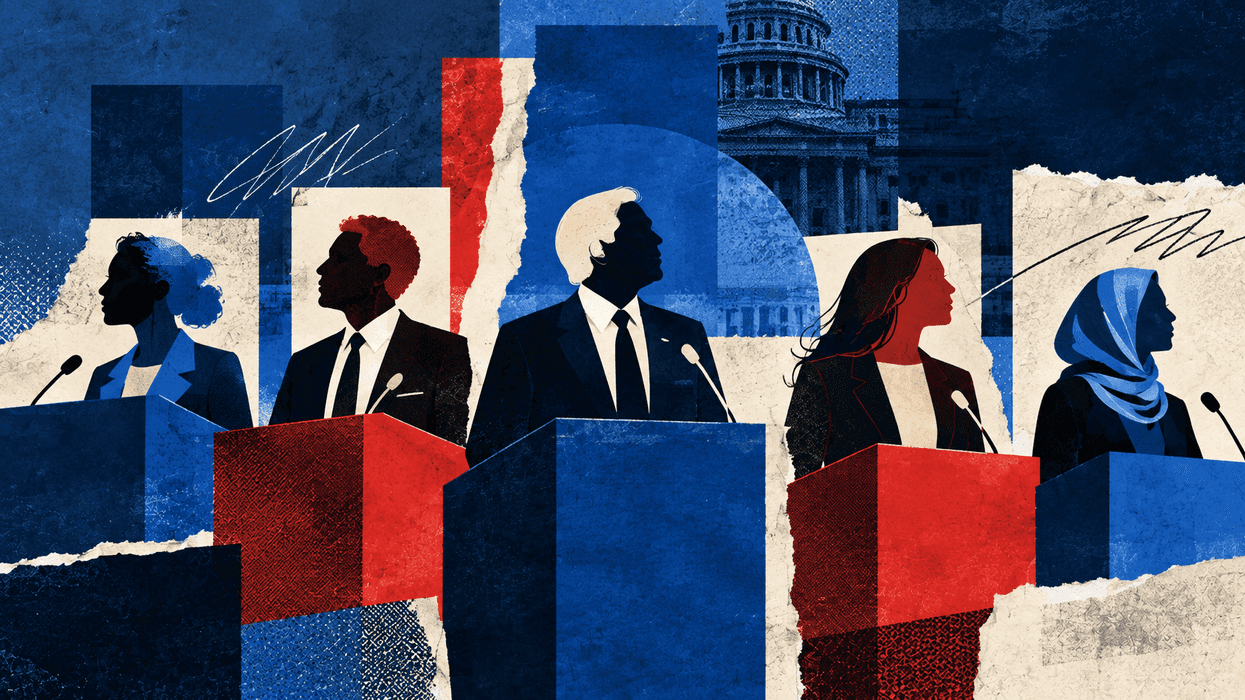
Zohran Mamdani was a long shot. But the 33-year-old democratic socialist state assemblyman flew past former New York Governor Andrew Cuomo’s name recognition and money advantage to win the Democratic primary for New York mayor last week.
On paper, the upset may seem like a parochial story of quirky turnout math and a uniquely flawed opponent in a city so blue it’d elect a Smurf. In reality, Mamdani’s victory is a canary in the coal mine, less for what it says about him and New York politics than the conditions that made his message land. Dismissing it as an intramural oddity misses the broader point: when voters believe the deck is stacked against them, they look for candidates who promise to reshuffle it.
First, a reality check: There’s no guarantee Mamdani will win in November. Only registered Democrats vote in primaries, and the general electorate is a different animal. Moreover, while New York is reliably blue, big outside money is lining up against him, so it remains plausible (even if not super likely) that he could lose to an independent candidate.
Nobody knows how Mamdani would govern if he wins, either. He could push the policies he ran on, some of which could create a crisis if enacted. In the worst-case scenario, they could result in capital flight, plummeting tax revenue, worsened public services, rising crime, and a host of other ills that would make the greatest city in the world slightly less great. (Though none of that would make me consider relocating my home and company HQ. Moose is up for anything.)
But Mamdani will also be a first-time executive constrained by Albany’s veto power and the tough realities and tradeoffs of city management. I wouldn’t be shocked if he governed more pragmatically than he campaigned. He’s already ditched some of his more controversial positions such as “defund the police,” and he’s shown a willingness to engage and evolve. He’s clearly a skilled and ambitious politician who wants to have a successful career in this business; to achieve this, he needs to be popular and win elections, and that means being seen as having done a decent job as mayor. If he does things that make New York’s tax base flee the city, crime go up, and public services fall apart, he will be seen as a failure. As Fiorello LaGuardia said, “There is no Democratic or Republican way to pick up garbage.”
Ultimately, though, how and what Mamdani does in the future is almost beside the point. Nothing will change the fact that he won the primary with an unabashedly far-left, economically populist, soak-the-rich message in the beating heart of global capitalism. New York is simultaneously one of the wealthiest and least affordable cities in America (and the world). Mamdani’s campaign was focused on slashing the cost of living and improving the quality of life for regular New Yorkers, promising a $30 minimum wage, free buses and childcare, city-owned grocery stores to slash food prices, rent controls on stabilized apartments, and higher taxes on the rich and corporations to pay for it all.
In the America I grew up in, this kind of platform would’ve been DOA, and Mamdani would’ve long been ostracized from polite society. The only political label that’s historically been more toxic than “socialist” is “communist.” Everyone knows that’s about as un-American as it gets, which is why Donald Trump calls anyone to his left a communist, from Mamdani to Barack Obama, Joe Biden, and Kamala Harris.
But here’s the thing: the slurs only carry weight if people still see the United States as capitalist. Increasingly, they don’t. The United States looks less like a free‑market meritocracy – the kind with equal opportunity, open competition, rags-to-riches possibility – and more like a pay‑to‑play kleptocracy where access and advantage are auctioned to the highest bidder.
When Mamdani said that “billionaires shouldn’t exist,” he wasn’t threatening to line them up at dawn, but rather just to tax them down to size – at least as long as the playing field looks as tilted as it presently does in the United States. A growing number of Americans, those for whom the American Dream is the stuff of history books and “socialism” gives more Sweden vibes than Cuba, are on board for that.
Socialists may still not be able to beat capitalists, but if voters conclude that America has devolved into a two-tier system that rewards proximity to power more than hard work, don’t be surprised when a Ugandan-born millennial socialist like Mamdani has a shot against oligarchs and kleptocrats.
This country’s last successful populist wave started with a Queens real-estate showman promising to blow up business as usual. Trump won the White House twice on the back of voters who believed that democracy was broken and the game had been rigged against average Americans by coastal elites and the “deep state.” He’s spent a decade blaming global trade and immigration for working‑class pain, to reasonable success. But when it comes to “draining the swamp,” Trump has done anything but. Instead, he has expanded the swamp – and I’m not just talking about the new Alligator Alcatraz he's so excited about. Now Republicans in Congress are ramming through the One Big Beautiful Bill, which is set to be the largest wealth transfer from the poor to the rich in modern US history and will burden future generations with trillions in additional debt. Talk about class warfare.
If you’re 25, saddled with student loans, priced out of housing, and watching Trump cut the social safety net you’re paying into to fund tax cuts for his billionaire friends and cronies, soaking the rich increasingly looks not just like common sense but like self-defense. It’s no wonder Mamdani’s message resonated.
And I suspect the demand for what he’s selling will only grow in the coming years. Advances in artificial intelligence threaten massive job losses among white-collar workers. The backlash this time around will be driven not by blue-collar, working-class men in the Rust Belt but by priced-out urban professionals with advanced degrees and politically active suburban moms whose over-educated, under-employed children won’t have the opportunities they thought they would. Trump’s protectionist, anti-immigrant crusade won’t win over that crowd. Establishment Democrats haven’t come up with a good answer yet, either.
This doesn’t necessarily mean Mamdani himself is about to become the left’s new Trump. The fact is Mamdani is everything Trump wished Obama could’ve been: actually born in Africa, actually a Muslim, and actually a (democratic) socialist. That may be a winning combo in Brooklyn coffee shops and parts of the Bronx; color me skeptical it plays out as well in swing districts across the country. But the policy lane Mamdani has staked out – call it “anti-kleptocratic economic populism” – is wide open for someone with more national appeal to speed through it.
CEOs should worry less about Mamdani and more about the energy he’s tapping into. Those who mistake lobbying spend for sound strategy will one day wake to find themselves the targets of bipartisan populist pitchforks. If companies don’t start embracing genuinely open competition and mainstream politics remain unable to fix the optics of a rigged game, voters will send outsiders to rewrite the rules for them.