Just three years ago, people around the world viewed the US more favorably than China. That is no longer the case. According to data published by the Pew Research Center this summer, China now receives more favorable ratings in most of the 36 countries surveyed.
It’s a dramatic change from just a year ago, when 49% of those surveyed had a favorable view of the US, while 37% had a favorable view of China. Even Americans are warming to China, especially young Americans, embracing so-called “Chinamaxxing” on social media, a tongue-in-cheek trend where Americans adopt elements of Chinese culture.
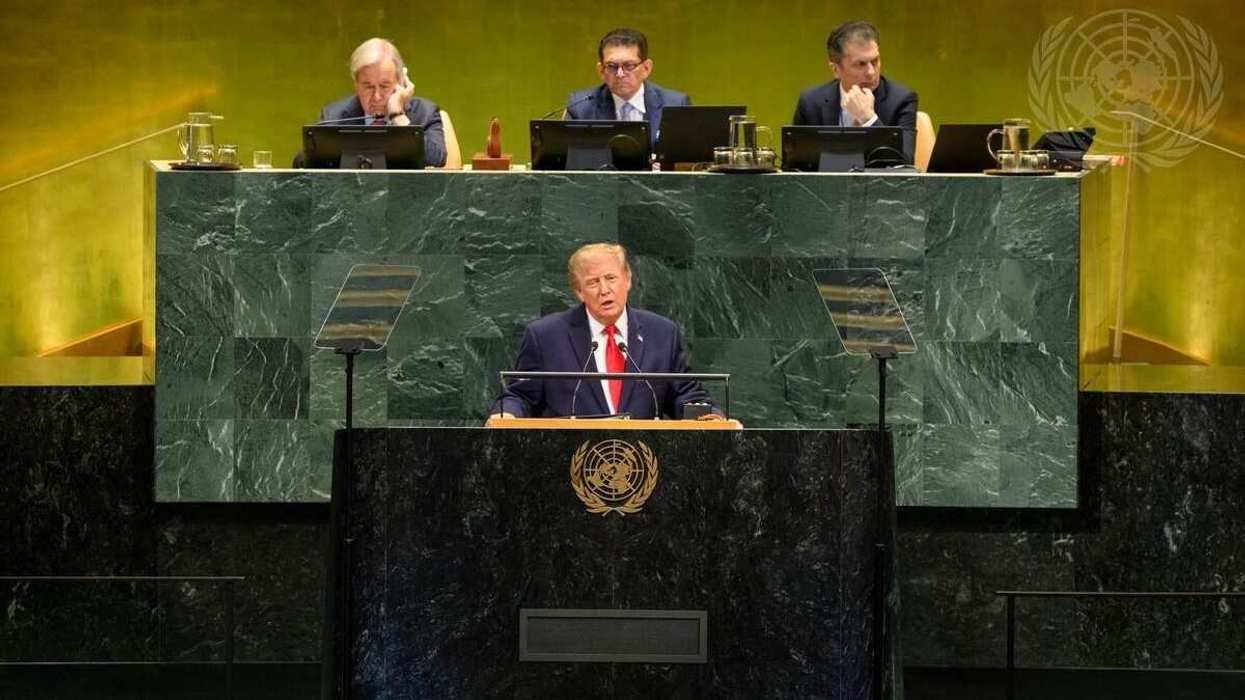
This shift is set against what’s happening inside the United States. President Donald Trump has pursued a more unilateralist and transactional approach to foreign policy, questioning alliances and imposing tariffs on allies. As Ian Bremmer has often said, the US is stepping back from the global order it’s led for decades. There are reasons to believe Beijing, meanwhile, has the economic clout, trade relationships, and technological reach to fill some of the space Washington leaves behind. The question is, can it?
A reliable trade partner. China is presenting itself as a more dependable and inclusive partner than the US today, whether in trade, international development, or AI.
“One of the things that the Chinese Communist Party is continually trying to do is take advantage of the idea that there's continuity and stability to it,” said Jeffery Wasserstrom, a professor who teaches Chinese history at UC Irvine.
US trade policy, by contrast, has become synonymous with uncertainty, with tariffs and negotiating demands shifting frequently. Canada abandoned trade talks in August after the US repeatedly changed its demands, resulting in both sides imposing steep tariffs on each other's goods.
China has taken a different path, leaning into regional trade partnerships. In 2022, China ratified the Regional Comprehensive Economic Partnership (RCEP), a trade deal resulting from 10 years of negotiations among 10 ASEAN countries, plus Australia, China, Japan, New Zealand, and South Korea, representing over 30% of global GDP. China has further expanded its reach through trade deals and development initiatives, most notably its ambitious Belt and Road Initiative (BRI), designed to expand infrastructure in developing countries. China’s exports to the Global South grew 39-fold between 2000 and 2024, while the US’s grew only two-fold.
Another example is in AI. The US’s AI governance initiative, Pax Silica, brought together several allies, including the UK, Australia, and France – so long as they didn’t join China’s AI initiative. Despite the initiative, the US has instead ignored allies’ calls for governance and pushed to accelerate AI growth without meaningful guardrails.
Meanwhile, China launched the World Artificial Intelligence Cooperation Organization (WAICO) earlier this year, pledging to help developing nations benefit from AI development rather than fall behind. Chinese companies also offer “open-weight” AI models – publicly available models that anyone can download, study, and customize – which are much cheaper than US models.
But here is where China’s pitch begins to collide with its record. Despite Beijing’s language about multilateralism and equal partnerships, the size of China's economy gives it significant leverage over the states it deals with – which it uses to its benefit.
“China continues to do things that are highly problematic regarding trade, including using economic coercion against countries that do things it doesn't like,” explained Joshua Kurlantzick, a senior fellow for Southeast Asia and South Asia at the Council on Foreign Relations. When Lithuania allowed Taiwan to open a de facto Taiwanese embassy in Vilnius in 2021, China responded by closing its markets to Lithuanian products – demonstrating that it might play by different rules than the US once did.
Messaging vs. Reality. Despite its messaging, China hasn’t stepped into the void the US left abroad. Much of the American humanitarian and development assistance, including through the since-gutted USAID or UN aid, came as grants. China’s Belt and Road Initiative, by contrast, initially started as loans that developing countries had to repay – often at high rates. Plus, China has been accused of flouting human rights with crackdowns on various civil society groups and minority populations.
“Originally [the loans] were incredibly favorable to China, so some countries thought they were predatory, and they weren't helping China's image,” Kurlantzick explained. Although it has since reduced those terms and invested more in traditional aid since 2019, it’s still far from the humanitarian efforts the US once led.
China’s rise isn’t just about China. While Xi Jinping wants to give the impression that China is becoming the world’s leading superpower, the story is more complex.
In fact, Xi may not be the strongman he wants to appear to be. “What people miss often is that Xi Jinping is not really a great leader,” Kurlantzick said. Xi has struggled with an unbalanced economy and overregulating the private sector. On top of that, repeated purges of his generals have also raised questions about his leadership.
“If China had a better, more effective leader since 2012… then the US would be in much worse shape. In fact, China probably already would be the global hegemon,” Kurlantzick argued. Instead, China’s rise is “partly a reflection of the US setting its credibility and soft power on fire.”
Canada makes for a striking example. As Trump made repeated threats to annex it and make it the “51st state,” Canadians began souring on America, and positive views of China rose. Now, Canadians have more positive views of China than the US for the first time in roughly two decades of Pew polling.
For Canada, as with many countries reassessing their relationship with the US, China’s consistency and reliability are an appealing pitch. But when it comes to stepping into the role of world leader, China might not fit the bill. But if it doesn’t – who, or what, comes next?