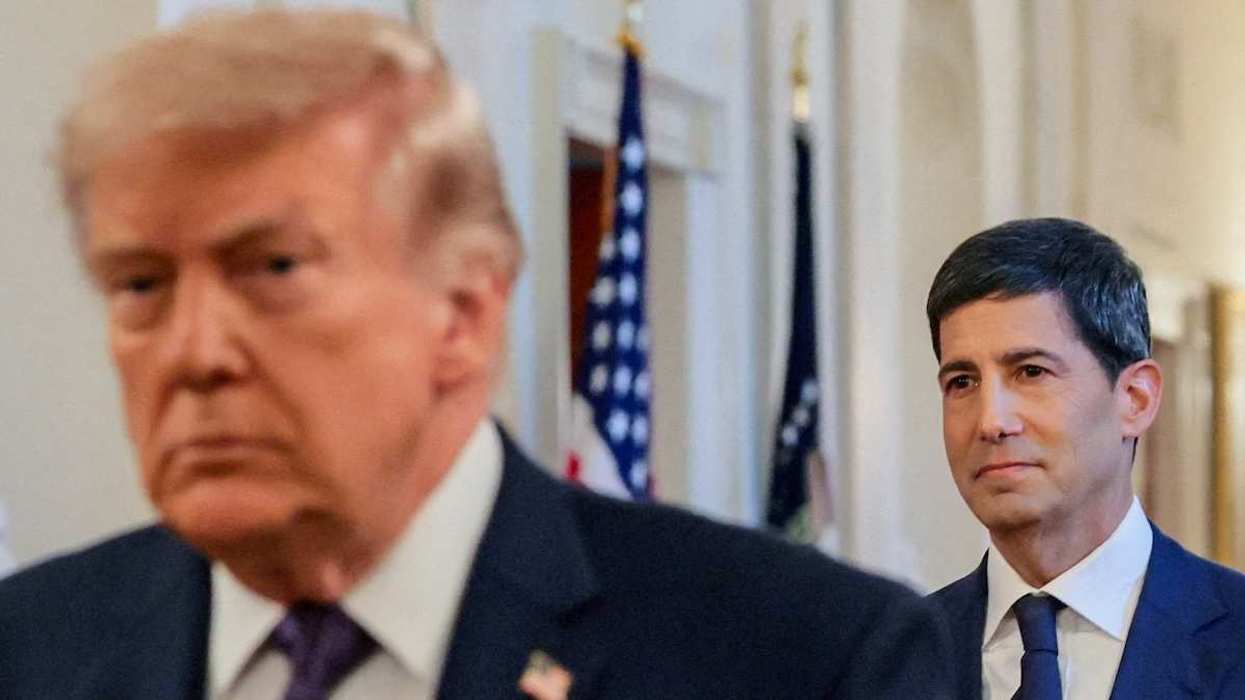
“To the victor belong the spoils,” US President Donald Trump declared before the UN General Assembly in New York on Tuesday. Trump was talking about the massive oil deal the US struck with Venezuela this year following the ouster of strongman Nicolás Maduro. The message – and the very Trumpian approach to geopolitics behind it – was clear: the winner takes all.
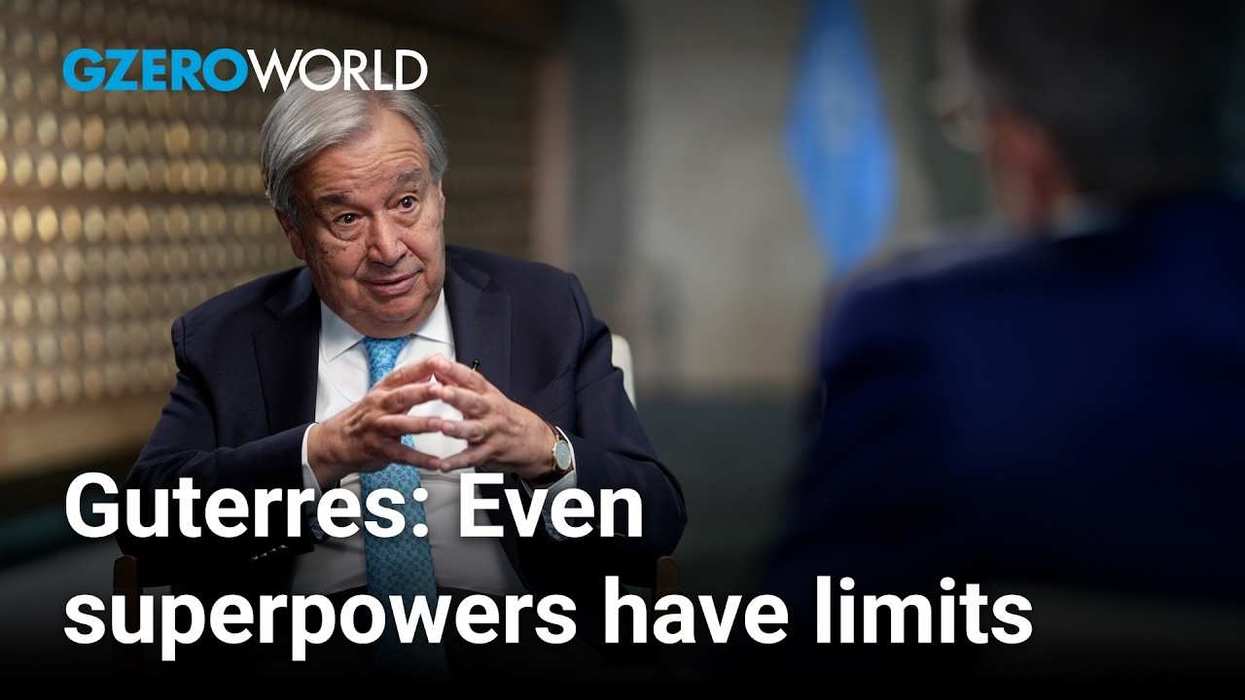
It was a striking message to deliver at the world’s largest multilateral organization. Minutes earlier, UN Secretary-General António Guterres, whose term ends in December, had made the opposite case. “The greatest power is not the power to dominate,” Guterres said. “It is the power to build a future that works for everyone.”
The contrast captured a much bigger shift. GZERO has long written about the decline of the US-led post-World War II order. Trump did not cause that decline, as Ian Bremmer has argued, but he has accelerated it, embracing a more unilateral and transactional approach with both allies and adversaries.
But one of the biggest changes in US policy has been a drawback from the UN itself. That has left the body in an uncomfortable position: for most of its eight-decade history, it has sought to represent the world while depending disproportionately on the United States to pay the bills. The US is assessed 22% of the UN’s regular budget and roughly 26% of its peacekeeping budget. In 2025, its regular-budget assessment was more than $820 million, and Washington has historically contributed billions more through specialized agencies and voluntary humanitarian programs.
The US has been scaling back. In January, Trump ordered the US to stop participating in or funding 31 UN entities, along with moves to disengage from the World Health Organization, the UN Human Rights Council, UNRWA, and UNESCO. The White House argues that many of these bodies are ineffective, hostile to American interests, or infringe on US sovereignty.
In his speech Tuesday, Trump took credit for forcing the UN to cut costs. “The United Nations has great potential,” he said, “but it must stop imposing the far-left agenda of globalist bureaucrats no one ever elected.” He also rejected any potential international constraints on artificial intelligence, which he argued should be renamed “super intelligence,” putting him at odds with Guterres, who has pushed for greater international cooperation on governing the technology.
Washington isn’t fully walking away from the UN, either. Last week, it paid $725 million in overdue dues to preserve its vote in the General Assembly, along with $102 million for peacekeeping. The US still owes another $1.3 billion to the regular budget. Rather than abandon the organization, the Trump administration says it wants to reshape it into a “leaner, more focused” body – one more tightly focused on US priorities and more in keeping with Trump’s transactional approach to geopolitics.
The UN has started to adapt. Guterres’ reform drive trimmed the organization’s 2026 regular budget by 7% from 2025, to $3.45 billion. In June, member states also changed a 75-year-old accounting rule, allowing the UN to keep $400 million in regular-budget credits and more than $900 million in peacekeeping credits on its books to stave off what officials called an “imminent financial collapse” – at least on paper.
As of September 16, 140 member states had paid their 2026 regular-budget assessments in full. But the US pullback creates a bigger planning problem for UN officials: American funding can now swing dramatically from one presidential administration to the next.
Could the US come back? Trump’s speech itself offered a glimpse of the changing dynamics. As he moved through topics ranging from the US economy and midterms to Greenland and AI, the crowd in the General Assembly appeared to lose interest, only perking up when he turned to Iran. “Do I drive them into hell?” he asked.
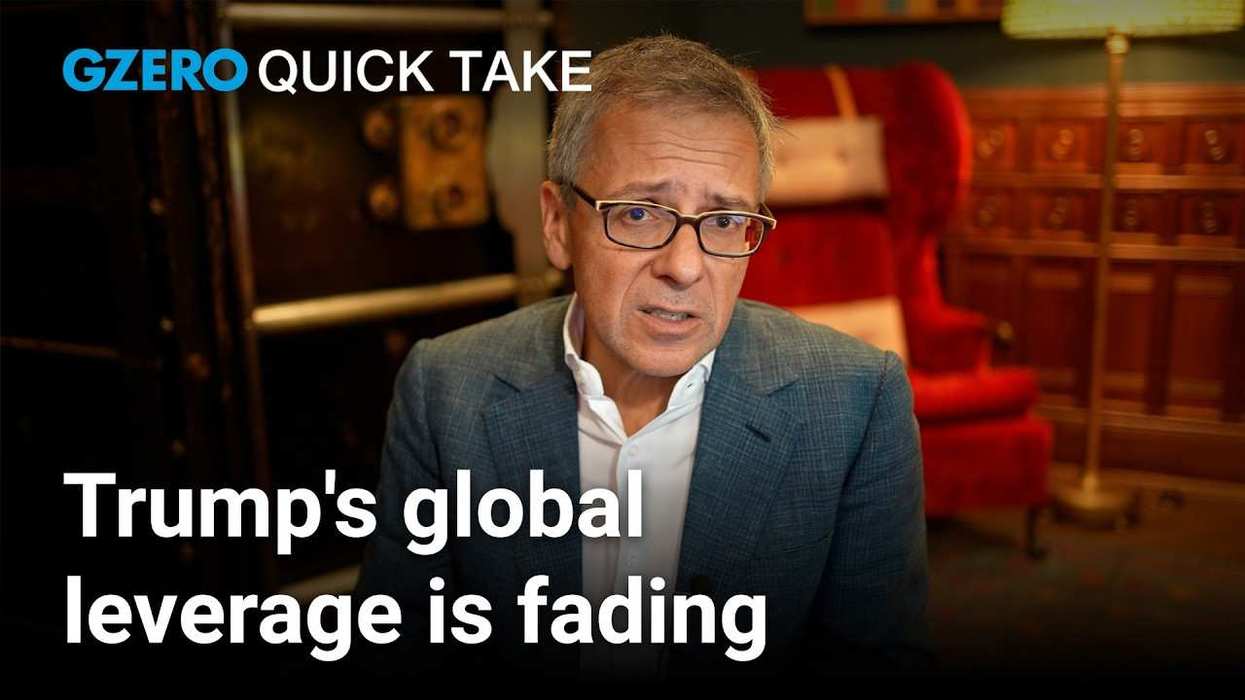
But Trump has struggled to force Iran to buckle, militarily or economically. As Ian has argued, Trump may have already hit “peak” leverage on the world stage – a reminder that even the world’s most powerful country faces limits on its ability to get others to do what it wants.
But could a future American president turn things around? Public support for continued US engagement with the UN remains strong: 79% of Americans support US membership, while 60% consider the organization necessary. Views of the UN itself, however, remain sharply partisan. A 2025 Pew survey found that 77% of Democrats and Democratic-leaning independents viewed the UN favorably, compared with 37% of Republicans and Republican leaners.
Recent history shows how quickly US policy can change. Joe Biden reversed several of Trump’s first-term foreign-policy decisions, rejoining the WHO and the Paris climate agreement and returning the US to UNESCO. Trump reversed course again when he returned to office. But if the US is no longer seen as the leader of the postwar world order – and if that order itself has been upended – Washington may find it harder to regain the influence it once wielded simply by rejoining the institutions it helped build.
The organization was built for a world in which great powers like the United States were willing to underwrite a multilateral system even when it did not always serve their immediate interests. That world is fading – with or without Trump in it. The question now is whether the UN can adapt to whatever comes next.