US strikes controversial Venezuela oil deal
The US government will take a majority stake in a new company that has the rights to develop 65 million barrels of Venezuelan crude, or about one-fifth of the country’s total proven reserves. The deal aims to secure massive investment in the dilapidated Venezuelan oil industry, boost US energy security, and yield huge new tax revenues for the Venezuelan government to spend on economic development. But it’s controversial. There is little precedent for one government having such direct control over another country’s oil resources. The deal was also struck with Venezuelan acting president Delcy Rodriguez, installed under duress by Washington after the US deposed her former boss, strongman Nicolás Maduro. That lack of democratic legitimacy surrounding a matter of such critical importance to Venezuela’s economy and society could poison the deal under future governments or administrations. It is already unpopular both among Venezuelan hardliners who see it as a capitulation, and among Venezuela’s opposition, which sees it as illegitimate.
Greece and Israel sign “Achilles Shield” defense deal
Greece has signed a deal with Israel on Monday worth $3.5 billion for a multi-layered air defense system – one of the largest defense agreements in Israel’s history, according to Israel’s Defense Ministry. The “Achilles Shield” feeds into Greece’s push for military modernization and growth in domestic defense manufacturing, with Greek companies’ participation accounting for roughly $870 million of the project. Greece is already one of NATO’s top spenders, contributing 3.1% of its GDP to defense in 2024. However, a tense relationship with neighboring Turkey, with which it shares a long-disputed sea border, coupled with its being partially within reach of Iranian medium- and long-range missiles, has driven an interest in strengthening its security. Israel has also significantly ramped up its weapons sales after its combat-proven systems have generated strong international demand, overtaking the United Kingdom in March as the world’s seventh biggest weapons exporter.
Russia to the rescue for Niger’s junta
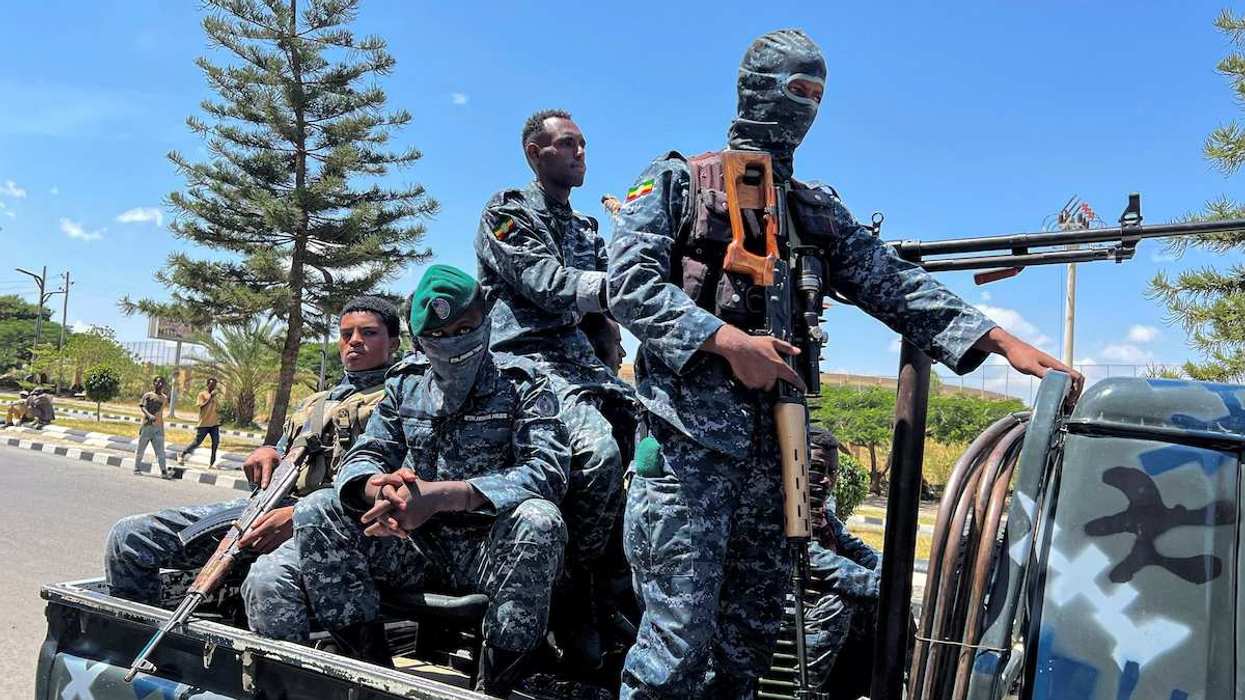
Niger’s military junta survived a mutiny over the weekend from Russian forces stationed in the country. Gunfire erupted in the capital city of Niamey late Friday after soldiers took loyalist troops hostage at an air base and attacked government forces near the presidential palace. That sparked an hours-long standoff before Russia’s Africa Corps, a Kremlin-controlled paramilitary force, stepped in to help put down the uprising. The mutineers were reportedly frustrated by Niger’s security situation, which has deteriorated since the military seized power in a 2023 coup. It’s the second time in recent months that Russian forces have helped prop up a military government in the region, after assisting Mali’s junta during an attack in May. The episode is another sign of Moscow’s growing influence in the Sahel, where as many as 2,000 Russian mercenaries are now stationed across Mali, Niger, and Burkina Faso, allowing Moscow to pursue resource deals and fill a vacuum left by retreating Western powers.