On August 4, the Trump administration notified Congress of its intent to pay the United Nations $725 million – less than a fifth of the roughly $4 billion the UN says the United States owes in unpaid membership dues. It will also pay $125 million towards UN peacekeeping operations in Haiti and the Democratic Republic of Congo, although it was asked to contribute $1.5 billion to peacekeeping in 2025.
This comes as the UN faces what Secretary General António Guterres called an “imminent financial collapse” due to unpaid fees and is undergoing a significant cost-cutting exercise. It has cut its budget by 9% this year and is moving thousands of jobs away from expensive cities like Geneva and New York. Even so, the shortfall has left the UN struggling to fund human rights projects in 87 countries including Ukraine, Sudan, Gaza, Haiti, and the Democratic Republic of the Congo – last year, they observed over 1,300 trials, supported 67,000 torture victims, and helped release 4,000 people from arbitrary detention.
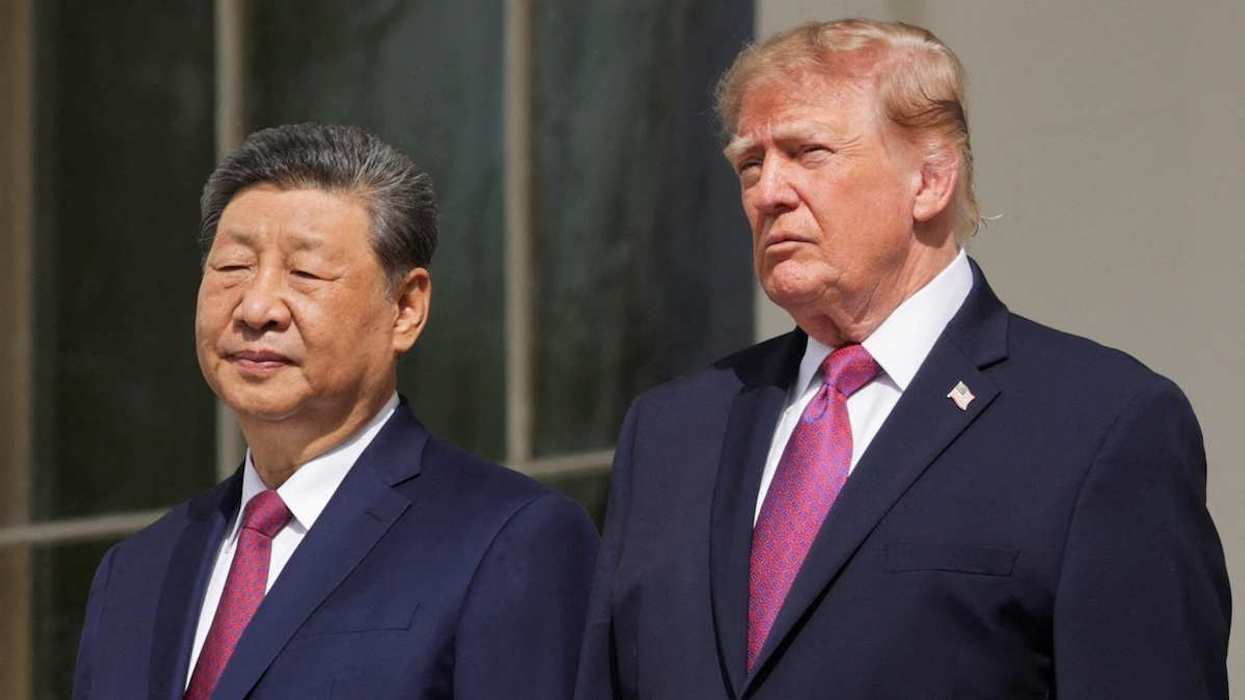
A significant part of the UN’s funding problem comes down to a very small number of countries. Just two members – the US and China – account for 42% of the UN’s regular budget, contributing 22% and 20% respectively. China also currently owes around $455 million.
That concentration creates what Raphaël Viana David, a program manager at the International Service for Human Rights who researches UN funding, called “major donor syndrome”: the biggest contributors expect to see their priorities better reflected across the organization. For example, his research found instances of China and Russia blocking or cutting funding to UN investigations into human rights abuses, which they see as infringing on state sovereignty.
How does the UN decide who pays? Fees are shared among member states by the Committee for Contributions, largely based on each country’s share of the global economy and their ability to pay, said Brett Schaefer, who was a member of that committee from 2019 to 2021.
These numbers are then adjusted according to a set of factors including GDP per capita and debt burden. China, which has a high share of the global economy but low GDP per capita due to its population size, has previously seen its fees reduced to account for this.
Who has the power? In January, US President Donald Trump issued an executive order withdrawing from dozens of UN bodies that he called “contrary to the interests of the United States” and cut millions of dollars in voluntary funding. “The US is embracing a very disruptive and a very anti-system position,” Viana David said.
Despite those cuts, the US remains the largest contributor to the regular UN budget and has used that financial weight as leverage, repeatedly withholding payments to push for organizational reforms. For example, Washington told the UN in April that it would not release the billions of dollars it owes unless the UN cut costs and made changes to counter China’s influence in the organization. Viana David explained this as part of a broader shift in the US approach: not abandoning the UN, but pushing for a smaller organization more closely aligned with US priorities – “a trimmed-down UN that is more palatable to the US.”
China has pushed back against that pressure, instead pointing to Washington’s unpaid dues. Its UN mission said in April that the “root cause” of the financial difficulties facing the UN was the unpaid fees from “its largest contributor” – the US.
However, Schaefer said that the two aren’t unreasonable for wanting more control over what they pay. Budgets and contributions are often voted on by countries with little “financial skin in the game,” Schaefer said, explaining that “the obligations or the implications financially for those decisions are not necessarily distributed.”
What can the UN do? The UN’s only real lever is Article 19 of its charter, which strips a member state of its vote if it owes more than two years’ unpaid fees to the regular UN budget, which excludes voluntary contributions to other UN agencies, such as UNICEF or the WHO.
But even if applied, Schaefer said Article 19’s impact would be more symbolic than practical: the rule would affect only the UN General Assembly, not bodies such as the Security Council, where the US holds a permanent seat regardless. And votes at the General Assembly are rarely close, coming down to a one-vote margin just a few times in UN history – in 2003 in an 80-79 vote on human cloning, and again in 2007 in a 79-78 vote condemning human rights abuses in Iran.
What comes next? Although the US and China pay a significant share of the UN’s budget, Viana David emphasized that the countries that contribute the remaining 58% shouldn’t be forgotten. He pointed to the EU as a possible bloc – which collectively funds 22.3% of the budget – to challenge the dominance of the US and China by coordinating amongst its 27 member states to present a unified position. In 2025, EU members voted against Russia and the US to pass a resolution condemning the war in Ukraine, which passed.
“We need middle ground states to really step up… and reaffirm their support to the UN and to multilateralism and to be bold in the reform that they undertake to ensure that the organization does not depend on hegemonic powers,” Viana David said.
Schaefer also said that the UN could seek to diversify its funding by spreading costs among members, making it less vulnerable to missed payments from any individual state. For now, though, two countries continue to exert an outsized influence on what the UN can achieve, depending on how much they are prepared to pay – even though each officially gets just one vote at the assembly.
“What is the future of an organization where 42% of the budget is in the hands of only two countries, and those two countries are clearly seeking to wield influence?” Viana David asked. “Are we still, at [the] UN, one country, one vote, or is influence commensurate to your ability to pay?”