I’ve said it before: since Donald Trump took office for the second time a year and a half ago, the United States has been the largest single driver of global political risk. Not Moscow, not Tehran, not Beijing – Washington. When the leader of the most powerful country in the world – the one that built and upheld the global order for eighty years – decides the rules should no longer apply to either him or America, he is bound to drive an inordinate amount of uncertainty.
But I’m now ready to call the top on Trump-induced chaos. Yes, I know he still has most of his term left and no shortage of disruptive fervor. But I believe we’ve now passed the peak of his ability – even if not his willingness – to wreak global havoc.
We’ve seen it on his two most maximally-disruptive policies, both of which hit the same ceiling and ended with the American president backing down.
Liberation Day last year saw the United States impose the highest tariffs on its trade partners in nearly a century and effectively boycott Chinese imports, on the assumption that China’s smaller and structurally vulnerable economy would force Xi Jinping to capitulate in short order. But instead of folding, Beijing absorbed the economic pain and hit back hard, wielding leverage it had spent decades assembling – control over the rare-earth and critical-mineral inputs on which the US and the global economy depend – long enough to force Washington to blink first. China’s rare-earth weapon proved more painful than Trump had anticipated; unable to stomach the financial, economic, and political cost of a prolonged standoff, the US president backed down.
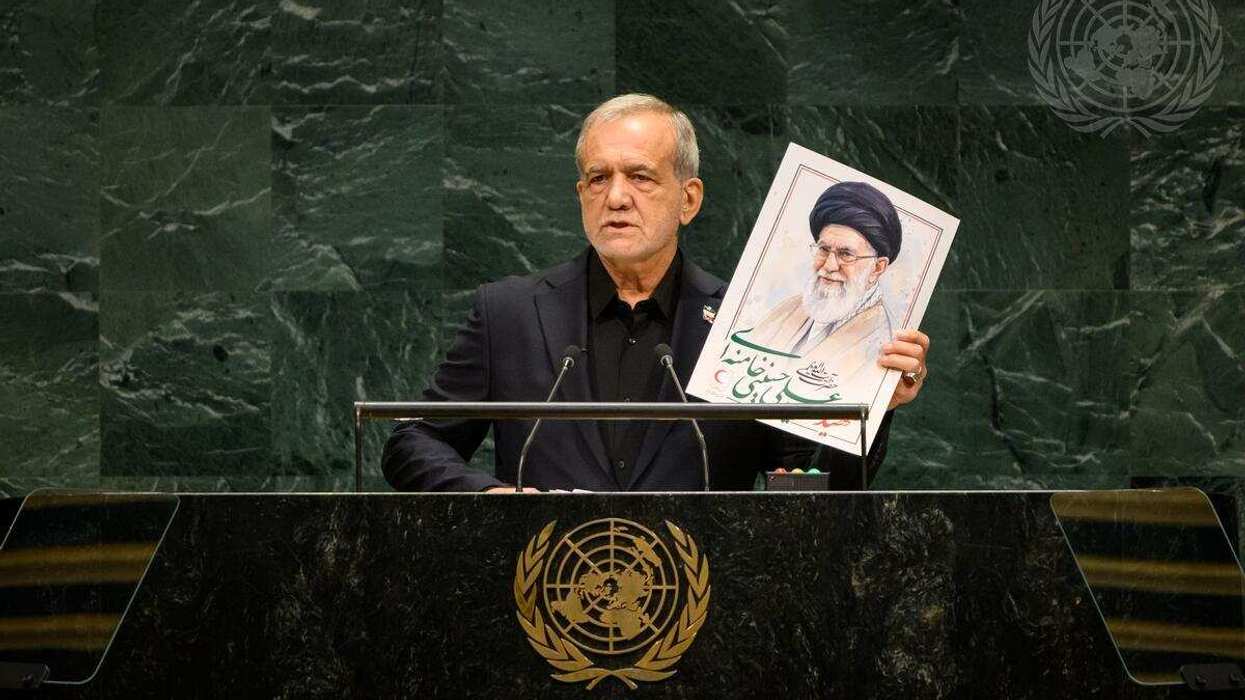
Something similar has played out with Iran this year. Trump’s war of choice against the Islamic Republic set out to topple the regime, destroy its nuclear capabilities, end its missile program, and cut off its support for proxies across the Middle East. Once again, his working theory was that this could all be achieved easily and painlessly, as the much-weaker Iranians would quickly capitulate in the face of America’s overwhelming military superiority. But instead of suing for peace after the US and Israel killed Supreme Leader Ali Khamenei and wiped out much of Iran’s military command, Tehran launched wave after wave of retaliatory strikes against US bases and energy infrastructure in Gulf Arab countries, and weaponized its own chokepoint: the Strait of Hormuz. The impact of the Strait closure on energy markets, the global economy, and Trump’s domestic political standing was massive, ultimately – albeit not before much denial, anger, and bargaining – forcing the president to accept an outcome that accomplishes none of his initial objectives and leaves the Iranian regime in a stronger strategic position than it was before the war. Don’t take it from me: 92% of Israelis believe that Iran has won the war, according to a recent Hebrew University poll, while less than a quarter of Americans think the US won it, per an Economist survey.
Whether you blame him for starting these fights in the first place or for TACO’ing too soon, both episodes demonstrate the limits of President Trump’s ability to drive global risk. Trump himself has admitted that Iran’s Hormuz closure would have caused an economic catastrophe if it had continued just a few more weeks. The US would likewise be in a recession right now if Trump had continued the boycott of Chinese goods or retaliated against Beijing’s critical minerals restrictions. The reason why he backed off both times and the catastrophic scenarios that once looked plausible – a full economic rupture with China, a ground war in Iran to “take the oil,” a global recession driven by American policy choices – were averted, according to Trump, is that he didn’t want to be the next Herbert Hoover.
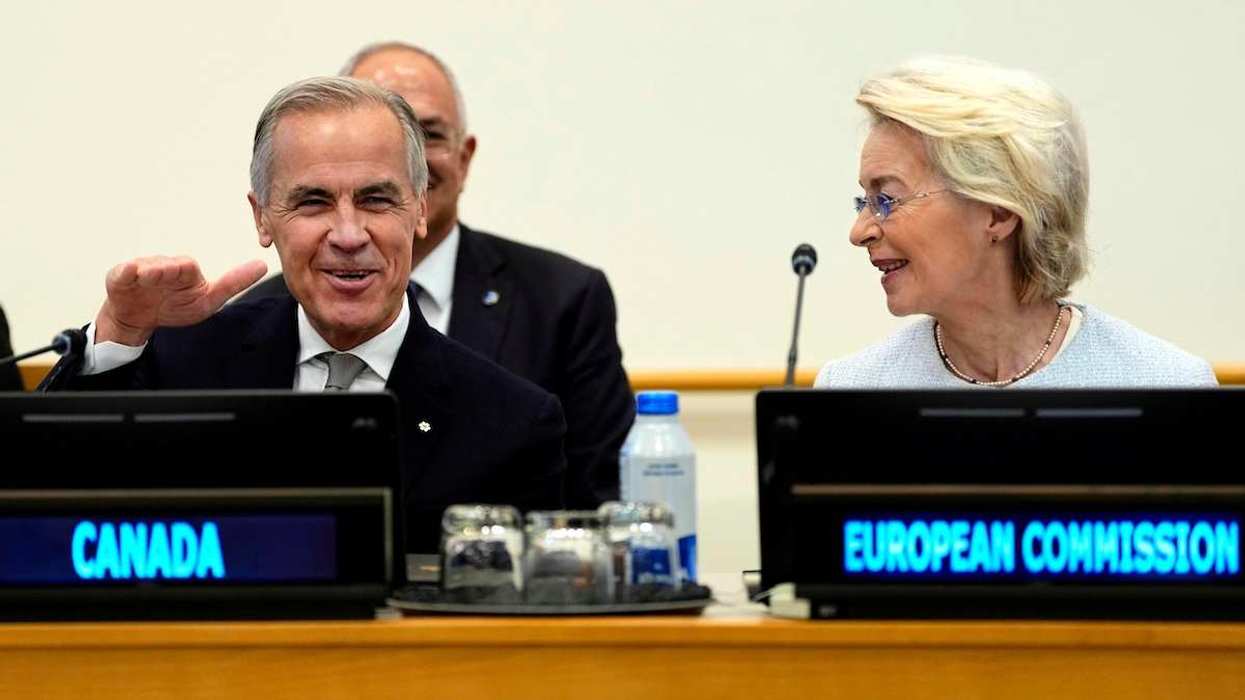
Those retreats have depleted Trump’s political capital and eroded his (and America’s) credibility in ways that are now showing up elsewhere. As midterm elections and Trump’s lame-duck era approach, the cost of pushing back on the president will keep dropping, capping his ability to impose his will on others – both at home and abroad. We’re already seeing this with foreign leaders increasingly willing to say publicly what heretofore they’d only been saying privately. Italian Prime Minister Giorgia Meloni – one of Trump’s most reliable conduits in Europe and the only EU leader who attended his second inauguration – last week accused him of lying about their G7 encounter and mistreating his friends, vocalizing what, by her own account, every US ally already says behind his back. I heard the same from the Austrian president in Vienna a few days later. It helps that standing up to Trump no longer costs a leader anything domestically (if anything it's the opposite – just look at Mark Carney using his opposition to Trump to propel himself into power last year). But more than that, it’s starting to look like the right bet on where power is heading.
Even Trump’s own party is beginning to show signs of defiance. Several Republican lawmakers in the House and the Senate crossed party lines to pass a War Powers Resolution demanding that Trump seek Congressional authorization for the war in Iran or end all military action, and the administration’s $1.8 billion anti-weaponization fund collapsed under more Republican pushback than any policy effort of the term. They’ll be the last to pull away from his gravitational orbit, but elected officials are starting to recognize that their political futures are likely to be a lot longer than Trump’s … and acting accordingly.
None of this is to say Trump is powerless – far from it. He remains one of the most powerful individuals on the planet and commands overwhelming support from the GOP faithful. Although it’s likely to ultimately fail, his attempts at political revolution will persist and intensify through the next two-and-a-half years. Expect continued efforts to weaken checks and balances on the presidency, politicize independent institutions, weaponize government against his enemies, and monetize the office for personal enrichment beyond anything we’ve already seen. And if you believe Trump will gracefully accept defeat at the midterms and potentially the 2028 elections – even though he won’t be on the ticket – think again. But the constraints on the president are becoming greater than his capacity to change outcomes.
Trump will similarly keep driving plenty of risk and instability around the world, all the more so as courts and a divided Congress limit his domestic agenda … but to a lesser degree than we’ve seen over the past year and a half, and in places with less global impact. Trump still craves a legacy-cementing (and Nobel-worthy) foreign-policy win, but after Iran his instinct has shifted back toward small, targeted interventions over open-ended military commitments.
The Western Hemisphere is an especially target-rich environment for those purposes, full of weaker countries that are structurally dependent on Washington, have no economically-critical chokepoints to wield against Trump, and can be brought to heel with relatively limited force (not to mention, the administration dedicated a whole doctrine in its National Security Strategy to its strategic importance). Venezuela is the proof of concept: Maduro surgically removed, a far more pliant government installed in Caracas, and Washington dictating policy going forward – with little pushback or downsides. Watch Mexico next, where the Americans are pushing Claudia Sheinbaum hard – going after members of her own party and cabinet – testing just how much sovereignty her government is willing to defend. And watch Cuba, the bigger prize still on the table, where Trump thinks he can replicate his Venezuela success with much greater historical resonance.
Trump is still president, still making noise, still winning in some places and losing in others. But the targets are increasingly smaller, the stakes more bounded, and the global consequences more limited. He’s not done causing trouble, but his capacity to do long-lasting damage has peaked.