Skip to content
Search

Latest Stories

News

CLIMATE CHANGE IS CHANGING POLITICS

CLIMATE CHANGE IS CHANGING POLITICS

This week, diplomats from around the world have gathered in the southern Polish city of Katowice in an effort to put the 2015 Paris climate accord into practice.


Even as high-level efforts to stave off environmental catastrophe rumble on, climate change is already re-shaping domestic politics in countries around the world. Here are three recent examples.

Smoke on the horizon in France: The yellow vest riots that have gripped France in recent days started as a protest against President Emmanuel Macron's plans to hike taxes on fuel. Mr. Macron billed the taxes as a part of a broader effort to reduce France's carbon footprint. Middle-class voters view them as another hit to their pocketbook during an already tough time economically. Committing to reduce emissions is one thing; getting buy-in from the public, particularly from working-class voters who are disproportionately affected by higher energy prices, will be much harder.

A Green New Deal in the US: There's one way to make the green revolution more palatable to the masses: make it about jobs. Spying an opportunity, a group of incoming House Democrats are pushing for a bipartisan committee to draft legislation that would move the US to 100 percent renewable energy in a decade and create new employment opportunities along the way. Similar proposals have been pooh-poohed as unrealistic in the past, given the massive investments that would be required. But the surprising momentum behind this latest push means support for a Green New Deal could well become a litmus test for Democratic presidential contenders in 2020.

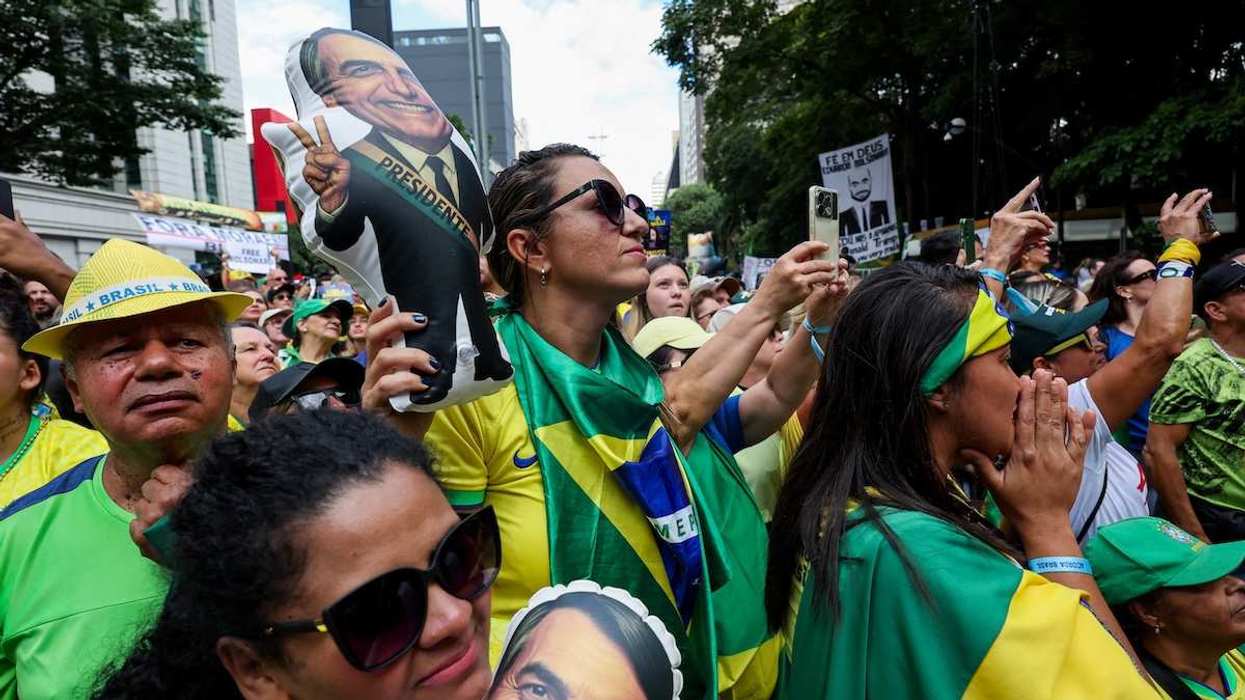
A lot of hot air in Brazil? Brazil's president-elect Jair Bolsonaro is taking the opposite tack. The right-wing firebrand recently withdrew an offer for Brazil to host the next round of global climate talks in 2019, saying "environmental politics can't muddle with Brazil's development." Like President Trump, he has also threatened to withdraw from the Paris accord. That could just be bluster – in part because Brazil's Congress might try to stop him, but also because the move may do less for him politically than simply restraining local environmental regulators' ability to impose fines on big agricultural businesses – a key base of his political support.

More For You

Graphic Truth: Costa Rica’s severe murder rate
Eileen Zhang
Costa Rica was once known as one of the most tranquil and stable countries in Latin America. A dollarized, tourism-oriented democracy so peaceful and picturesque that it didn’t even have an army. That idyll has been blown apart in recent years as murder rates – particularly among young men – have shot up to new highs. The culprit? Drug cartels. [...]
​A flood victim stands at her flooded home after weeks of heavy rainfall in Boane District, Maputo, Mozambique, January 19, 2026.

A flood victim stands at her flooded home after weeks of heavy rainfall in Boane District, Maputo, Mozambique, January 19, 2026.

REUTERS/Amilton Neves/File Photo
392,000: The estimated number of people displaced across Mozambique by recent rain-induced floods. Severe flooding in the southern African nation, as well as in South Africa and Zimbabwe, has killed over 100 people. Experts say climate change has exacerbated the rainfall and flooding. [...]
​Protesters call for US military intervention in Iran.

Protesters call for US military intervention in Iran.

ZUMA Press Wire
Are US strikes on Iran imminent?US President Donald Trump continued to threaten strikes on Iran, saying Thursday they must do “two things” to avoid a strike: end their nuclear ambitions and stop killing protesters. His message comes as the US is building up its military presence in the Gulf (he made a similar move in the Caribbean ahead of the [...]
Costa Rica presidential candidate Laura Fernandez in Heredia, Costa Rica, January 29, 2026.​

Costa Rica presidential candidate Laura Fernandez of the Sovereign People's Party (PPSO) addresses supporters during her closing campaign rally, ahead of the February 1 general election, in Heredia, Costa Rica, January 29, 2026.

REUTERS/Mayela Lopez
In yet another Latin American election shaped by concerns about security and violence, Costa Ricans will vote for president this Sunday.Leading the polls with roughly 40% support is conservative candidate Laura Fernández, the preferred successor and former chief of staff of current leader Rodrigo Chaves, who is popular but cannot run again due to [...]