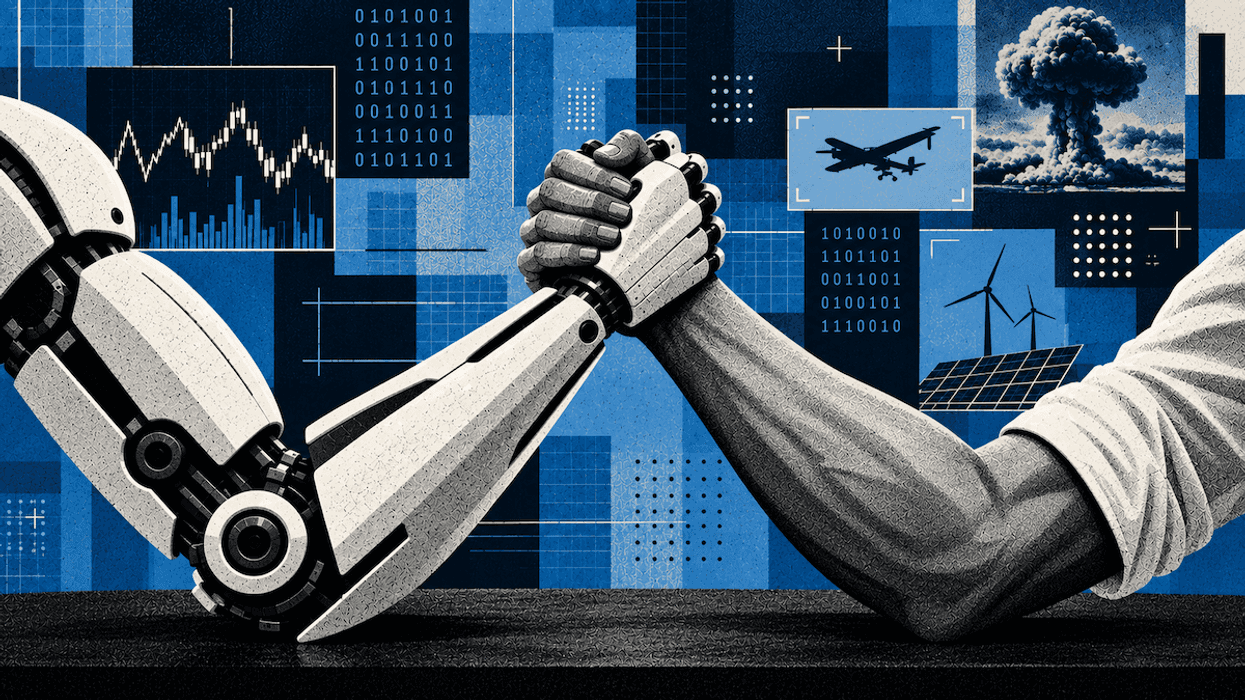
As COVID-19 continues its global attack, many people are thinking that robots look like a pretty good investment right now.
If you're a company decision-maker spooked by the pandemic's massive disruption of economies and supply chains, greater automation of your production lines has a distinct appeal. Robots don't get paid, demand benefits, commute, take vacation, or go on strike. They also don't take sick leave, ask for PPE, or sneeze on other robots. Also, crucially, you can put robots wherever you like – making it easier to take production back to your home country.
If you're an investor trying not to check the balance on your 401K right now, you might be thinking about how automation can make companies more efficient and more profitable, pushing stock prices higher so that you can retire before you turn 80.
If you're a consumer, you might see new value in transactions that don't include the kind of personal contact that spreads deadly viruses.
For all these reasons, COVID-19 will accelerate a process of automation that was already well underway in many sectors. Research shows that the global financial crisis of 2008-2009 already led to the replacement of many workers with machines.
A few thoughts on the implications….
It won't happen all at once. This kind of change takes lots of investment that businesses won't make at a time when demand for their products is low.
Some jobs are easier to automate than others. Coronavirus doesn't change that, even if it creates economic incentives to think more deeply about what's possible. In the US and Europe, employers will be looking in particular to automate many of the millions of retail, services, and manufacturing jobs that have been vacated in recent weeks.
Overseas jobs will also be a target if pressure to bring production "home" now grows.
New kinds of jobs are coming. History shows that technological change can create more jobs than it kills. But the new jobs are likely to fall into one of two broad categories: digital-age jobs for a digital economy and service jobs that don't pay like they used to. That leaves a lot of people out.
Automation will worsen inequality in wealthy countries. This transition to new forms of work won't come easy. People with skillsets better suited to the digitized workplace will have a much easier time than people expected to develop those skills from scratch. The result could intensify the inequality that has already stoked populism and upended political establishments in so many countries in recent years.
Robots pose a special challenge in emerging markets. Hundreds of millions of jobs are at stake in lower-wage countries that have operated for decades as factories for the world's textiles and light manufacturing industries. The International Labor Organization has warned, for example, that 140 million jobs in Southeast Asia alone are at risk of automation in the next 15 years. That's more than half the region's salaried labor force. And that was before the pandemic created new reasons for companies to turn to robots in order to safeguard their production and supply chains against future disruptions.
In both rich and poor countries, governments better be ready. Lost jobs and greater inequality mean that political leaders better be thinking about ways to rewrite the social contract to help those people who can learn new skills and new jobs, and to support those who can't. Displaced people make trouble in democracies and dictatorship alike.
One last thought….
Robots gets viruses too! Cyber-viruses can be just as virulent as biological ones. (Hey, maybe robots do take sick leave.) If companies move to automate their labor forces, they'll also have to invest massively in cybersecurity to immunize them against hackers.