Skip to content
Search

Latest Stories

News

Coronavirus Politics Daily: Trump's grim trade-off, corona vs protests, and a boon for Kenya's fishermen

Coronavirus Politics Daily: Trump's grim trade-off, corona vs protests, and a boon for Kenya's fishermen

Trump wants the US "open" by Easter: US President Donald Trump today said he wants the coronavirus-related lockdowns lifted by mid-April, because he is concerned that the economic costs of these measures is too high. Trump's earlier caution that "the cure can't be worse than the problem itself" is a central principle of public health responses to pandemics, but most serious epidemiologists and public health experts say that easing the lockdown measures makes sense only once hospitals are fully prepared and there is sufficient testing to detect new outbreaks – neither of which is yet true in the US. The idea sets up a macabre calculation of how many lives are worth saving vs the economic impact of doing so, but it could also put governors on the spot: the lockdown measures have been imposed by states, not the federal government. Local authorities may be reluctant to relax the rules for fear of generating a fresh spike in cases. But if Trump is serious, he could also threaten to withhold federal aid from states that defy new, looser guidelines. Something nasty is coming, one way or another.


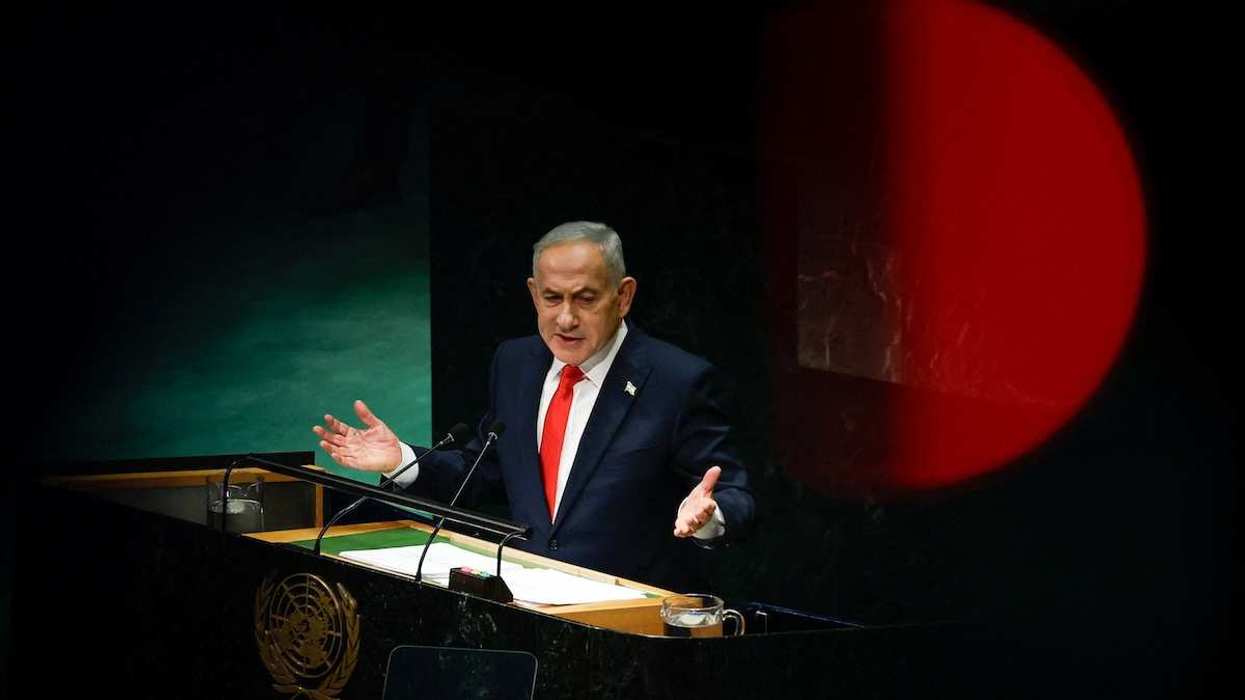
Coronavirus and protest politics: No matter how angry people may be at their governments, few are eager to gather in the streets to lift their voices against authority these days. We've seen lots of recent examples of how fear of coronavirus can undermine protests, while governments are also using new rules against public gatherings to disperse even the bravest of crowds. In India, for example, police have broken up a months-long peaceful protest against a new citizenship law and its prejudicial effect on the country's enormous Muslim minority. The easing of virus fears in China may soon revive long-running protests in Hong Kong. But some in Israel aren't waiting for news that the COVID coast is clear. In response to health regulations banning public gatherings, critics of Prime Minister Benjamin Netanyahu have staged a virtual rally of hundreds of thousands of people to accuse him of using the public health crisis to remain in power. How coronavirus changes the norms and avenue of political mobilization is going to be a big story in the coming months.

Kenyan fishermen's coronavirus boon: Kenyan fishermen have long lamented cheap frozen fish imports from China, which have strangled a local industry that supports thousands of people. But the coronavirus crisis has suddenly changed the picture as Chinese exports have slowed to a trickle amid that country's lockdowns, while Kenyans worried about contracting coronavirus began shunning fish from China anyway. As a result, Kenya's fishermen, who used to complain of having to barter or even give away their catch, are now celebrating as demand for Kenyan fish has surged 80 percent in the past two weeks. But there's a catch, so to speak. Experts warn that Kenyan supplies aren't enough to meet demand, and Kenya could soon face shortages if those Chinese imports don't resume.
More For You

Tokyo Electric Power Company (TEPCO)'s Kashiwazaki Kariwa nuclear power plant, one of the world's largest nuclear facilities, stands along the seaside in Kashiwazaki, Niigata prefecture, Japan December 21, 2025.

Tokyo Electric Power Company (TEPCO)'s Kashiwazaki Kariwa nuclear power plant, one of the world's largest nuclear facilities, stands along the seaside in Kashiwazaki, Niigata prefecture, Japan December 21, 2025.

REUTERS/Issei Kato
54: Japan is reopening the world’s largest nuclear power plant after a regional vote gave the greenlight on Monday. The Kashiwazaki-Kariwa plant, located 136 miles outside of Tokyo, had its 54 reactors shuttered following the 2011 earthquake and tsunami that spurred the worst nuclear disaster since Chernobyl. The decision reflects Japan’s push to [...]
Pro-democracy protesters carry portraits of North Yemen's late president Ibrahim al-Hamdi.

Pro-democracy protesters carry portraits of North Yemen's late president Ibrahim al-Hamdi.

REUTERS/Khaled Abdullah
Group of Yemeni ministers announce support for UAE-backed rebel coalitionIn the latest twist to Yemen’s decade-long civil war, a group of government ministers declared support for the UAE-backed Southern Transitional Council (STC), a rebel group that broke the war’s deadlock earlier this month by seizing control of the oil-rich Handramout region. [...]
US President Donald Trump speaks with Chinese President Xi Jinping at Gimhae Air Base in Gimhae, South Korea, on October 30, 2025.

US President Donald Trump speaks with Chinese President Xi Jinping, during a bilateral meeting at Gimhae Air Base in Gimhae, South Korea, on October 30, 2025.

Yonhap News/POOL/Handout via Sipa USA
Every January, Eurasia Group, GZERO’s parent company, unveils a forecast of the top 10 geopolitical risks for the world in the year ahead, authored by EG President Ian Bremmer and EG Chairman Cliff Kupchan. The 2026 report drops on Monday, January 5.Before looking forward, though, it’s worth looking back. Here’s how the 2025 Top Risks report [...]
US President Donald Trump announces tariffs on US trading partners at the White House in Washington, DC, USA, on April 2, 2025.

US President Donald Trump arrives to announce reciprocal tariffs against US trading partners in the Rose Garden of the White House in Washington, DC, USA, on April 2, 2025.

POOL via CNP/INSTARimages.com
As GZERO readers will be all too aware, 2025 has been a hefty year for geopolitics. US President Donald Trump’s return to office has rocked global alliances, conflicts have raged from Khartoum to Kashmir, and new powers – both tangible and technological – have emerged.To put a bow on the year, GZERO highlights the biggest geopolitics stories of 2025. [...]