Skip to content
Search

Latest Stories

GZERO AI

WHO can succeed at AI?

World Health Organization (WHO) displayed on screen with pharmacy medical syringe and vaccine vial. Seen in this photo illustration, in Brussels, Belgium, on September 24, 2023.

World Health Organization (WHO) displayed on screen with pharmacy medical syringe and vaccine vial. Seen in this photo illustration, in Brussels, Belgium, on September 24, 2023.

Jonathan Raa via Reuters Connect

The World Health Organization recently released Smart AI Resource Assistant for Health — or SARAH — an AI chatbot that’s able to answer basic health questions. SARAH is able to answer health questions in eight different languages, and the organization says she’s a tool to fight misinformation about mental health, cancer, and COVID, among other things.


The WHO bills SARAH, which appears as a female avatar with a voice and facial expressions, as a digital health “promoter” — not a provider — and, though SARAH hasn’t taken the Hippocratic Oath, it’s meant to fill in the gaps for people searching for health questions without access to proper health care providers. (They’ll still need a broadband connection.) You can speak through a microphone, and SARAH will respond, or you can type your answers to a similar effect.

But SARAH still struggles with plenty of basic queries, according to independent researchers who spoke to Bloomberg.

SARAH is trained on GPT-3.5, the model that OpenAI powers its free version of ChatGPT with, not the updated premium version (that’s GPT-4). Bloomberg found that SARAH repeatedly hallucinated — giving false and outdated medical information about drugs, medical advisories, or WHO’s own data. It incorrectly said that an Alzheimer’s drug was not approved, couldn’t provide details on where to get a mammogram, and couldn’t even recount the WHO’s finding about hepatitis cases worldwide.

When GZERO tested SARAH, it didn’t make any noticeable mistakes, but it basically refused to answer any questions, including a query about whether COVID is still dangerous. It responded, “I’m here to encourage you to live a healthy lifestyle, so I can't respond to that. Is there anything else health-related you'd like to discuss or any other questions I can help answer for you today?”

So maybe don’t cancel that appointment with your doctor just yet.

More For You

What we learned from a week of AI-generated cartoons
Courtesy of ChatGPT
Last week, OpenAI released its GPT-4o image-generation model, which is billed as more responsive to prompts, more capable of accurately rendering text, and better at producing higher-fidelity images than previous AI image generators. Within hours, ChatGPT users flooded social media with cartoons they made using the model in the style of the [...]
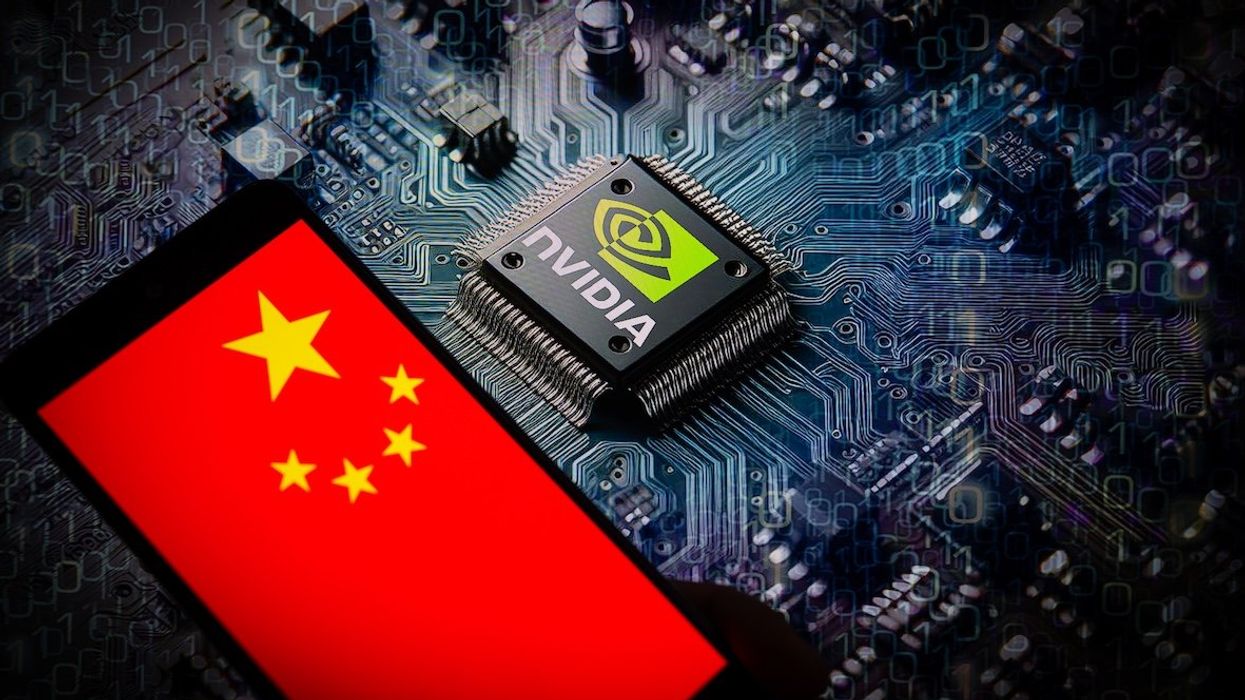
The flag of China is displayed on a smartphone with a NVIDIA chip in the background in this photo illustration.

The flag of China is displayed on a smartphone with a NVIDIA chip in the background in this photo illustration.

Jonathan Raa/NurPhoto via Reuters
H3C, one of China’s biggest server makers, has warned about running out of Nvidia H20 chips, the most powerful AI chips Chinese companies can legally purchase under US export controls. [...]
​North Korean leader Kim Jong Un supervises the test of suicide drones with artificial intelligence at an unknown location, in this photo released by North Korea's official Korean Central News Agency on March 27, 2025.

North Korean leader Kim Jong Un supervises the test of suicide drones with artificial intelligence at an unknown location, in this photo released by North Korea's official Korean Central News Agency on March 27, 2025.

KCNA via REUTERS
Hermit Kingdom leader Kim Jong Un has reportedly supervised AI-powered kamikaze drone tests. He told KCNA, the state news agency, that developing unmanned aircraft and AI should be a top priority to modernize North Korea’s armed forces. [...]
The logo for Isomorphic Labs is displayed on a tablet in this illustration.

The logo for Isomorphic Labs is displayed on a tablet in this illustration.

Igor Golovniov/SOPA Images/Sipa USA via Reuters
In 2024, Demis Hassabis won a Nobel Prize in chemistry for his work in predicting protein structures through his company, Isomorphic Labs. The lab, which broke off from Google's DeepMind in 2021, raised $600 million from investors in a new funding round led by Thrive Capital on Monday. The company did not disclose a valuation. [...]