There’s an old saying: “If you do not change direction, you may end up where you are heading.” With the changing of the guards in both the US and Canada, where are these two countries headed?
The short answer? They’re headed for a hot trade war, one made hotter by Donald Trump’s threats to take over Canada by escalating counter-threats from patriotic Canadian leaders who are locked in their own election cycle. The political barometer is rising.
This has upended conventional wisdom about the political landscape in Canada, where the Liberals are in a leadership race (former Banks of Canada and England Governor Mark Carney announced his leadership bid in Edmonton today), and a federal election is likely to kick off at the end of March.
Just weeks ago, it was all about Justin Trudeau and his legacy. The Conservatives, led by Pierre Poilievre, have been up in the polls, with a lead ranging from 20 to 25 points. That may well hold, but the election is no longer only about Trudeau. It is also about Trump’s threat to take over Canada and which leader has the best response.
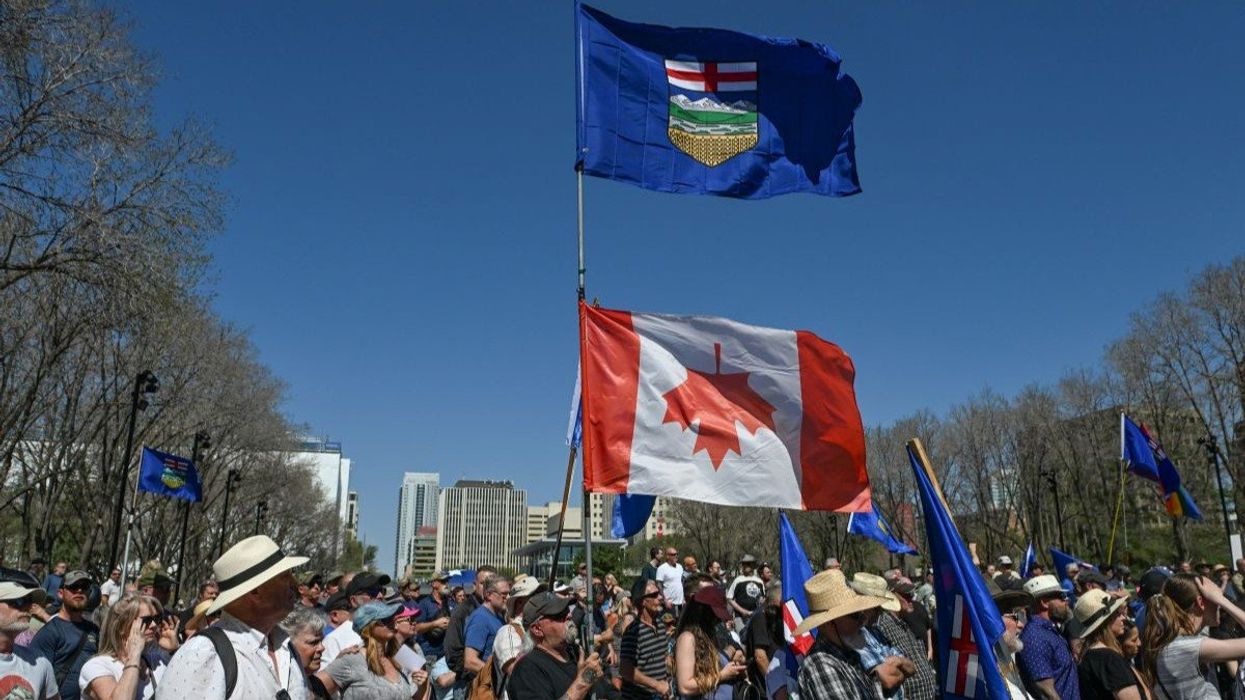
Outside threats have a way of healing some internal divisions and, already, we’ve seen two long-time former prime ministers, Stephen Harper, a conservative, and Jean Chretien, a Liberal, speak out forcefully against Trump’s threat. That catalyzed all political leaders to boost their own tough patriotic talk as polls show the vast majority of Canadians reject Trump’s expansionist dream.
A common outside threat doesn’t help an opposition party looking to focus on domestic issues, but it also creates new internal divisions.
For example, Ontario’s Premier Doug Ford believes Canada must retaliate against the US with every weapon possible, including cutting energy supplies, while Alberta Premier Danielle Smith says cutting off energy exports will spark a national unity crisis. She wants it off the table. Smith went to visit President-elect Trump in Mar-a-Lago to get an exemption for Alberta energy, where she was joined by the self-appointed champion of Trump’s Canadian union strategy, Kevin O’Leary.
Will Poilievre side with Smith on the energy issue, and if so, does that risk being linked to O’Leary, who openly supports an economic union between the US and Canada? Or, will a new Liberal leader side with Ford and drive the old East vs. West internal tensions at a time when unity is needed?
The Canadian federal election cycle and the Liberal leadership race are now being driven by three factors:
Change. The Economy. And Trump.
All of Canada’s leadership candidates are pitching themselves as a change from Trudeau, especially the Liberal contenders, which is a harder case to make than it is for Poilievre.
On Monday, Mark Carney soft launched his campaign on “The Daily Show with Jon Stewart,” calling himself an “outsider” and talking about his long economic experience in dealing with serious disruptions like the 2008 financial collapse. (Disclosure: Carney is a close family friend, and Diana Fox-Carney is an adviser at Eurasia Group, our parent company). Former Finance Minister Chrystia Freeland is also expected to launch her bid, with reports saying she will try to position herself as a change candidate by scrapping the carbon tax, a policy she long championed that has become controversial.
So defining yourself as a change candidate is vital. When it comes to the economy, inflation and home prices are still crucial to the domestic agenda, but will these drop back as the impact of the Trump tariffs is felt? Expect the tariffs to dominate the economic agenda if they come next week.
Does changing the focus of the upcoming federal election to an outside threat change the current polls? That will be the most critical question in the next Canadian federal election. Trump is now the most disruptive and important political figure in Canada, and every day he makes that more clear.
For example, as the California fires raged, the president-elect talked covetously about water from Canada, claiming – erroneously – that water from Canada would have prevented the California fires. “When I was President, I demanded that this guy, the governor (of California), accept the water coming from the north, from way up in Canada,” Trump told Newsmax, likely referring to the Columbia River. “It flows down right through Los Angeles … They would have had so much water they wouldn’t have known what to do with it. You would have never had the fires.”
Like Trump’s claims about the US subsidizing Canada to the tune of $100 billion – most recently debunked by economist Jim Stanford in this report from the Center for Future Work – this is provocative but false. The Columbia River flows through Washington state and parts of Oregon before emptying into the Pacific Ocean, but it never reaches Los Angeles. And this water issue isn’t some new thing either. In 1961, the US and Canada signed the Columbia River Treaty, a treaty that has been under renegotiation since 2018. Those 15 rounds of negotiations have never included bringing water to LA.
Still, these kinds of jabs, taunts, and threats make Trump the leading opposition figure in Canada, the person changing the direction of politics. Every leader in Canada – whether they like it or not – is now forced to run primarily against Trump, not Trudeau.