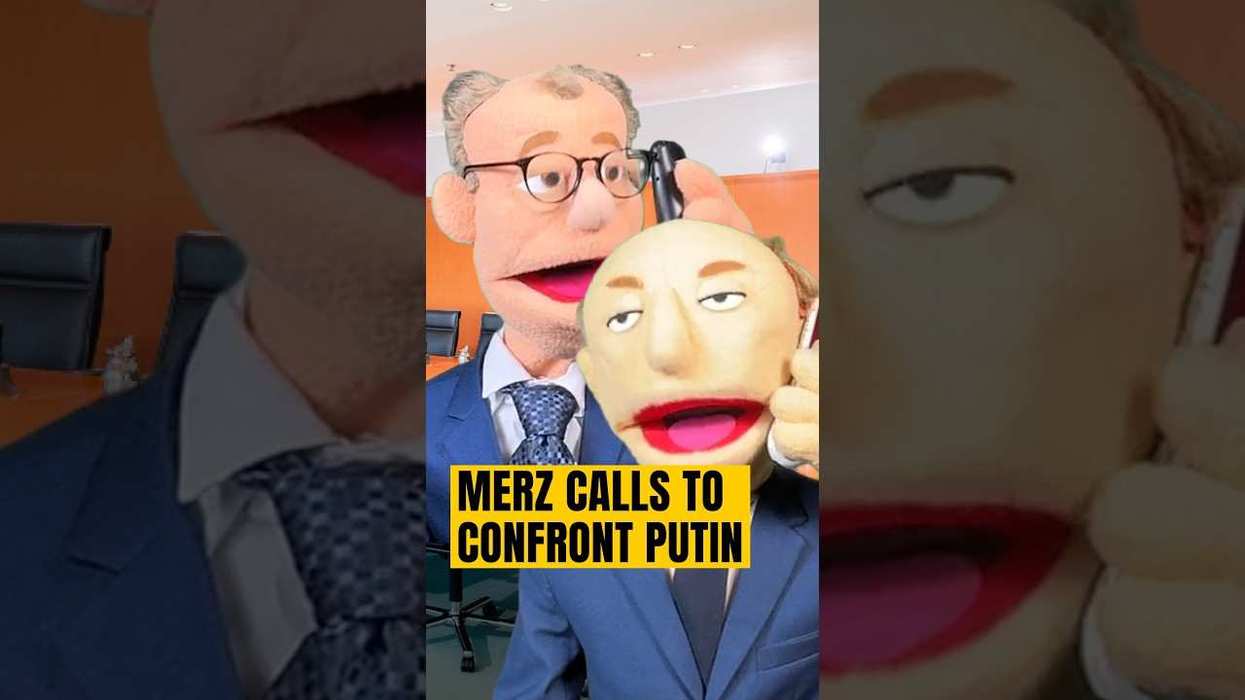
Friedrich Merz’s first 100 days as chancellor of Germany have marked an assertive shift in the country’s role on the European and global stage. Elected to the top job by a razor-thin election and an unprecedented second-round Bundestag vote – the first in Germany’s history – Merz has defied domestic instability to position Germany as Europe’s strategic anchor.
On foreign policy, Merz has pursued a clear goal: put Germany at the center of European and transatlantic security. Unlike Angela Merkel, whose approach to Ukraine was marked by caution and a tendency to trust Russian President Vladimir Putin, or Olaf Scholz, who moved hesitantly in the early months of the war, Merz strives for speed and assertiveness. Just several days into his term, he went on a high-profile visit to Kyiv alongside UK Prime Minister Keir Starmer, France’s Emmanuel Macron, and Poland’s Donald Tusk – illustrating solidarity with Ukraine.
“Merz made it clear that his primary goal was to strengthen European unity and make Germany a key figure in the European and global order,” says Jan Techau, Europe Director at Eurasia Group.
Despite Merz’s personal goals, German institutions are slower to evolve. Despite his early visits and vocal support, many Ukrainian officials have expressed frustration with Berlin’s perceived slowness in delivering promised aid and equipment. For a chancellor attempting to redefine Germany’s global identity, any disconnect between rhetoric and delivery risks weakening credibility – not only in Kyiv but across Europe.
But Merz is putting money where his mouth is. Germany committed to raising defence spending to 3.5% of GDP – a dramatic acceleration of its military modernization. Meanwhile, a $578 billion infrastructure and energy package, focused on sustainability, aims to safeguard Germany’s economic leadership in a more fragmented and competitive global economy. Germany’s trajectory under Merz could set the tempo for the EU’s global relevance over the next decade.
Securing that budget has come at a political cost . With Germany’s strict balanced-budget rules limiting room to manoeuvre, fighting will only intensify over how to fund Merz’s ambitions - especially when negotiations begin in earnest over the 2027 budget next year. Monetary disputes are likely to bring long-standing ideological differences to the surface, with fiscal conservatives resisting new borrowing and others pushing for greater flexibility. Managing these tensions will be the key domestic challenge for Merz – and the ultimate test of whether the coalition can remain intact, says Eurasia Group’s Techau.
Merz’s coalition is already showing cracks. In July, the Social Democratic Party’s attempt to appoint legal scholar Frauke Brosius-Gersdorf to the Federal Constitutional Court turned into a political crisis. Allegations of plagiarism were quickly dismissed by legal experts, but a digital campaign, spearheaded by Germany’s far-right AfD party, succeeded in painting Brosius-Gersdorf as a radical leftist. As tensions escalated, the ruling center-right party, the CDU/CSU, withdrew its support, and the vote was delayed, sparking SPD accusations of political sabotage.
The controversy reflects the weakness of Germany’s political center. The February federal election saw gains for both the AfD and the Left Party, driven in large part by digitally-savvy campaigns that resonated with younger voters. Platforms like TikTok have become powerful political battlegrounds, amplifying polarization in Germany as they have also been found to do elsewhere. Merz’s center is not experiencing growth.
Still, Merz has already shaped Germany’s global role. His 100 days in office have placed Germany on a new trajectory, and with it, the European Union – toward a more assertive security posture and stronger transatlantic alignment. Whether this pivot leads to greater unity and global relevance will depend not only on strategic vision but on political resilience. As Germany becomes more central to Europe’s future, its internal fractures, from coalition tensions and looming fiscal disagreements to the disruptive influence of digital populism, may ultimately determine whether Merz’s ambitions can hold.
The question remains: Can Merz lead a more assertive Europe while keeping Germany’s political center from collapsing?