Sánchez releases classified documents on Ceuta crisis
Spanish Prime Minister Pedro Sánchez’s government on Wednesday declassified documents showing that Morocco had knowledge of plans for a mass migrant crossing into the Spanish exclave of Ceuta days before it occurred. The disclosure may be an attempt to deflect some of the backlash Sánchez has faced over the surge of 70,000 people into the tiny North African territory, including mass protests, calls for his resignation, and criticism that his pro-immigration policies left Spain unprepared – all especially perpetuated by the far-right, anti-immigration party Vox that has been rising in the polls ahead of the 2027 election. But the release hasn’t taken the pressure off: critics of Sánchez are saying that the documents also show that some in Spanish intelligence also knew about the plans to cross the border. Both countries have blamed human traffickers and misinformation spread on social media for helping fuel the surge.
Trump’s new plan to win over midterm voters
US President Donald Trump promised to give Americans $5,000 if the Republicans win both the House and the Senate in the midterms yesterday – a cost of around $1.25 trillion. Despite his falling approval ratings, Trump seems intent on being center stage for the elections, urging voters to “pretend” he’s on the ballot. But while he polls well amongst MAGA voters, he struggles with Independents and non-MAGA aligned Republicans who will be crucial to the GOP in November. Some Republican candidates have even tried to expunge Trump from their campaigns; Eric Flores, Republican candidate for a Texas swing seat, removed “Trump Endorsed” and “Republican” from his signs after the primary. Trump is also struggling to mobilize young Republican voters, who worry he doesn’t have their cost of living concerns on his mind. Even so, it’s clear that Trump thinks he will be the deciding factor in November, and he might be – just not in the way he hopes.
Zelensky visits Canada as budget shortfalls grow
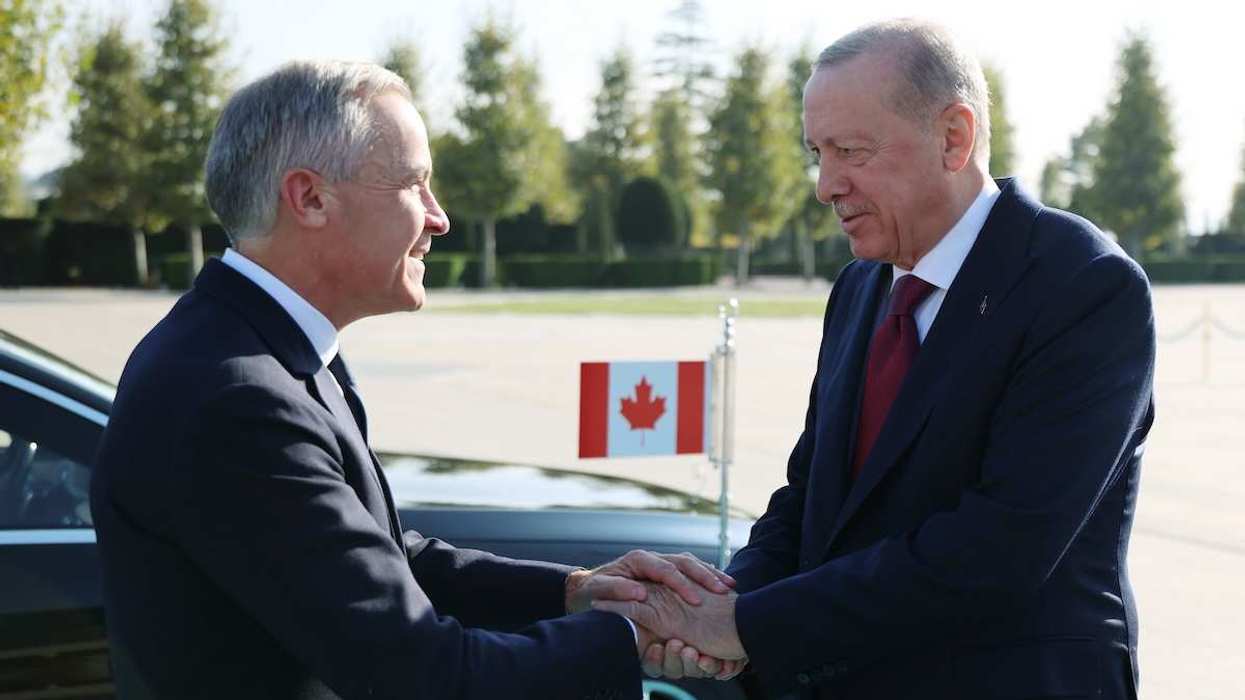
Ukrainian President Volodymyr Zelensky’s ongoing international campaign for help against the Russian invasion takes him to Canada this week, where he will meet with PM Mark Carney to ask for more military and financial assistance. With the Russia-Ukraine aerial war intensifying daily, winter approaching, and recent US peace efforts yielding little of note, Kyiv’s sense of urgency is acute. But questions about the effectiveness of aid are also swirling. With the US no longer providing significant aid, Ukraine has relied almost entirely on Europe and Canada. But it recently emerged that Ukraine faces a $27 billion budgetary shortfall this year, even after securing $100 billion more from the EU. In addition, a recently leaked Ukrainian audit revealed that more than $1 billion in aid was lost to fraud or waste in 2024 alone.