AfD trounces rivals in German state election
The far-right party won a landslide in Saxony-Anhalt this weekend, taking nearly 44% of the vote. The result left embattled German Chancellor Friedrich Merz “in shock” – his incumbent center-right CDU party finished a distant second, at 17%. The AfD, an anti-establishment party that opposes immigration and favors closer ties with Russia, has surged in recent years, especially in economically struggling parts of former East Germany. The party is now three seats short of a majority in Saxony-Anhalt. Establishment parties have ruled out working with the AfD, which German intelligence characterizes as “extremist,” but the party is aiming to pluck off enough defectors in order to form the country’s first far-right government since World War II. Meanwhile, two more state elections loom on September 20th: the AfD tops polls in Mecklenburg-Vorpommern, and is a leader even in liberal-leaning Berlin. Merz has pledged to remain in power, and to improve “communication” with voters.
Australia wants to allow social media users to opt out of algorithm
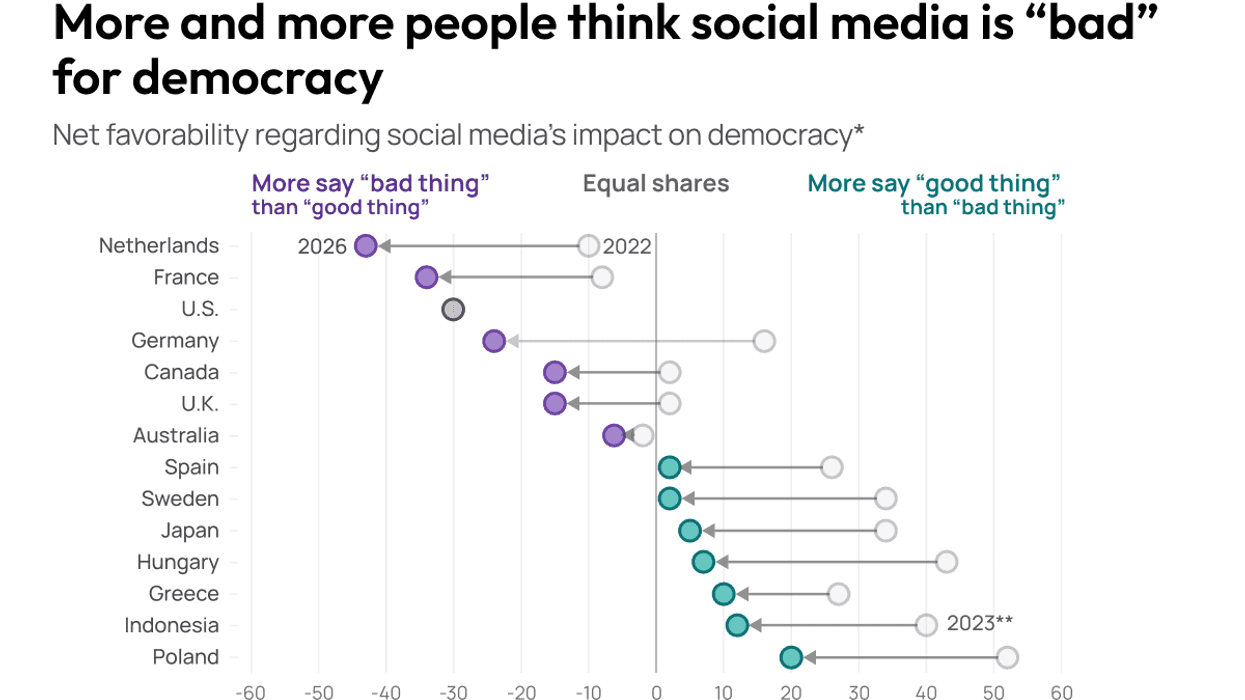
Australia plans to give social media users the ability to opt out of algorithms, as it continues to establish itself as a world leader in social media regulation. Under new legislation proposed by Prime Minister Anthony Albanese’s government on Tuesday, users would be able to choose to only see content from accounts they follow, as opposed to being fed content suggested by highly personalized algorithms. Companies that don’t comply with the proposed law could face penalties up to $79 million. Opponents accuse the government of censorship and algorithm “rigging,” while the social media lobbying group DIGI defended the tech as valuable for users wanting to discover diverse content. Countries including Spain, Britain, and Malaysia have since followed Australia’s ban on social media for children, which was announced late last year, though research shows it has only been partly effective.
Milei makes his move on the Falklands
Argentina is once again resurfacing its sovereignty claim over the British-controlled Falkland Islands. President Javier Milei’s government announced on Monday that it will file criminal charges against Israeli energy company Navitas Petroleum for plans to drill around the islands under a UK-issued license that Buenos Aires does not recognize. The territorial dispute is a long-running one: Argentina invaded the islands in 1982, but lost a 10-week war with Britain, accelerating the collapse of the Argentine military dictatorship. Successive Argentine governments have maintained the claim ever since and is officially enshrined in their constitution. But this latest push has an unusual source of momentum: President Donald Trump. He said last week that the US may review its officially neutral position on ownership of the islands amid tensions with Britain over its lack of support for the US war with Iran.