Skip to content
Search

Latest Stories

News

Other pressing issues to discuss in Munich

Other pressing issues to discuss in Munich
GZERO Media

Much of the media attention on the Munich Security Conference will focus, understandably, on the Russia-Ukraine standoff. But other important security questions will be discussed. Here are three of the most important.

The Balkans. Bosnia now faces its most worrisome threat since the end of the Yugoslav civil war in 1995. To keep warring factions apart, the peace agreement ending that war created a special enclave within Bosnia for ethnic Serbs. The leader of that enclave, Milorad Dodik, has threatened secession over a new law banning the denial of the genocide that Serbs inflicted on Bosnian Muslims during that conflict. A breakup of Bosnia could trigger a new war.


The Caucasus. Ukraine is not the only former Soviet Republic weighing the costs of war. Armenia and Azerbaijan have long been locked in a struggle over control of Nagorno-Karabakh, an enclave inside Azerbaijan that’s populated mainly by ethnic Armenians. In 2020, the frozen conflict turned hot, with Turkey and Russia becoming directly involved when hostilities erupted. Following major gains for Azerbaijan, the guns have gone silent, but a ceasefire has not brought confidence that peace can be kept, and the status of prisoners is making its way through international courts.

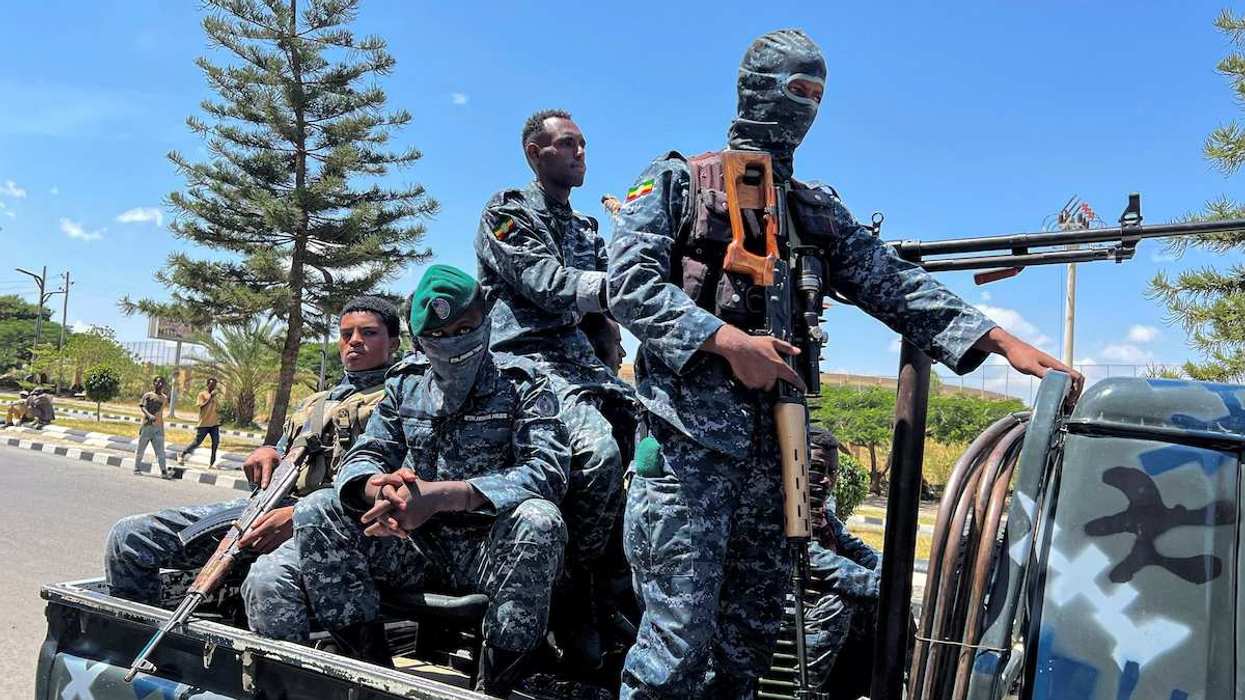
The Sahel. In some West African countries, the inability of governments to respond effectively to jihadist emergencies has frustrated both military leaders and civilians caught in the crossfire. One result of this instability is a series of recent coups that have toppled governments across the region. France, the former colonial power, has long been a major player in the Sahel. As part of a plan called Operation Barkhane, French troops have tried to lead a regional effort to quell the insurgency, but lack of success has left West Africans angry at Paris and French voters unhappy. As a result, France has pulled back, leaving the EU to debate how to manage a problem that is destabilizing an entire region – with blowback for European security.
More For You

​A Boeing 737 Max 8 with Afghans on board lands at Berlin Brandenburg Airport (BER) on December 16, 2025.

A Boeing 737 Max 8 with Afghans on board lands at Berlin Brandenburg Airport (BER) on December 16, 2025. 160 Afghans have come to Berlin on a charter flight organized by the German government.

Fabian Sommer/dpa via Reuters Connect
500: By the end of the year, Germany plans to accept over 500 Afghan refugees who assisted German troops on the ground in Afghanistan, or face threats from the Taliban. Although these refugees have already been approved for admission, Chancellor Friedrich Merz’s coalition government delayed their entry into the country. [...]
​President Donald Trump delivers an address to the nation from the Diplomatic Reception Room of the White House, in Washington, D.C., U.S. Wednesday, Dec. 17, 2025.

President Donald Trump delivers an address to the nation from the Diplomatic Reception Room of the White House, in Washington, D.C., U.S. Wednesday, Dec. 17, 2025.

Doug Mills/Pool via REUTERS
Less than one day after US President Donald Trump declared a military blockade of sanctioned oil tankers from Venezuela, he addressed the nation during a rare primetime speech – but didn’t talk about Venezuela. Instead, he touted the economy, arguing that it’s doing better than many Americans believe it is.“Boy, are we making progress,” Trump said [...]
India Prime Minister Narendra Modi

India Prime Minister Narendra Modi

Reuters
Pakistani-Afghan rift gives India an openingIndian Prime Minister Narendra Modi isn’t necessarily known as the greatest friend of Muslim people, yet his own government is now seeking to build bridges with Afghanistan’s Islamist leaders, the Taliban. New Delhi is seeking to capitalize on the rift between Pakistan and Afghanistan, two former allies, [...]
French President Emmanuel Macron, German Chancellor Friedrich Merz, Ukrainian President Volodymyr Zelenskiy, U.S. Special Envoy Steve Witkoff and businessman Jared Kushner, along with NATO Secretary-General Mark Rutte and otherEuropean leaders, pose for a group photo at the Chancellery in Berlin, Germany, December 15, 2025.

French President Emmanuel Macron, German Chancellor Friedrich Merz, Ukrainian President Volodymyr Zelenskiy, U.S. Special Envoy Steve Witkoff and businessman Jared Kushner, along with NATO Secretary-General Mark Rutte and otherEuropean leaders, pose for a group photo at the Chancellery in Berlin, Germany, December 15, 2025.

Kay Nietfeld/Pool via REUTERS
The European Union just pulled off something that, a year ago, seemed politically impossible: it froze $247 billion in Russian central bank assets indefinitely, stripping the Kremlin of one of its most reliable pressure points. No more six-month renewal cycles. No more Hungarian vetoes. The money stays locked up, full stop.Turns out that was the [...]