
Skip to content
Search

Latest Stories

Middle East

GZERO news and analysis about the Middle East

Presented by

Podcast: Lebanon Post-Blast: Rage in the Streets of Beirut

Podcast: Lebanon Post-Blast: Rage in the Streets of Beirut

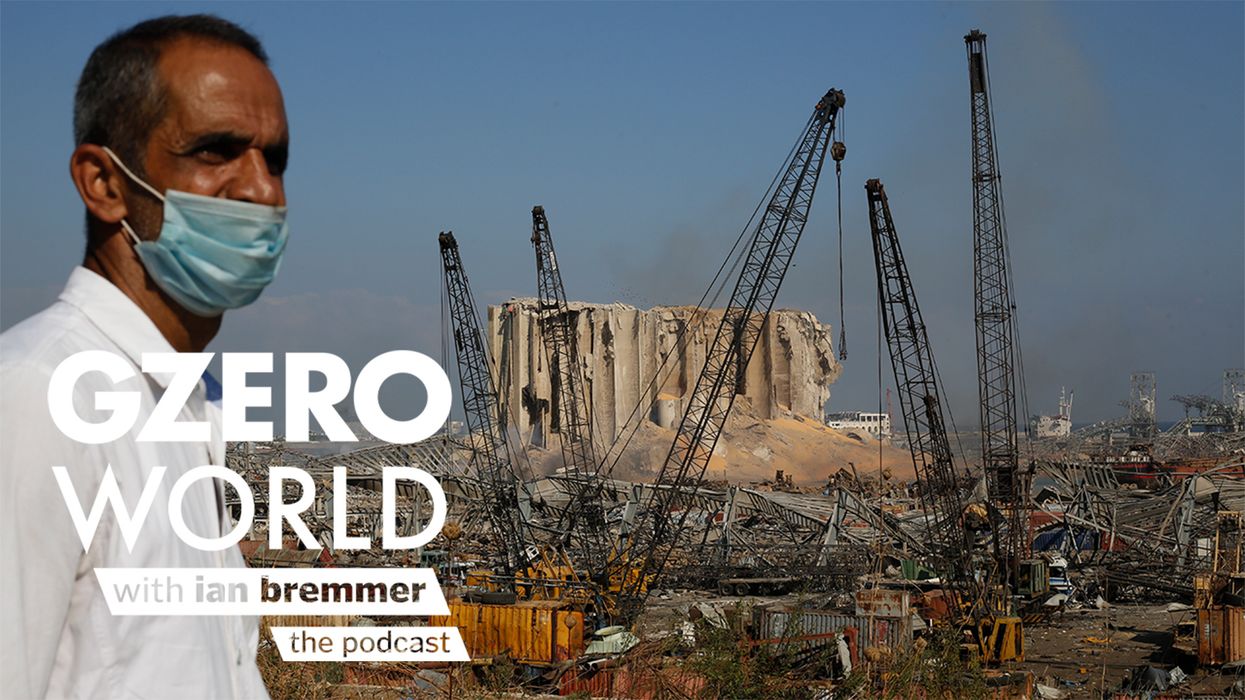
Listen: It was a blast heard around the world, an explosion so big it literally sent shockwaves through the streets of Beirut. More than 200 were killed, thousands injured, and hundreds of thousands left homeless. On this GZERO World podcast, Ian Bremmer examines the aftermath and fallout of the catastrophe in Lebanon, a nation that was already aflame in political turmoil. Ian Bremmer talks to acclaimed journalist Kim Ghattas, author of Black Wave: Saudi Arabia, Iran, and the Forty-Year Rivalry That Unraveled Culture, Religion, and Collective Memory in the Middle East, about the road ahead for Lebanon and how this moment could impact the region.

Transcript

Listen: It was a blast heard around the world, an explosion so big it literally sent shockwaves through the streets of Beirut. More than 200 were killed, thousands injured, and hundreds of thousands left homeless. On this GZERO World podcast, Ian Bremmer examines the aftermath and fallout of the catastrophe in Lebanon, a nation that was already aflame in political turmoil. Ian Bremmer talks to acclaimed journalist Kim Ghattas, author of Black Wave: Saudi Arabia, Iran, and the Forty-Year Rivalry That Unraveled Culture, Religion, and Collective Memory in the Middle East, about the road ahead for Lebanon and how this moment could impact the region.

Subscribe to the GZERO World Podcast on Apple Podcasts, Spotify, Stitcher, or your preferred podcast platform to receive new episodes as soon as they're published.
Next Page

More from GZERO World Podcast

Trump postpones strikes on Iran’s power plants, US gov’t to greenlight giant local news merger, Iran war hurting global airline sector

Is Trump really talking to the Iranians?

After threatening on Saturday to strike Iran’s power plants within 48 hours unless the Islamic Republic reopened the Strait of Hormuz, US President Donald Trump said on Monday morning he would postpone the attacks for at least five days after he held “productive conversations” with Tehran. But Iran denied that there was any direct communication – a US source reportedly told Axios said the talks took place via Turkish, Egyptian, and Pakistani intermediaries. Whether Trump’s announcement tangibly changes the course of the war is one thing – Tehran still may not allow boats to peacefully pass through the Strait of Hormuz. In the short term, however, Trump’s comments prompted oil prices to fall 10% and US stocks to jump more than 2%. Some financial analysts speculated that calming these markets was the real aim of Trump’s announcement.

Keep reading... Show less

Is Trump really talking to the Iranians? US President Donald Trump postpones attacks on Iran after "productive conversations." FCC greenlights Nexstar-Tegna merger, sparking concerns. Iran conflict... More >

Rahm Emanuel: Trump doesn’t know “friend from foe” on Russia

Rahm Emanuel says the arrival of Russian oil tankers in Cuba is a direct test of whether President Trump can distinguish between political theater and a real strategic threat.

Keep reading... Show less

Rahm Emanuel says the arrival of Russian oil tankers in Cuba is a direct test of whether President Trump can distinguish between political theater and a real strategic threat.... More >

Trump asks for $200B to fund Iran war

In this Quick Take, Ian Bremmer says the Trump administration’s push for $200 billion in supplemental funding for the war in Iran is a sign that the conflict is getting more expensive, more entrenched, and harder to contain.

Keep reading... Show less

In this Quick Take, Ian Bremmer says the Trump administration’s push for $200 billion in supplemental funding for the war in Iran is a sign that the conflict is getting more expensive, more... More >

Iran conflict brings energy boon for some, doom for others

Air defense batteries moved out of Asia. Fighting between Israel and Hezbollah. Growing domestic frustration with the Trump administration. Formula 1 races in the Gulf canceled.

The secondary effects of the US-Israel war with Iran have been expansive. But no specific issue has perhaps been more pressing for governments than the fuel shortages prompted by the de facto closure of the Strait of Hormuz, the 30-mile-wide waterway through which roughly one fifth of the world’s oil and liquified natural gas supplies passed before the war began.

Keep reading... Show less

The US-Israeli war with Iran has badly damaged oil & gas producers in the Gulf and consumers in the Indo-Pacific. But not all countries within those regions will feel the pain equally.... More >

GZERO Podcasts

Ian Bremmer sits down with Thomas Wright, Brookings Institution fellow and former Senior Director at the US National Security Council, to unpack the deepening war in Iran and the divergent strategies... More >

Listen: What does global energy transition look like in a time of major geopolitical change, including rebalancing of trade? In this special episode of "Energized: The Future of Energy,” host JJ... More >

Creating artificial human retinas in zero gravity. Mining rare minerals on the moon. There seems to be no limit to what could be possible if we continue to take our more important industries to... More >

The Associate Director of Video Production supports the day-to-day operations, execution, and delivery of GZERO Media’s video output across studio, field, and post-production environments.... More >

"We are coming out of a period of uncertainty," says David Bailin, Chief Investment Officer at Citi Global Wealth. In the latest Living Beyond Borders podcast, Bailin and Ian Bremmer discuss what we... More >

In this episode of The Ripple Effect: Investing in Life Sciences, host Dan Riskin speaks with Patrick Horber, President of Novartis International, and David Gluckman, Vice Chairman of Investment... More >