

Podcast: Iran on the verge: why you don’t want the nuclear deal to fail, according to Iran expert Ali Vaez
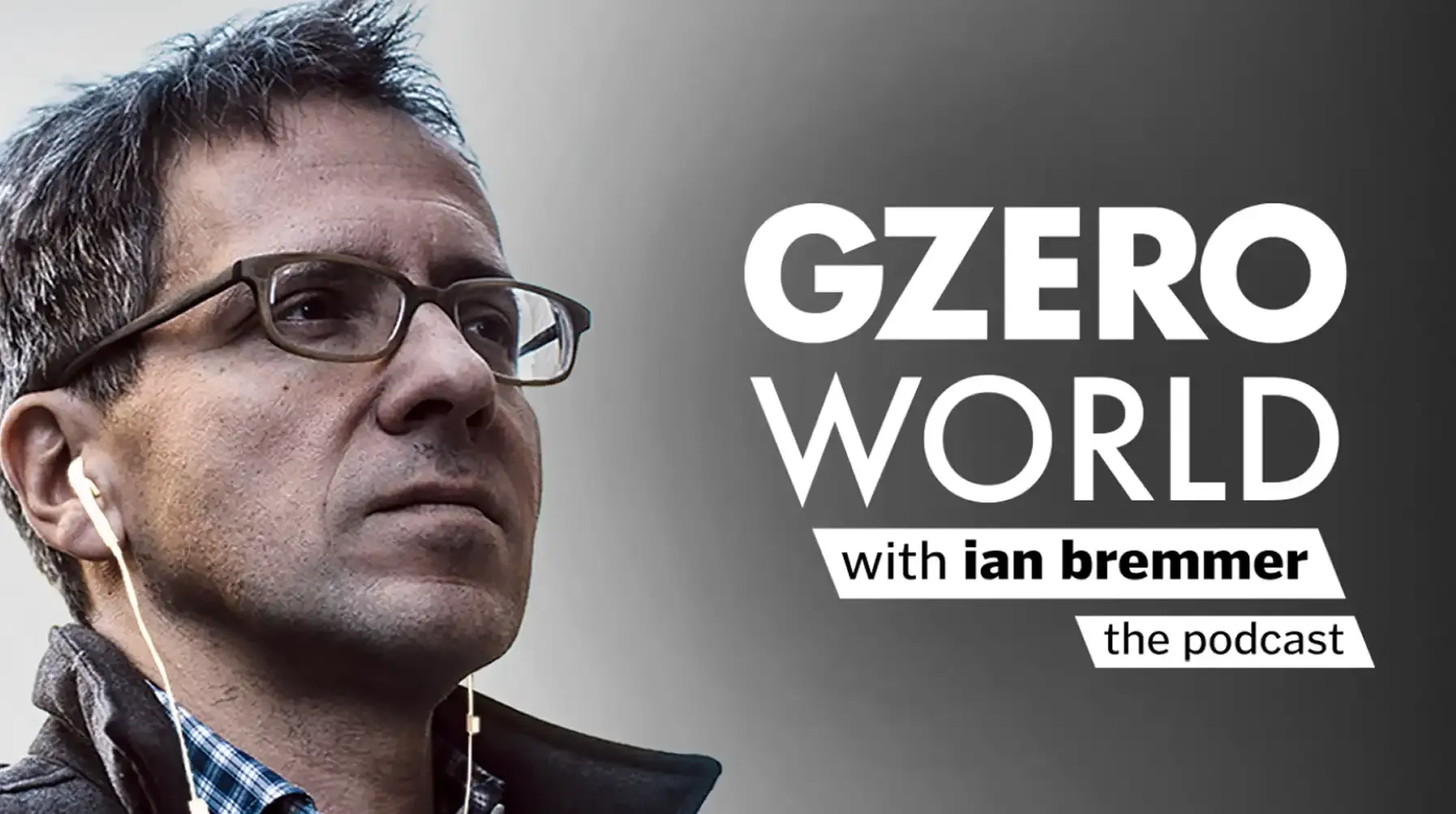
Listen: Renewing the Iran nuclear deal is more urgent than ever for the Biden administration. Iran is closer to getting the bomb, with the breakout time to enrich enough uranium for a single nuclear weapon reportedly less than two weeks. On the GZERO World podcast, Ian Bremmer speaks to Ali Vaez, Iran project director at the International Crisis Group, who says the odds of reaching an agreement in the short term are 50/50.
TRANSCRIPT: Iran on the verge: why you don’t want the nuclear deal to fail, according to Iran expert Ali Vaez
Ali Vaez:
Iran's breakout time, which is the amount of time that it takes for Iran to enrich enough uranium for a single nuclear weapon is now less than two weeks. It was more than 12 months when President Trump walked into the Oval Office.
Ian Bremmer:
Hello and welcome to the GZERO World Podcast. This is where you'll find extended versions of my interviews on public television. I'm Ian Bremmer, and today we are looking at international efforts to revive the Iranian nuclear deal. After 11 months of complex negotiations, diplomats say they are finally close to re-reaching agreement. This would effectively breathe new life into a deal that was left languishing after the Trump administration's unilateral withdrawal back in 2018. But ongoing conflict in Ukraine involving Russia, one of the deal's key negotiators, has threatened to upend progress. I speak to the international Crisis Group's Iran Director, Ali Vaez, who was recently in Vienna covering the talks. Let's get to it.
Announcer:
The GZERO World Podcast is brought to you by our founding sponsor, First Republic. First Republic, a private bank and wealth management company, understands the value of service, safety and stability in today's uncertain world. Visit firstrepublic.com to learn more.
This GZERO World Podcast is also brought to you by Visa. At Visa we are committed to creating opportunities for small business owners. That's why we've created the Visa Economic Empowerment Institute, a digital platform dedicated to sharing research and fostering the open exchange of policy ideas designed to empower citizens, small businesses and economies alike. Visit visaeconomicempowermentinstitute.org to learn more.
Ian Bremmer:
Ali Vaez, welcome to GZERO World.
Ali Vaez:
My pleasure.
Ian Bremmer:
So is this new Iran deal happening?
Ali Vaez:
Look, I've stopped predicting because it was supposed to happen a few months ago. The US is consistently talking about the fact that the window is closing on it, but from one week to another it's constantly pushed back. But at the same time, I would say, it has become too big to fail for both sides. They've expended too much political capital and time and effort into it, and the alternatives for both sides is really not attractive at all. But there is still plenty of space for miscalculation. So it's really difficult to say. I would say it's still 50-50.
Ian Bremmer:
So let me push on both of those sides just a little bit. On the Iranian side, we've heard about how they say they can succeed with a resistance economy. That performance has been lousy but not disastrous. There's no green revolution on the ground. It's a harder line government. Why can't failure be an option for the Iranian government?
Ali Vaez:
Well, because it's true that their economy has survived, but their economy can't thrive under sanctions and then in the medium- to long-term that becomes an existential threat to the system. So that's why Iran wants to get out from under US sanctions and is seeking sanctions relief. They also know that if this crisis escalates, it would eventually result in the snapback of the UN sanctions, which means that Iran would once again be considered a threat to international peace and security under UN Charters, Chapter VII. And now with the P5's unity completely shattered as a result of US-China cold war and as a result of Russia's invasion of Ukraine, it is actually, there is no light at the end of a tunnel. It wouldn't be easy for the Iranians to, again, get out of Chapter VII designation.
Ian Bremmer:
Now on the American side, we of course know, that gas prices are very high and nobody's really happy about that, and it's not helping Biden at all. But at the same time, there are a lot of people that remain very critical of this Iranian nuclear deal and signing a deal on the back of, "We got to get something done to get oil prices down." Isn't Biden risking taking some pretty significant shots on goal?
Ali Vaez:
If the main driver for policy was to bring down the energy prices, that would be correct. But I don't think that's the case. The reason the administration is pursuing this agreement is because Iran is now closer to the verge of nuclear weapons that it has ever been in the past, almost, 20 years of a nuclear standoff with Iran. Iran's breakout time, which is the amount of time that it takes for Iran to enrich enough uranium for a single nuclear weapon, is now less than two weeks. It was more than 12 months when President Trump walked into the Oval Office. So the administration, yes, will pay a political price for restoring the agreement, but it would also pay a, I would say, even a bigger political price in the run-up to midterm elections if it has allowed Iran to become a virtual or a nuclear weapon state under its watch.
Ian Bremmer:
Can't they just blame Trump? The reason that the Iranians are out of the deal and are now developing their nuclear capabilities is because Trump decided to unilaterally pull out of the deal in the first place.
Ali Vaez:
Well, they can and they will, but the reality is that they've been in power now for almost a year. And if they fail to restore the nuclear deal, it will be their fault. It will be on under their watch and they would be blamed of basically paving the ground for living with a nuclear armed Iran. And that's not a good look for a Democratic president.
Ian Bremmer:
Naftali Bennett, the Israeli prime minister, seems to be somewhat less hawkish on the Iran issue than Bibi Netanyahu used to. I've heard that, privately, he talks about Iranian nuclear weapons capabilities as opposed to breakout as being the true red line for the Israelis. Do you see a change in the Israeli position?
Ali Vaez:
I don't necessarily think that the new Israeli administration is less hawkish, is not as proactive in fighting the deal, especially by direct interference in US domestic politics in the same way that Prime Minister Netanyahu did very brazen speech that he delivered at the Joint Session of Congress in 2015. That's not the case anymore. But Prime Minister Bennett can't afford to be seen on the left of former Prime Minister Netanyahu, now the leader of opposition. And so he has to come out in opposition to restoring the deal. But the reality is that as we have seen now by statements and comments by a lot of former Israeli security and military officials who served in the Netanyahu administration, they all now agree that a no-deal scenario does not serve Israel's interest. And in fact, Trump's withdrawal from the agreement in 2018 was a strategic mistake that has basically brought Iran to the verge of nuclear weapons.
Ian Bremmer:
Which was not Netanyahu's position at the time that Trump decided to withdraw from it?
Ali Vaez:
That's correct. And it's still not to this day. But again, those who don't have the political calculations of leaders like Prime Minister Netanyahu or Bennett admit that that was a mistake, and basically that the nuclear deal is better than all the other alternatives for Israel.
Ian Bremmer:
So you come back into this deal, first of all, there's not as much time left on it. So it's a narrower timeframe. It's not longer, it's not stronger as the Biden administration was initially saying they would be working on when they first came into power a year ago. And of course if Trump were to come back in 2025, or if almost any Republican leader were to, the likelihood the US would once again withdraw from a second nuclear deal seems pretty high. So given all of that, what are we really looking at?
Ali Vaez:
So first of all, I don't think it's a short-term benefit. One of the key limits in the nuclear deal, which is the limit on the stockpile of enriched uranium without which Iran would not be able to develop nuclear weapons, and also on the level of enrichment, these two limits will expire in 2031. So we are buying at least nine years, and that's not nothing in international politics. And also, it's true that in 2018 when President Trump wanted to withdraw from the deal, there was a hypothetical threat that Iran might develop, what might get close to the verge, of nuclear weapons.
That has now, we've actually lived four years of the alternative, and we know that it actually unleashed Iran's nuclear program. It rendered Iran much more aggressive in the region, much more repressive at home. It really did not advance any of the strategic objectives that the US had in mind when it withdrew from the agreement. That's all part of the historic record now. So if the next Republican president wants to repeat that mistake, of course they can. But Iranians have also now have, what is known as, inherent guarantees in the agreement. Which is that they are preserving some of their advanced centrifuges, which implies that if we get out of the deal again and we renege on our obligations under the deal, it would take them even less time to get back to where they are today, which is, again, uncomfortably close to nuclear weapons.
Ian Bremmer:
Now, as you say, they're weeks away from nuclear breakout capability, but as you know, that implies not only capacity, but it also implies will. And one has to think the Iranian government, including the supreme leader, has historically said they have no interest in nuclear weapons. Furthermore, if they were to become a nuclear power and actually test the nuke, or even develop a nuke without testing it, the likelihood that the Israelis would engage in direct military strikes is real. The likelihood that others in the region like the Emiratis, the Saudis, maybe even the Turks, would want to develop their own nuclear weapons capabilities, is real. How confident do you feel and why, that if there is no nuclear deal, that the Iranians would actually develop a nuclear weapon?
Ali Vaez:
That's a very good question. Look, the reality is, with the trajectory of Iran's nuclear program, they are, as I said now, less than two weeks away from breakout. In a matter of four weeks, they would have enough 60% enriched uranium, which is 99% of the effort that it takes to get to weapons grade, that is sufficient for a single nuclear weapon. I think you remember Bibi Netanyahu's red line at the UN in 2012, that was about-
Ian Bremmer:
With the bomb.
Ali Vaez:
That was about 240 kilograms of 20% enriched uranium.
Ian Bremmer:
When he brought the graphic, the big graphic of the bomb. Yeah.
Ali Vaez:
Exactly. The cartoon bomb. And now, that equivalent of that amount in 60% is 40 kilograms. Iran has of last week had about 33 kilograms of 60% enriched uranium. So this is not a stable situation. Eventually, that breakout time will fall down to a matter of days. It was what US officials refer to as margin of error, which means that with the lower level of inspections that we right now have, between one inspection of a site and the next one, Iranians can produce a single nuclear weapon.
Now, that's not an arsenal, that's not a deliverable and functional nuclear weapon, but it's too much of a risk, and I think it's too uncomfortable for Israel and the US. So there is a risk of military confrontation. Iranians know this. The reality is that this is a program that has been deeply penetrated by Western and Israeli Intelligence, as we have seen in the form of covert operations against Iran's nuclear program and scientists. So there is a risk of escalation and military confrontation that could then easily spiral out of control, and that's what I'm worried about much more than Iran actually causing the Rubicon and developing nuclear weapons.
Ian Bremmer:
So you're not actually trying to argue that you think the Iranians would develop a nuclear weapon? You're not saying that?
Ali Vaez:
I'm saying that there is a risk that they might, because the only part of the nuclear, basically, process to develop nuclear weapons that we can monitor is their enrichment program.
Ian Bremmer:
No, of course-
Ali Vaez:
The rest of the weaponization-
Ian Bremmer:
I'm just saying you don't have confidence about it? It's not like you're saying, "No, I really think they would develop nukes." You're not saying that?
Ali Vaez:
That's correct.
Ian Bremmer:
Right. Another thing I'd love to ask, because we don't talk about it very often, your view on why the Israelis should have, say, a 100 nuclear weapons, and yet it's unacceptable for the Iranians to have any, what's your view on that?
Ali Vaez:
Well, international relations is about double standards, right? So the fact that Israel already has nuclear weapons doesn't mean that Iran, which is a member of the non-proliferation treaty, should have the same rights. And it's true that non-proliferation cascades have often been feared, but rarely have actually materialized. Take the case of North Korea, it did not result in a cascade of nuclear weapon proliferation in that part of the world. But in the case of Iran it's a very different situation. We know that Turkey and Saudi Arabia and the UAE, they've all have looked into developing significant nuclear capabilities, not necessarily weapons, but again, it's a hedging policy that could render a region that is already in too much turmoil, even more unstable. So again, it's a risk that I don't think anyone should take. And the fact that Israel has nuclear weapons, I don't think would provide Iran with any kind of blank check to pursue a similar policy.
Ian Bremmer:
Are nukes becoming more attractive now? Because we know that if Ukraine had them, there'd be a very different response from the Russians right now. Because the Russians have them, nobody in NATO is prepared to take the Russians on in Ukraine. Are the Iranians or others in the region thinking differently about nuclear proliferation because of what we're seeing with this horrible war going on in Europe?
Ali Vaez:
Look, it's not a new lesson for the Iranians. They remember Saddam Hussein or Qaddafi in Libya who basically gave away their nuclear programs and were invaded by the US or NATO. They have seen how President Trump treated North Korea, which was all armed with nuclear weapons with respect, versus Iran that was obviously complying with his obligations under the nuclear deal. President Trump withdrew from that and reimposed sanctions. So it's not necessarily a new lesson. Again, as I said, I think Iran's nuclear calculus has been based on two main factors. Number one is the fact that they know if they crossed the Rubicon and developed nuclear weapons, the strategic balance of power becomes basically a nuclear game on how many nuclear weapons you have, how sophisticated they are, whether you have second strike capabilities or not.
And a lot of the dimensions of Iranian power, in terms of size, population, depth of history, statehood, all of that would disappear in a balance of power that is dictated by nuclear deterrence. And Iran's neighbors often have better resources and better alliances. So it's a risk that I don't think Iran really wants to take. Its policy has always been on hedging and providing itself with an option of going nuclear if indeed there is a threat that would justify that. And the second element is, as I said, the fact that they do believe that if they dashed towards nuclear weapons, they will probably pay a huge price in terms of a military strike before they're able to reach their objectives.
Ian Bremmer:
Well, since I asked you about Russia-Ukraine, I do want to ask about the Russia relationship with Iran. Historically, they've been seen as one of the friendlier countries towards Iran, certainly in terms of their cooperation around propping Assad up in Syria. And yet the Russians came out, not so long ago, just a couple of weeks ago and said, "We're prepared to quash any possibility of getting back into this Iranian deal unless you give us guarantees." How's that viewed in Tehran and how much of a spanner in the works do you think that the statement by Lavrov, the Russian foreign minister, actually represents?
Ali Vaez:
The Iranians were definitely surprised by it. They asked for clarification from Moscow, and they were disappointed because Russia is one of the sole allies that Iran has on the international stage, and for them to deprive Iran from getting sanctions relief, only because Russia is now subject of similarly draconian sanctions, did not make any sense to the Iranians. My own guess is that this was a Russian tactical gambit to see if they can leverage the nuclear deal with Iran, to which they are a major stakeholder and a guarantor, as a way of punching a hole in the Western sanctions regime against Russia. When it became clear that that's not going to happen, and when they realized that there was a popular backlash in Iran against Russia, they decided to walk back these demands and in a matter of week, the Iranians managed to convince Moscow to back off.
Ian Bremmer:
So you've told me at the beginning of this discussion that you're sick of making predictions on all this, and I get it, but having now heard all of your views on what's going on around the deal, it seems to me that if you had to make a call, you'd say you think it's going to happen?
Ali Vaez:
Well, again, I think because the alternatives really range from unattractive to outright ugly for both sides, and because they have invested so much into this deal that has become now too big to fail, that the odds of success are higher. I would put them maybe at 60% right now, but there's still 40% chance of miscalculation, because both sides believe that the other needs to deal more, and so is willing to make concessions on some of the remaining issues that, by definition, are the toughest ones that have been left to the very end.
Ian Bremmer:
I guess I'd say if it's really too big to fail, it'd be more like 90-10. So maybe it's not so big and maybe failure's an option, but we'll see soon. And I appreciate you being so thoughtful and honest around this issue with me, Ali Vaez, thanks so much for joining today.
Ali Vaez:
Absolute pleasure. Thank you.
Ian Bremmer:
That's it for today's edition of the GZERO World Podcast. Like what you've heard? Come check us out at gzeromedia.com and sign up for our newsletter, Signal.
Announcer:
The GZERO World Podcast is brought to you by our founding sponsor, First Republic. First Republic, a private bank and wealth management company, understands the value of service, safety and stability in today's uncertain world. Visit firstrepublic.com to learn more.
This GZERO World Podcast is also brought to you by Visa. At Visa we are committed to creating opportunities for small business owners. That's why we've created the Visa Economic Empowerment Institute, a digital platform dedicated to sharing research and fostering the open exchange of policy ideas designed to empower citizens, small businesses and economies alike. Visit visaeconomicempowermentinstitute.org to learn more.
Subscribe to the GZERO World Podcast on Apple Podcasts, Spotify, Stitcher, or your preferred podcast platform, to receive new episodes as soon as they're published.